Tea for One

‘Where time is drowned in odour-laden winds

And Druid moons, and murmuring of boughs,’ – W.B. Yeats

Tea for One

misty streams of sweetened jasmine
encircling my sleepy head
echoes of our conversations
misty streams of sweetened jasmine
memory’s a poor companion
i wish that you were here instead
misty streams of sweetened jasmine
encircling my sleepy head

~kat

A triolet for Jane Dougherty’s A Month with Yeats – Day Eleven inspired by the excerpt above from ‘The Harp of Aengus’ by W.B. Yeats.

This verse brought to mind the ways that certain scents can rouse memories. I have a dear friend who lives far away, but everytime I have a cup of jasmine tea, a favorite we shared, I think of her. in thise moments, time stands still and I am transported by memories of the many conversations❤️ we had over a cup of tea. ❤️


Magnetic Poetry Saturday

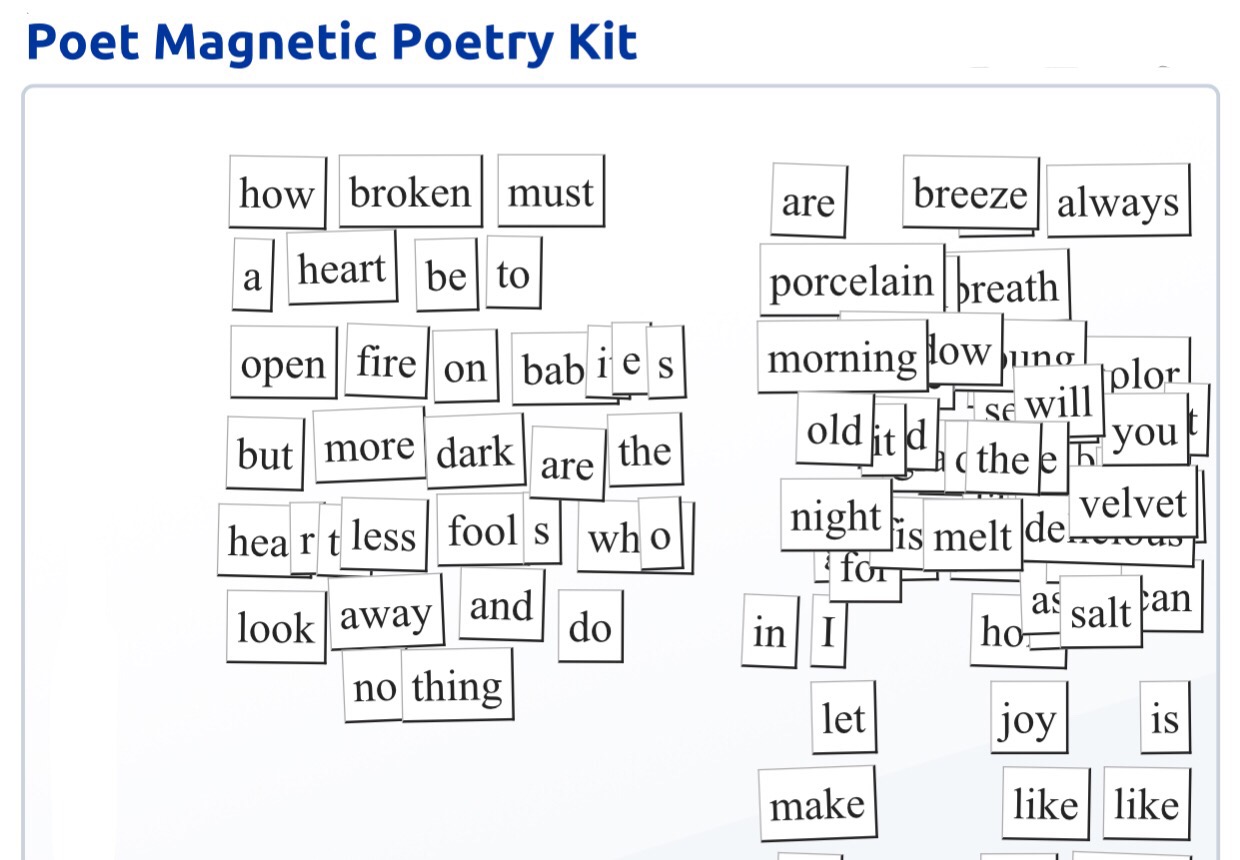
how broken must
a heart be to
open fire on babies…
but more dark are the
heartless fools who
look away and do
nothing

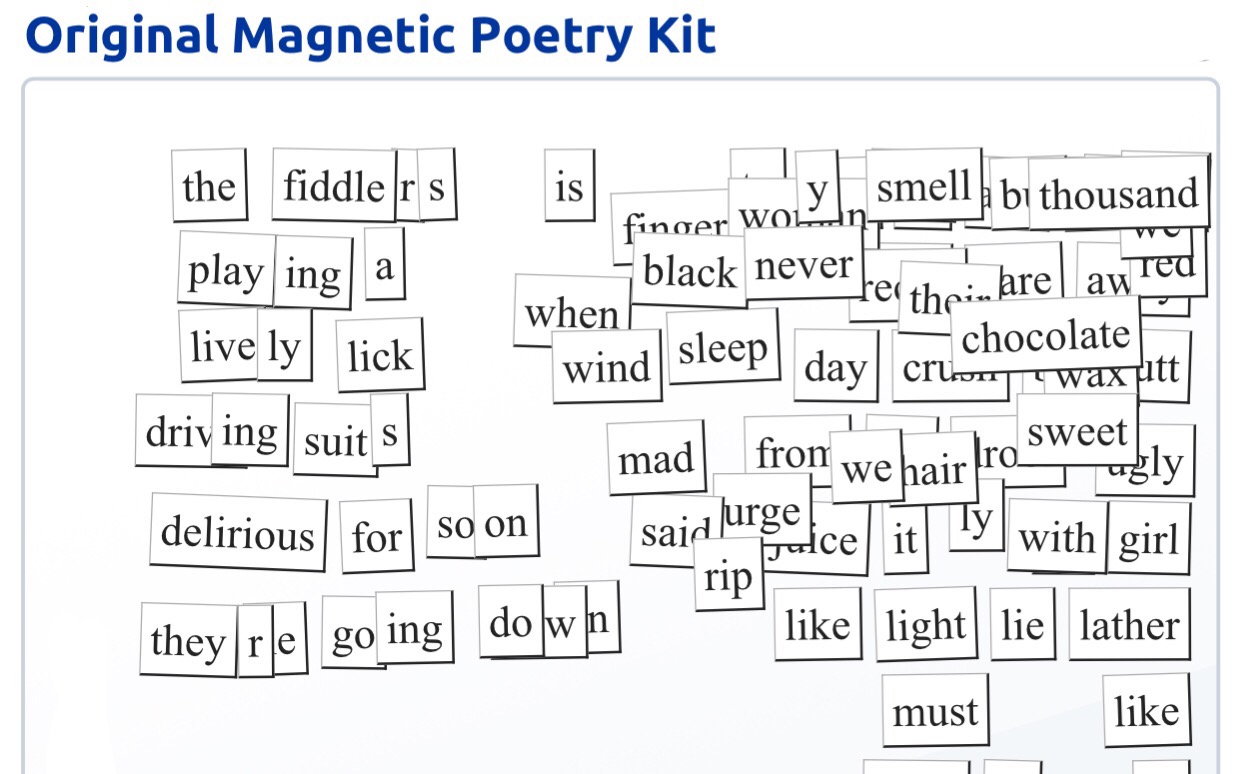
the fiddler’s
playing a
lively lick
driving suits
delirious, for soon
they’re going down

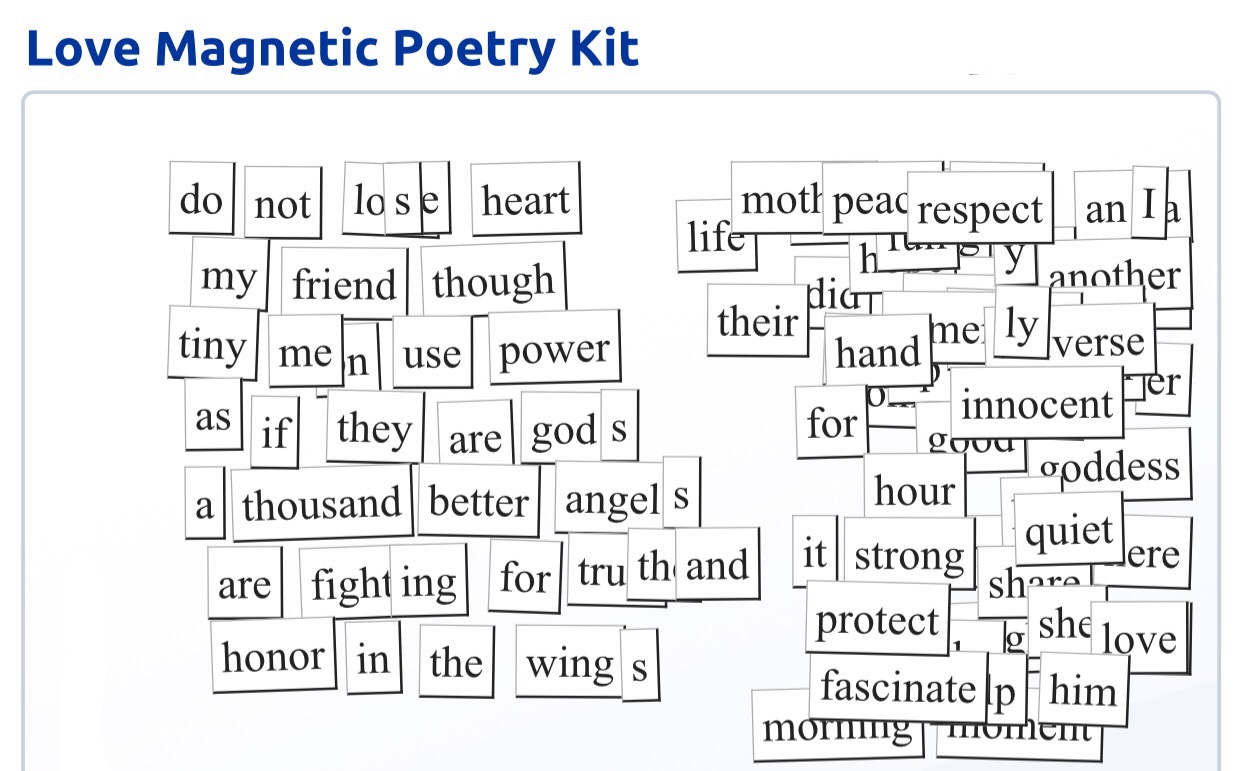
do not lose heart
my friend, though
tiny men use power
as if they are gods…
a thousand better angels
are fighting for truth and
honor in the wings

too beautiful to bear,
the forest falling
gently, frosted breezes
murmuring, as leaves
cover quiet paths in
vivid shades of brown

~kat

Magnetic Poetry Online


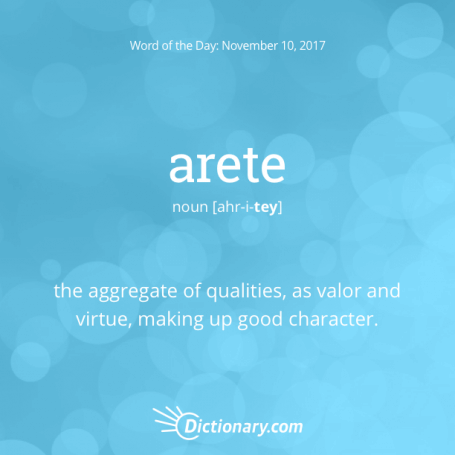
Arete – Friday’s Word of the Day

Today’s word of the day at Dictionary.com is arete, a noun that means the aggregate of qualities, such as valor and virtue, making up good character.

It is Greek in Origin as Dictionary.com summarizes:

It is hard to imagine a more Greek word than aretḗ “excellence.” The excellence is of all kinds: military (bravery and prowess), sports (footracing), but also intelligence, public speaking, and good character. Aretḗ applies to the gods and women as well as to warriors and heroes: Penelope in the Odyssey (book 18, line 251) complains that “The immortals destroyed all excellence of mine, in beauty and stature, when the Argives sailed for Troy, and with them my husband Odysseus.” Aretḗ also applies to land (“productive”) and domestic animals (horses, dogs). Socrates pursues aretḗ “virtue, excellence” even if it costs him his life. In the Septuagint and New Testament, aretḗ also means “rewards of excellence, distinction,” as also in classical Greek. Arete entered English in the 16th century.

Here’s a nice bit of info to round out the application of this word. According to Greekmythology.wikia.com:

Arete was the goddess or daimona of virtue, excellence, goodness and valour. She was depicted as a fair woman of high bearing, dressed in white. Her opposite number was the daimon Kakia, lady of vice.  The best known story of Arete is when Arete and Kakia approached Heracles and offered him a life of valour or a life of luxury.  Based on his numerous adventures it is clear that he chose the life of valour.

Arete is the theme Aristotle’s philosophical virtue theory. You can read more about it HERE. Basically Aristotle believed: Arete roughly means “moral virtue”. It refers to an innate “Excellence” or “Essence” in all things, and the striving toward that potential or purpose.

Incidentally, for obvious reason, businesses love to use arete or symbols of arete in their titles and logos. If you google arete, you find a long list of companies who advertise their excellence in this way.

Well, before I get lost in my thoughts as I consider the arete of the various aspects of my life…this could take some time. I better give you a Haiku.

Go forth the, and prosper. Be the best you can be. Strive for arete!

when arete is scorned
by ignominious fools
virtue is disdained

~kat


Drain The Swamp

‘And he saw how the reeds grew dark
At the coming of night-tide,’  W.B. Yeats

Drain the Swamp

a congress of reeds congregates in the shadows
corrupted, its oil glutted rodomont brims,
impassable moat churning pristine and brackish
host to edge dwellers too fearful to swim

as murky gray fog settles round its foundation
turbidity swirls, fire tangoing with ice
the tide ebbs disturbing its frail underpinning
sweeping them into all manner of vice

this haven for hoards of crude middling beasties
conceals crawling shape-shifters, long-legged fowl
slimy, amphibious, hideous predators
hiding sub-surface, always on the prowl

~kat

Today’s Prompt Verse for Jane Dougherty’s A Month with Yeats – Day Ten Poetry Challenge is from Yeats’ poem, ‘The Host of the Air.’ I resisted looking up the poem this time, before writing my own, because I wanted to focus entirely on the words of the verse. At first glance I imagined sunset rouged, tidal wetlands, with tall sea wheat and cattails; the day surrendering to evening. But when I looked up the word ‘reed’  I discovered it has a myriad of possible definitions; one in particular that caught me eye...from Webster: a person without strength of character. Oh…it went on…doorman, jellyfish, namby-pamby, pushover, weakling, wimp, coward, milquetoast, mouse, nebbish, nervous Nellie (or nervous Nelly), pussy [slang], wuss (also wussy) sheep. Not the idyllic scene I first imagined, but hey…I went with it, with a melding of the two. With so many reeds to inspire me on the world stage these days, how could I resist?!


Heeled Rivals

“Oooh, I hear her! Choose me, choose me!”

“Dream on Stiletto. She’s going hiking today. You are not a hiker!”

“I can hike, Trekker! You should see me on a runway.”

“Strut maybe. She’s gonna pick me.

Bet you a Choo!”

“You know Choo? Shhhhhh! She’s coming!”

“Wait!!! Flip Flops?!!!”

“Later dudes!”

~kat

52 Words exactly fo Sacha’s 52 Weeks in 52 Words Writespiration Challenge based on this prompt:

Write a day in the life of a pair of shoes – your protagonist IS the shoes.