Sunday’s Week in ReVerse – 13 May 2018

Happy Sunday, and Happy Mother’s Day for those who celebrate…and especially for those who don’t or can’t or won’t. This post is for you.

Before Hallmark and greedy tchotchke, florist, and confection hawkers usurped this day morphing it into Father’s Day, Grandparent’s Day, Friend’s Day, Siblings’ Day, etc, etc …before all that, there was a mother…and a daughter.

In 1914, with the help of Congress and President Woodrow Wilson, Anna Jarvis realized her mother, Ann Maria Reeves Jarvis’ dream to have an official national day honoring Mothers; specifically the work of women, and of mother’s, who played an influential role improving sanitary conditions and lowering infant mortality by fighting disease caused by milk contamination. These women were members of the Mother’s Day Work Clubs. During the Civil War Reeves Jarvis’ Work Clubs shifted their focus by declared neutrality, and providing aid to both Confederate and Union soldiers. They would eventually plan a Mother’s Friendship Day to help foster reconciliation between families and neighbors in a divided and broken nation. It was Ann’s Sunday School prayer that inspired her daughter Anna to found what would become the United States’ first Mother’s Day:

“I hope and pray that someone, sometime, will found a memorial mothers day commemorating her for the matchless service she renders to humanity in every field of life. She is entitled to it.”
-Ann Reeves Jarvis

Three years after her mother’s death Anna sent a telegram and 500 white carnations in honor of her Mother to Andrews Methodist Episcopal Church, where Ann Marie taught Sunday School. Today, it is home to the International Mother’s Day Shrine, in Grafton, West Virginia. Of her choice of the carnation she explained,

Its whiteness is to symbolize the truth, purity and broad-charity of mother love; its fragrance, her memory, and her prayers. The carnation does not drop its petals, but hugs them to its heart as it dies, and so, too, mothers hug their children to their hearts, their mother love never dying. When I selected this flower, I was remembering my mother’s bed of white pinks.”

— Anna Jarvis

Anna Jarvis’ Mother’s Day was meant to be a day for mourning women to remember fallen soldiers, to work for peace, provide assistance to mothers in need and to honor all mothers and motherhood. Anna, who never married or had children of her own spent her later years fighting the swift commercialization of the holiday, eventually dying penniless, blind, and broken in a sanitarium. It is reported that the businesses who profited from Mother’s Day actually paid for Anna’s treatment in order to keep her in the sanitarium, therefore silencing her protest of the growing commercial slant of the day.

Today we continue to be influenced by the commercial hype of this holiday. As children and mothers our feeling can fluctuate between feeling guilty or devastated if our Mother’s Day does not achieve our great expectations.

But all is not lost. I still believe Mother’s Day can be restored to the original intent of its founder and the mother who inspired her. Like the days following the Civil War, we are once again a divided nation. Like Ann Reeves and her daughter Anne we can strive to be neutral in the face of division, compassionate to those in need, kind to our family and neighbors. If the original mothers’ movement could be started by a few women over 100 years ago, then I believe we can do it again.

Let there be no cards, or flowers, or chocolates tied in a pretty bow to commemorate this day, but justice, compassion and peace. That is the greatest gift we can give to each other every day; not just on a designated commercialized holiday. I think Ann and Anna would be pleased.

Sunday’s Week in ReVerse – 13 May 2018

cool surface, scarcely rippling
we count the hours, days by you
forgotten in crumbling clay
at least that’s what my therapist tells me
the street sounds blared louder, louder
its bright cerulean dome dappled
your secret
we hide in bubbles
repeated repeatedly
up your sleeve
this is where I go to reconnect…
in fickle surrender, peace
…keep writing
grazing heaven’s canopy
a rose is a rose is
when time stands still
the wind whispers to me
then the flowers bloomed

~kat

(Source information: Wikipedia.)

42 Day 13

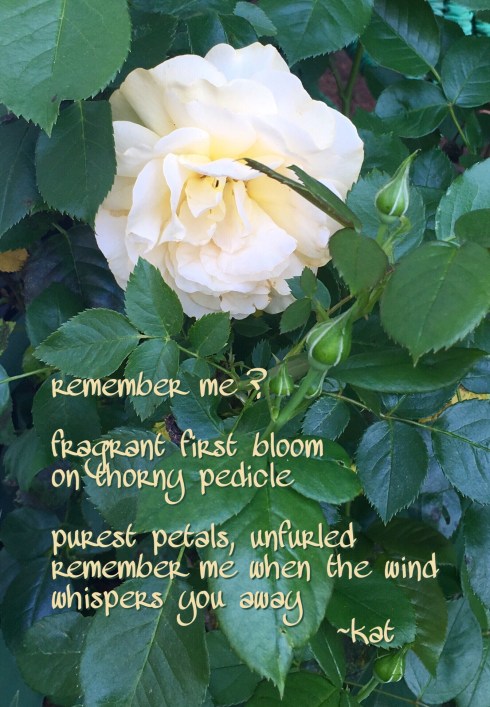
remember me?

fragrant first bloom
on thorny pedicle

purest petals, unfurled
remember me when the wind
whispers you away

~kat

42 Day 13 for Jane Dougherty’s Daily Poem Challenge.


Saturday with the Muse

MPLove512
a mother’s heart
remembers every sweet
moment; the sound of
her child’s laughter,
tiny hands in hers
to keep her warm
when she is old and they
have grown away

MPNature512
then the flowers bloomed
it was as if they didn’t
care that baring their
souls would only lead to
withering from a too hot sun

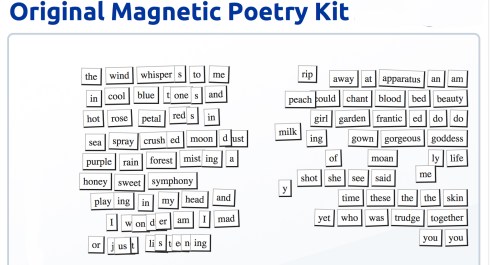
MPOrig512
the wind whispers to me
in cool blue tones and
hot rose petal reds…in
sea spray, crushed moon dust,
purple rain forest misting…a
honey-sweet symphony
playing in my head and
i wonder am i mad
or just listening

MPPoet512
remember eternity
is not here…it’s not there
somewhere…it surrounds
you in its brilliant embrace
when time stands still

~kat

Magnetic Poetry Online


42 Day 12


by another name

Eros, blood and tears
of Venus, Aphrodite

prickly hybrid
legendary bloom
a rose is a rose is

~kat

For Jane Dougherty’s Daily Poem Challenge 42 Day 12.


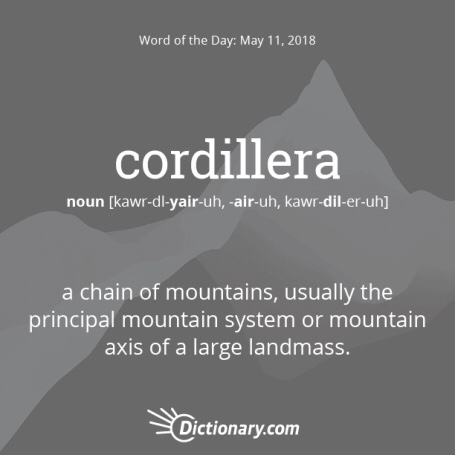
Cordillera – Friday’s Word of the Day


Today’s word of the day at dictionary.com is cordillera; a chain of mountains, usually the
principal mountain system or mountain axis of a large landmass; a series of parallel ranges of mountains. The word originated around 1704, from the Spanish word for “mountain chain,”  from cordilla, in Old Spanish, “string, rope,” diminutive of cuerda,from Latin chorda “cord, rope” (seecord).

When I researched cordilleras, I discovered a new information source, Quora. Here is a nice summary that explains what a cordillera is and perhaps what it is not.

1. Cordillera includes a general highland formed in different periods and by different processes, for example, the cordillera of the western United States and British Columbia.

2. Mountain system refers to mountains formed in a single period and includes many mountain ranges and groups of single mountains, for example, Appalachian.

3. Mountain range refers to mountains formed in the same age and with the same process arranged in narrow and long belt, for example, Himalayan mountain range.

4. Mountain groups are highlands composed of different mountains but with a proper arrangement, for example, Juan mountain group.

5. Mountain ridges are mountains formed due to local folding and faulting and rise abruptly from the adjoining region, for example, Blue Ridge Mountains, USA.

Source-The Earth Dynamic Surface by K. Siddhartha

I live in the shadow of what is defined as a “mountain ridge”. The Blue Ridge Mountains, and specifically the Roanoke Valley is part of the Appalachian “mountain system” that extends from Newfoundland and Nova Scotia in Canada to Central Alabama, which also includes the Catskills in New York, the Allegheny Highlands in Pennsylvania and The Great Smoky Mountains in Eastern Tennessee and western North Carolina. Basically it spans the Eastern portion of North America.

To find a true cordillera in North America you need to trek west to the Pacific coast to the west of The Great Basin. The Pacific Cordillera, also called Western Cordillera, the Western Cordillera of North America extends from Alaska to Central Mexico and includes three main belts: the Pacific Coast Ranges in the west, the Nevadan belt in the middle (including the Sierra Nevada), and the Laramide belt in the east (including the Rocky Mountains) extending to heights of over 20,000 feet at its highest point. This is quite a contrast to the 6,682 ft height of Mount Marshall in North Carolina in the Appalachian Mountain system.

Of course there is much more to know about Cordillera in other parts of the world, including the Andes Mountains, also known as the Cordillera de los Andes that extends over a distance of some 5,500 miles (8,900 kilometres) from the southern tip of South America to the continent’s northernmost coast on the Caribbean. They separate a narrow western coastal area from the rest of the continent and contain the highest peaks in the Western Hemisphere. The highest of them is Mount Aconcagua (22,831 feet). Other notable cordillera include: Alborz Cordillera, Northwest-Northeast Iran (also written as Elburz); Annamese Cordillera (Annamite Range), Laos and eastern Vietnam; Baetic Cordillera, Spain; East Australian Cordillera, more commonly known as the Great Dividing Range; and Zagros Cordillera, Middle East, Southeast of Turkey, Northeast of Iraq, and Northwest to Southeast Iran. From Wikipedia.

All this talk about mountains and cordillera, is making my heart race and my knees weak given my aversion to heights. But I do love the view, my feet safely planted in the valley I call home.

So, There you have it, a high level view that barely skims the apex, giving you a ‘peek’ at all things cordillera.

Here’s a Haiku to wrap this up.

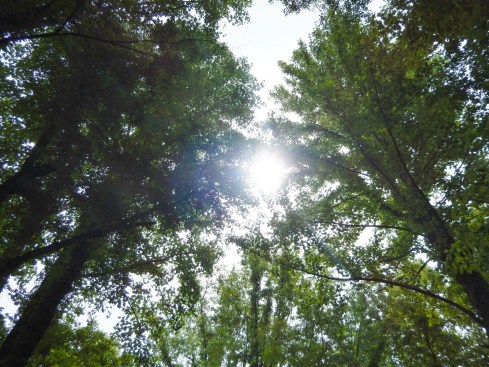
cordillera cusp
grazing heaven’s canopy
air thin, vista sweet

~kat