Category Archives: nature

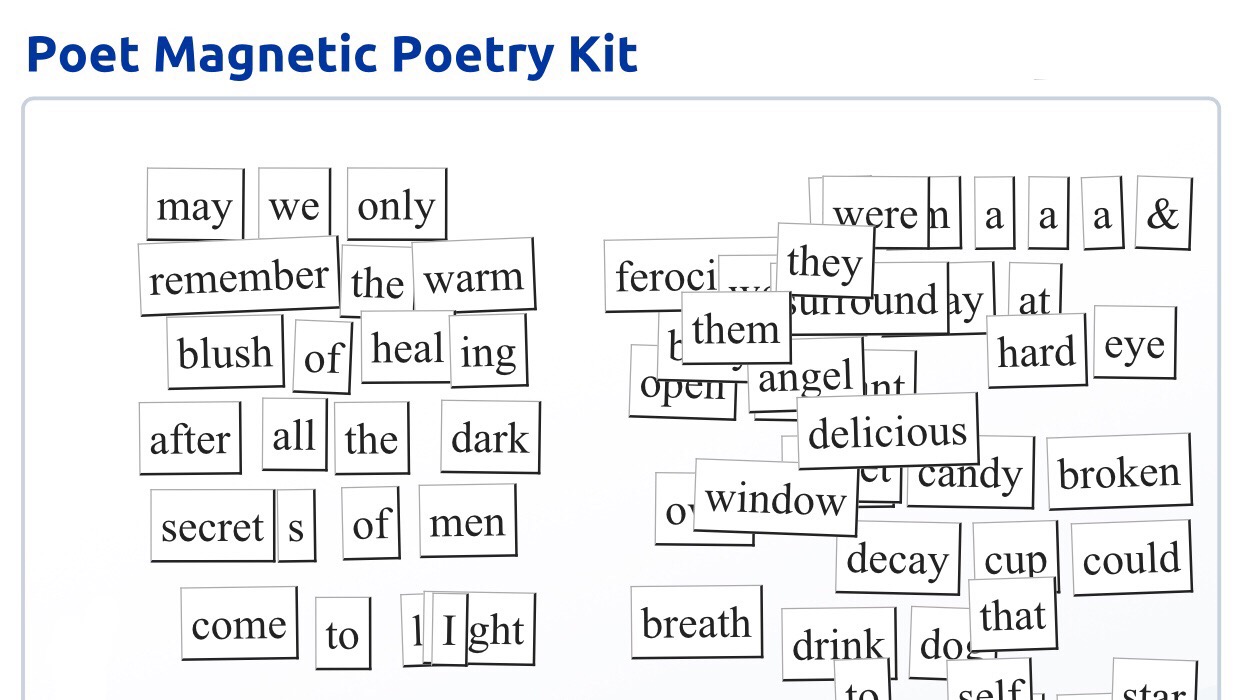
Magnetic Poetry Saturday

my garden heaves her

last bit of sweetness

as the cool beauty of

death whispers to her

urging her to sleep…

to dream of spring

I am not dazzled by

broken gods and

fool-hearty men who

must be surrounded by

all-embracing prisoners

of fear to feel whole

keep trusting in

the goodness of

others even if it is

hard to see….I

believe it’s always

there, waiting to care

every path is thick

with followers but

wanderers leave fresh

tracks through the wild

~kat

Magnetic Poetry


Chaos in Flux

For TJ’s Household Haiku Challenge based on this painting by Delaunay at The Museum of Modern Art in Paris, and the words earth and whirlwind.

whirlwinds and tempests
chaos rages, earth in flux
nature can’t be tamed

~kat


Sweet Scent – A Haiku

gone is the sweetness
frosted blossoms are fading
air dense with death’s balm

~kat

For Ronovan Writes Haiku Challenge, prompt words: sweet and scent (balm).


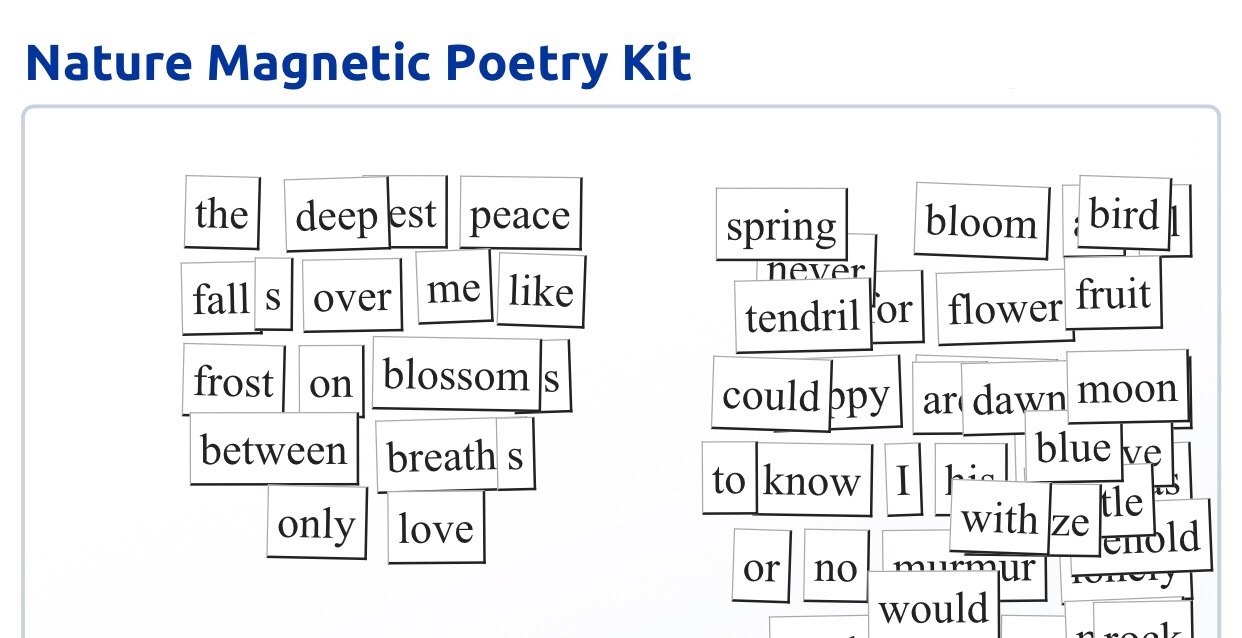
Magnetic Poetry Saturday

nature does not

murmur feeling

blue when night

falls, for she sees

the light in every

dark thing

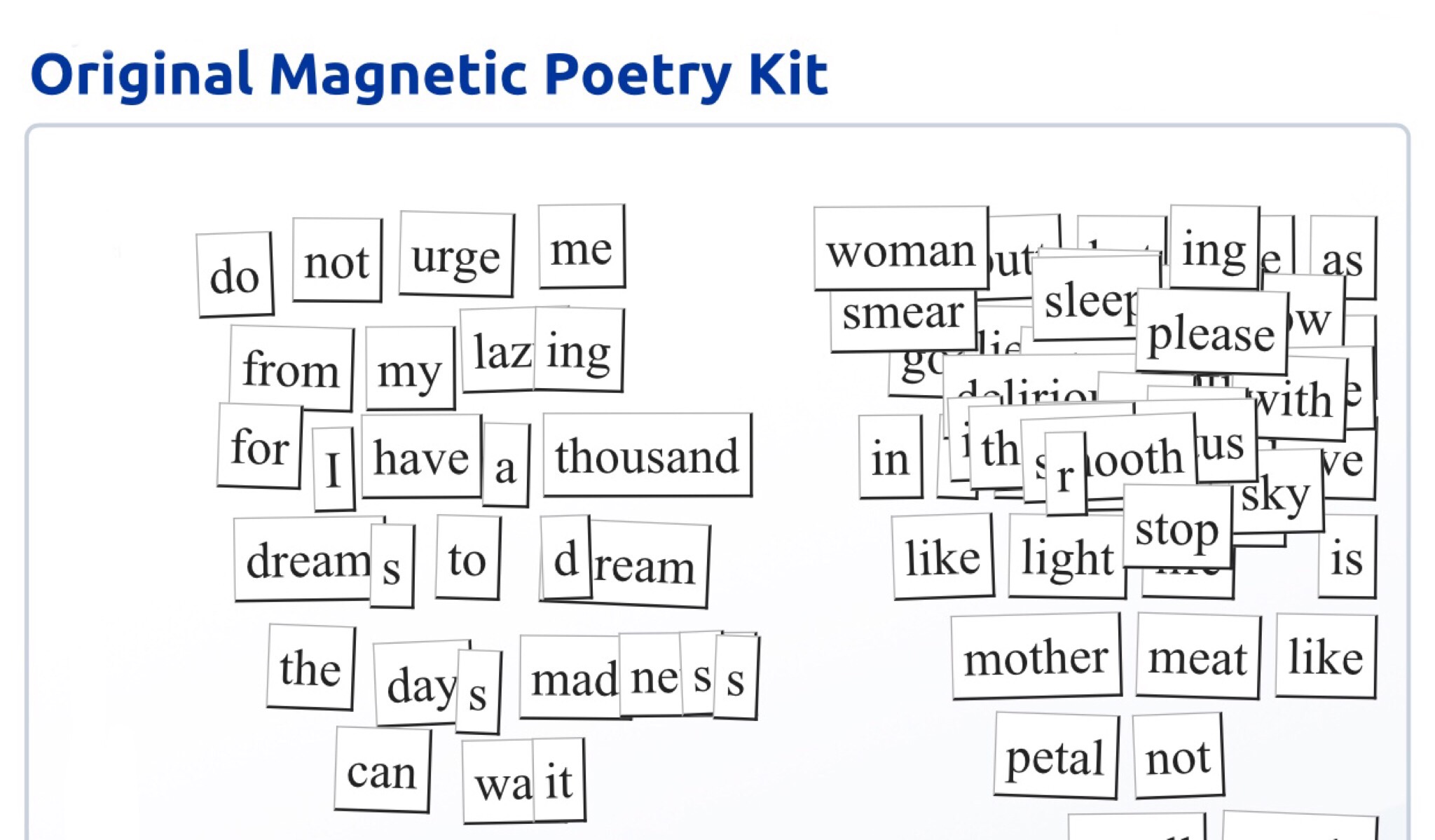
remember to make

time to enjoy the

little things in life

all work and no play

is not living

mist rising after

the rain, warm

meeting cool in a

dreamlike symphony…

fading away

in the light of day

champagne blushed

my foolish heart

dances to a broken

rhythm…I almost remember

how it was to be wild,

myself, in color

~kat

Magnetic Poetry…try your hand at this fun exercise in wordplay HERE.


Deciduous – Friday’s Word of the Day

Happy Autumn! Today’s very timely Word of the Day at Dictionary.com is Deciduous. It is defined as: shedding the leaves annually, as certain trees and shrubs; falling off or shed at a particular  season, stage of growth, etc., as leaves, horns, or teeth; not permanent; transitory.

Dictionary.com gives a nice history of the word:
The English adjective deciduous is straight from Latin, dēciduus  “falling off or down,  tending to fall off or down,”  formed from  the  preposition  (and prefix “down,  from”) and the verb, cadere (combining form –cidere “to fall”).  In Latin dēciduus is used for leaves  (dēcidua folia), (baby) teeth (dēciduτ dentēs), descending testicles ( testēs dēciduτ), and, charmingly, for shooting stars or falling stars (dēcidua sidera). Deciduous entered English in the 17th century.

My google search led me to the fascinating world of desiduous trees. In the process I learned a few new words and a bit more about the seasonal process of abscission (the dropping of leaves).

In fact, some of those the brilliant fall colors are dormant in the leaves. It is the surge of chlorophyll in the warmth of summer or the wetness of rainy seasons that give leaves their green color. As the days cool and the sun wanes, or when the trees are drought-stressed, less chlorophyll is produced allowing the leaf’s other colors to be revealed. Yellows, oranges and browns are called carotenoids. The reds and purples, are produced by Anthocyanin pigments and are the result of sugars produced and trapped in the leaves later in the summer after the abscission process begins.

An abscission layer is formed in the spring that allows the leaf to eventually fall away from the stem. It is held together by a hormone produced by the leaf called auxin. Auxin production is also sensitive to climate changes and dry seasons, and eventually slows in production allowing the abscission layer to elongate and the leaf to fall away. Amazingly it also forms a seal, so the tree does not lose sap.

Deciduous trees lose their foliage to conserve water and better survive the harshness of winter. There are some trees that are partially deciduous. Meaning they do not lose all their leaves. This is called marcsescence. There are several benefits to retaining dead leaves. One may be to deter large animals like deer and elk from eating their limbs and twigs where springs buds lie dormant. It may also help certain trees with water retention and protection against the elements.

Eventually even marcescent leaves fall, making way for the blooming buds of spring. But not the leaves. Not yet. There is a very good reason for this. The absence of leaves allows insects to see the blooms more easily, which assists with pollination. It also allows seeds and pollen to flow more freely on the warm spring breezes. And the cycle continues!

Isn’t that amazing?! I never knew these details. If not for today’s word of the day, I might never have known how intricately planned out the life of a tree is. I hope I didn’t bore you with my rambling. I just love learning new things!

I guess I better get to my little Haiku then. Have a great weekend. Go hug a tree! ❤️🌳❤️🌳

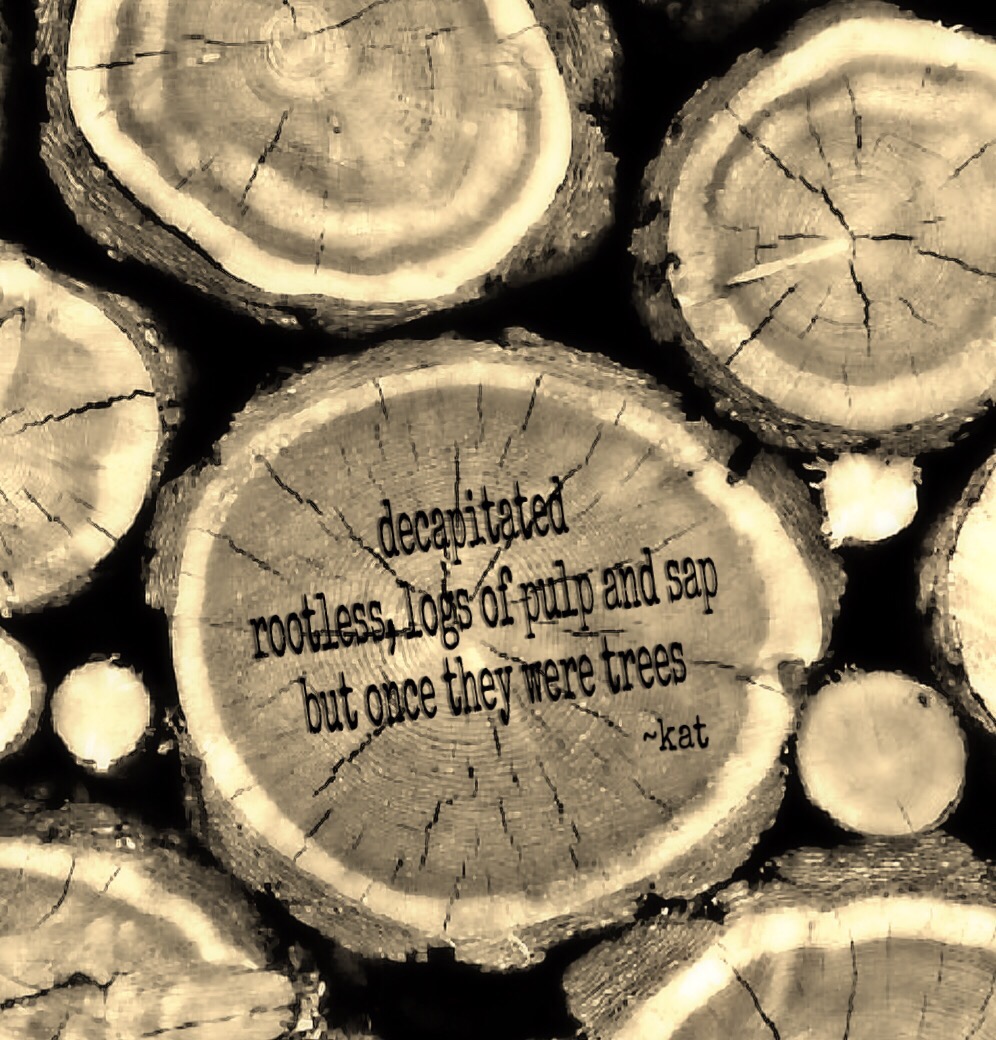
poor marcescent tree
partially deciduous
clinging is futile

~kat