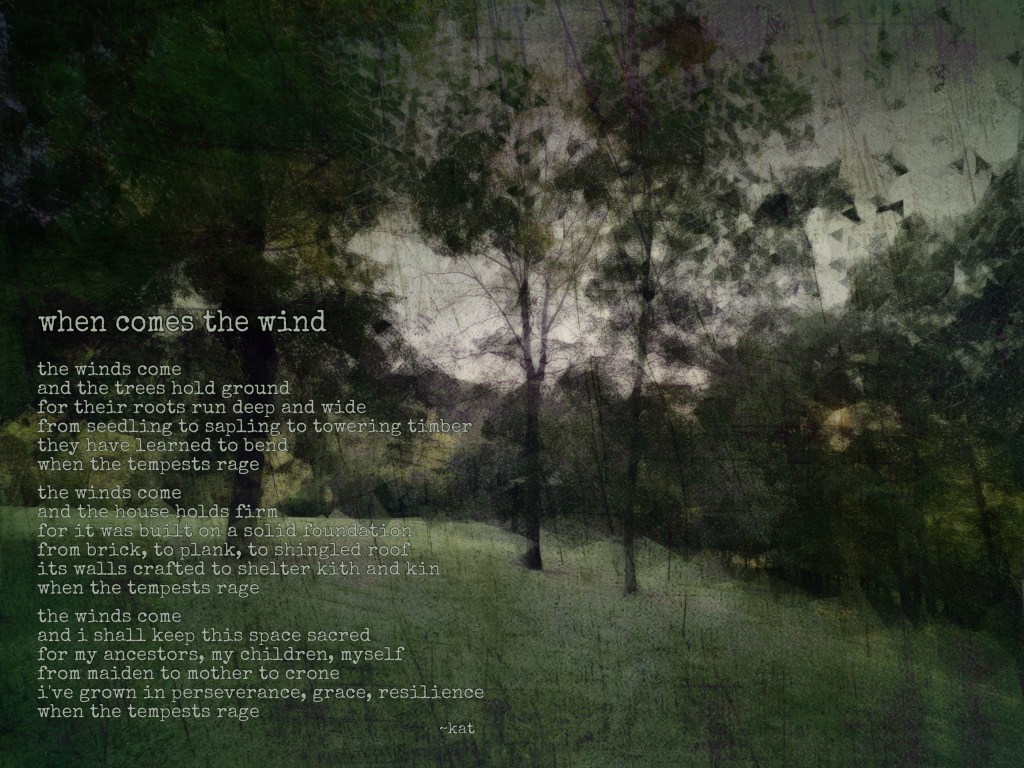
the winds come and the trees hold ground for their roots run deep and wide from seedling to sapling to towering timber they have learned to bend when the tempests rage
the winds come and the house holds firm for it was built on a solid foundation from brick, to plank, to shingled roof its walls crafted to shelter kith and kin when the tempests rage
the winds come and i shall keep this space sacred for my ancestors, my children, myself from maiden to mother to crone i've grown in perseverance, grace, resilience when the tempests rage
I spied a lovely doe today she held my gaze, then leapt away into the brush deep in the hollow I fought the urge to rush and follow to think I’m kind would not be safe we humans are a cruel race I kept my distance glad to see her intuition made her flee run free sweet forest sprite run free it’s best to fear the likes of me as hunters plan their autumn sacks be swift, stay safe, and don’t look back
I don’t mind being encroached upon by the invasive species of these foothills… blackberry brambles hug the long driveway to my house on the hill bursting with fruit I don’t mind that the deer, the squirrels, the rabbits, chickadees, finches, cardinals, and wrens will glean most of this year’s bounty… I don’t even mind sharing with bullish, boisterous bluejays I’ll happily savor my annual handful of luscious sweets, fingers stained a lovely shade of purple-blue how gracious my neighbors are sweetly serenading me, gracing me with visits that take my breath they don’t mind me trudging noisily along the wood’s edge rustling them from their burrows and perches…they don’t mind being encroached upon by me…
So it is easier for you to find all the parts/chapters of my ongoing fiction series, I created a new page that lists all the links. You can check it out HERE!
Unauthorized use and/or duplication of this material without express and written permission from this site’s author and/or owner is strictly prohibited. Excerpts and links may be used, provided that full and clear credit is given to Kat Myrman and Like Mercury Colliding with appropriate and specific direction to the original content.