Category Archives: Haiku

Ebullient – Friday’s Word of the Day

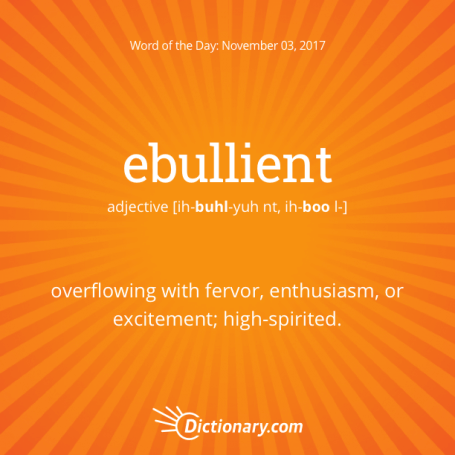
ebullient

Today’s word of the day at Dictionary.com is Ebullient, an adjective that means: overflowing with fervor, enthusiasm, or excitement; high-spirited:  (The award  winner  was in an ebullient mood at the dinner in her honor.);  bubbling up like a boiling liquid.

From Etymology Dictionary Online:

1590s, “boiling,” from Latin ebullientem (nominative ebulliens), present participle of ebullire “to boil over,” literally or figuratively, from ex “out, out of” (see ex-) + bullire “to bubble” (see boil (v.)). Figurative sense of “enthusiastic” is first recorded 1660s.

I found an amusing reference to and use of this word in Jonathan Swift’s book, “Gulliver’s Travels”. Here is an excerpt:

“There was a most ingenious doctor, who seemed to be perfectly versed in the whole nature and system of government. This illustrious person had very usefully employed his studies, in finding out effectual remedies for all diseases and corruptions to which the several kinds of public administration are subject, by the vices or infirmities of those who govern, as well as by the licentiousness of those who are to obey. For instance: whereas all writers and reasoners have agreed, that there is a strict universal resemblance between the natural and the political body; can there be any thing more evident, than that the health of both must be preserved, and the diseases cured, by the same prescriptions? It is allowed, that senates and great councils are often troubled with redundant, ebullient, and other peccant humours; with many diseases of the head, and more of the heart; with strong convulsions, with grievous contractions of the nerves and sinews in both hands, but especially the right; with spleen, flatus, vertigos, and deliriums; with scrofulous tumours, full of fetid purulent matter; with sour frothy ructations: with canine appetites, and crudeness of digestion, besides many others, needless to mention.

This doctor therefore proposed, “that upon the meeting of the senate, certain physicians should attend it the three first days of their sitting, and at the close of each day’s debate feel the pulses of every senator; after which, having maturely considered and consulted upon the nature of the several maladies, and the methods of cure, they should on the fourth day return to the senate house, attended by their apothecaries stored with proper medicines; and before the members sat, administer to each of them lenitives, aperitives, abstersives, corrosives, restringents, palliatives, laxatives, cephalalgics, icterics, apophlegmatics, acoustics, as their several cases required; and, according as these medicines should operate, repeat, alter, or omit them, at the next meeting.”

This made me laugh. No doubt politicians are an odd breed and not much has changed over the centuries!

I hope your weekend gives you reason to be most ebullient!  Until next Friday then, here’s today’s Haiku…

annoying, no end,
the ebullient boasting
of a poor winner

~kat


Too Many

too many to count
souls lost to the greed of men
darkness can’t hide them

~kat

For Sonya’ Three Line Tale Challenge based on this photo by gn dim via Unsplash.


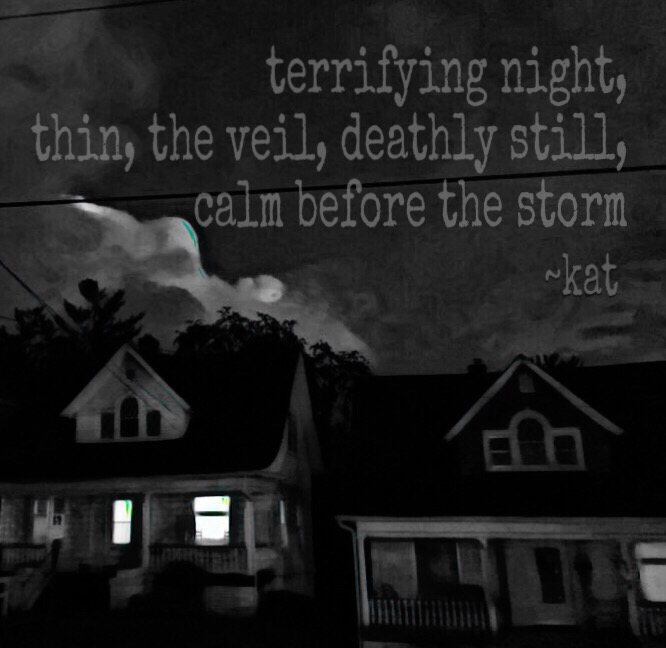
The Calm

terrifying night,
thin, the veil, deathly still,
calm before the storm

~kat

For Ronovan Writes Haiku Challenge, prompt words: Night and Spooky/Terrifying


Preta & Guisard – Friday’s AND Saturday’s Words of the Day

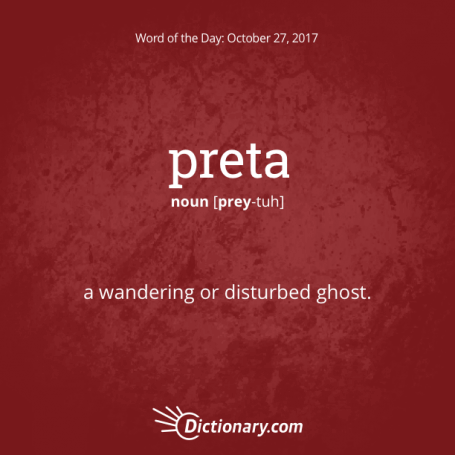
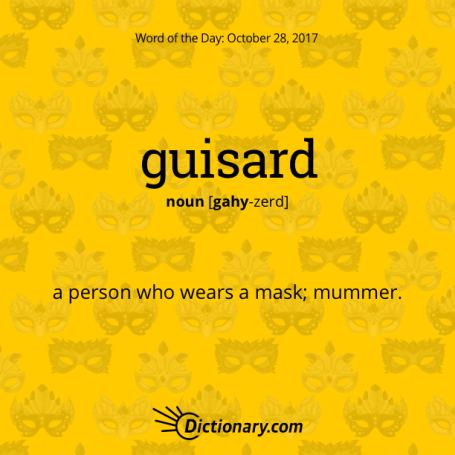
I missed posting yesterday’s word of the day, but as a bonus, today you shall have two lovely words to wrap your brain around! Friday’s word, Preta, a noun from Hindu Mythology meaning a wandering or disturbed ghost. And Saturday’s word, Guisard, a noun the means a person who wears a mask; mummer.

Given the season and impending dark night of all souls hallow, I thought it would be fitting to combine the two in a Haiku. Here’s a bit of history on the two from Dictionary.com:


Preta finds its origins In Sanskrit where e is a long vowel ( it is also transliterated as ē). Hindi grammarians correctly analyzed e as a monophthong replacing an earlier dipthong ai; thus the Sanskrit adjective preta, “gone before, deceased” is from an earlier form, ‘praita’, formed from the adverb and prefix ‘pra’ – “forth” and ‘ita’ – “gone”. Pra- is cognate with the Latin and Greek prepositions and prefixes, ‘prō’/‘pró’ (Greek) and ‘prae’, all of them meaning “before; in front of”. The Sanskrit participle ‘ita’ corresponds exactly with the Latin ‘itum’, past participle is the verb ‘īre’, “to go” and the Greek verbal adjective ‘itós’ “passable”, all from the Proto-Indi-European root ‘ei’, ‘i’ -“to go”. Preta entered English in the early 19th century. From wictionary we learn that: a Preta is a hungry ghost (a supernatural being in Buddhist folklore, the spirit of a greedy person whose divine retribution is to never be sated). How many a weary folk has woken to the first day of November the victim of mischievous antics of Pretas whose quest for sweets was not sated, in the form of TP garlands and raw egg peltings?!


And then there is Guisard, a Scottish and North English word. The first part of the word, guise, in Scotland and northern England means “to appear or go in disguise.” The suffix -ard, occasionally spelled -art, is now used mostly in a pejorative sense for someone who does something habitually or excessively, e.g., drunkard, braggart. Guisard entered English in the 17th century. Soon comes Halloween, when greedy, giddy guisards roam the streets, banging on doors, declaring their mantra, “trick or treat”. A wise somebody will appease these mummers by offering them the sweets they crave lest they transform into scary pretas with a vendetta to settle!

It’s all in good fun of course! An annual ritual that hearkens to an age when the veil between the living and the dead was not quite as pronounced. Our ancestors solemnly remembered and honored the dead more formally; gone but definitely not forgotten. Today we passingly engage this annual ritual in sport, sending our costumed children to the streets for a night of innocent begging. But the thinness of the veil is still there, souls lurking in the shadows, which adds to the drama of this dark, dark time.

These days, I must admit I turn my porch light out, not because I don’t enjoy the onslaught of tiny ghouls and gremlins, but because they terrify my fury housemates. We sit in darkness to the sound of potter-pattering feet outside our door…and entertain the lore of my ancestors, setting a place of honor at my table for loved ones passed. Sometimes I light a candle…or two or three to let them know I remember. I feel their presence ever so near. It could very well be my imagination, but there is something to this ancient dark night of all souls. Something indeed!

this dark night of souls
comes guisards begging for treats
pretas in the mist

~kat


Impenetrable

obstinate castle
stone rook girded by tears
impenetrable

~kat

For Haiku Horizons Weekly Challenge, prompt word, Castle