there is no safe place
no high ground, no border wall
to save us from us
~kat
For Haiku Horizons Challenge, prompt word, safe.
there is no safe place
no high ground, no border wall
to save us from us
~kat
For Haiku Horizons Challenge, prompt word, safe.

I remember the crunching sound of my feet shuffling, scattering pebbles about, as I walked that morning. The sun was barely tree-top high in the sky, the leaves were sparkling, and there was a fragrant breeze; honeysuckle and wild garlic. For whatever reason, I don’t even recall it now, I was distraught. I felt totally alone, unloved and hopeless.
And then my toe smacked into a perfectly honed, heart-shaped stone. As I bent down to pick it up, the sun crested the tops of the trees and I felt its warmth on my back. It occurred to me in that moment, I was not alone and that someone, a Great Spirit, Faeries, the Universe, God (I’ll leave the naming to you), had left it there to stub my toe and stop me in my melancholy tracks. I felt loved. I felt hope. I kept that heart-stone on a window ledge so I could look at it and remember.
Eventually, I was called upon to do the unthinkable; to give my beloved heart-shaped stone away…to someone who loved it as dearly as me, maybe even more.
Now, please don’t be sad for me, dear reader, because on that very day I found three more heart-shaped stones, and another, and several more.
Everywhere I turn I find them now; big, small, shiny, rough, perfectly formed, some with tiny flaws. To some, they are just rocks, but to me, they are undeniably hearts, one and all.
I keep them in my pockets these days, to remember…and just in case I have an opportunity to give one away to someone who needs to know they are not alone, that they are loved, and that there is hope.
If you should ever happen to find a heart-shaped stone of your very own, I hope you’ll remember too.
life to death to life
skeletal fragments turned cold
chiseled stones remembering
love requires letting go
a heart surrenders, knowing
~kat
A haibun/tanka For Colleen Chesebro’s Weekly Poetry Challenge, prompt words, stone and turn.
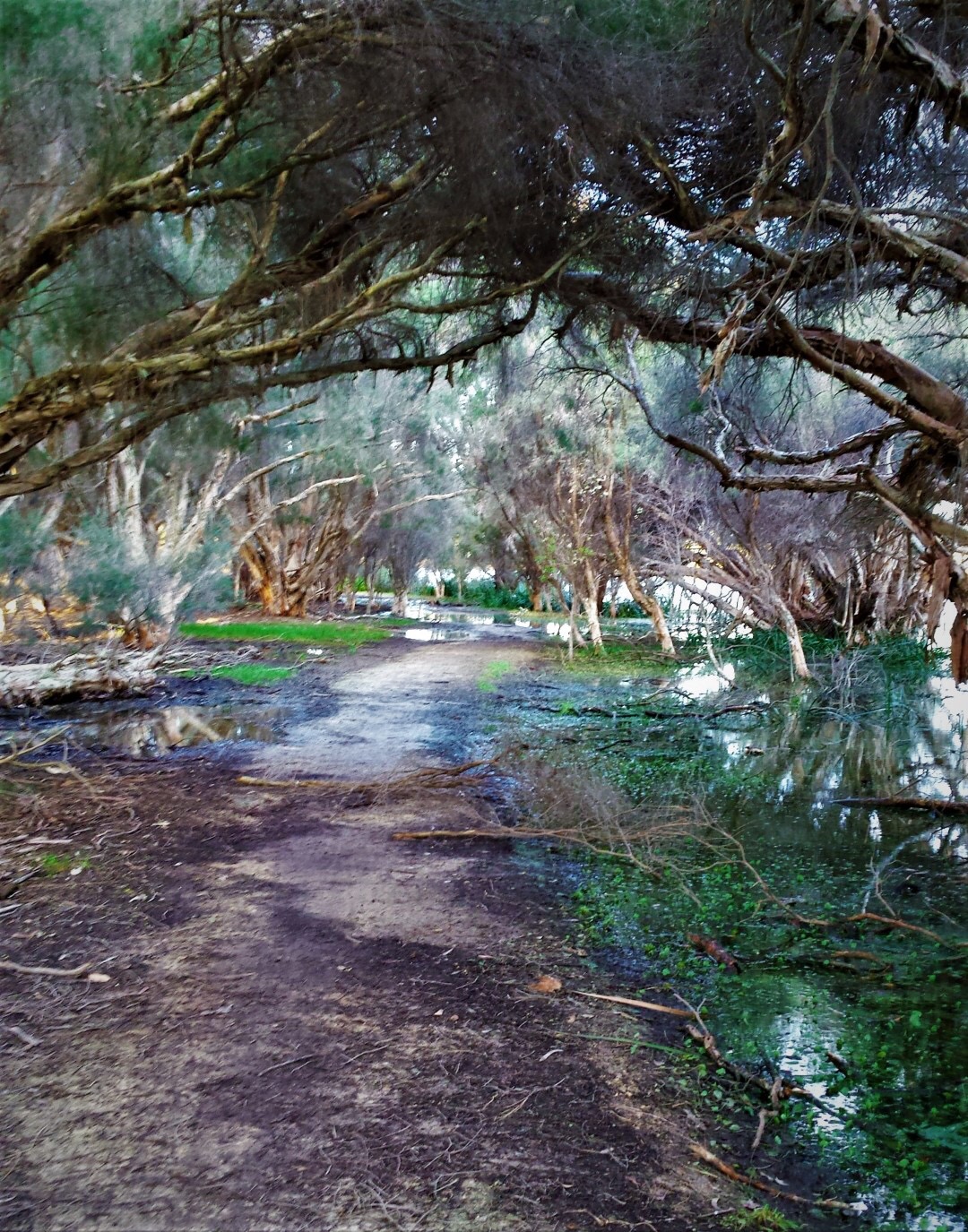
shivering timbres,
shrill cicada crescendos
swell like rain droplets
rain puddle tripping
giddy twirls beneath wet arches
blue goose-bump shivers
misty afterglow
shivering twisted limbs wilt
in rain-drenched hollows
~kat
For TJ’s Haiku Hub Challenge inspired by his mystical photo above and the prompt words, shiver and rain.

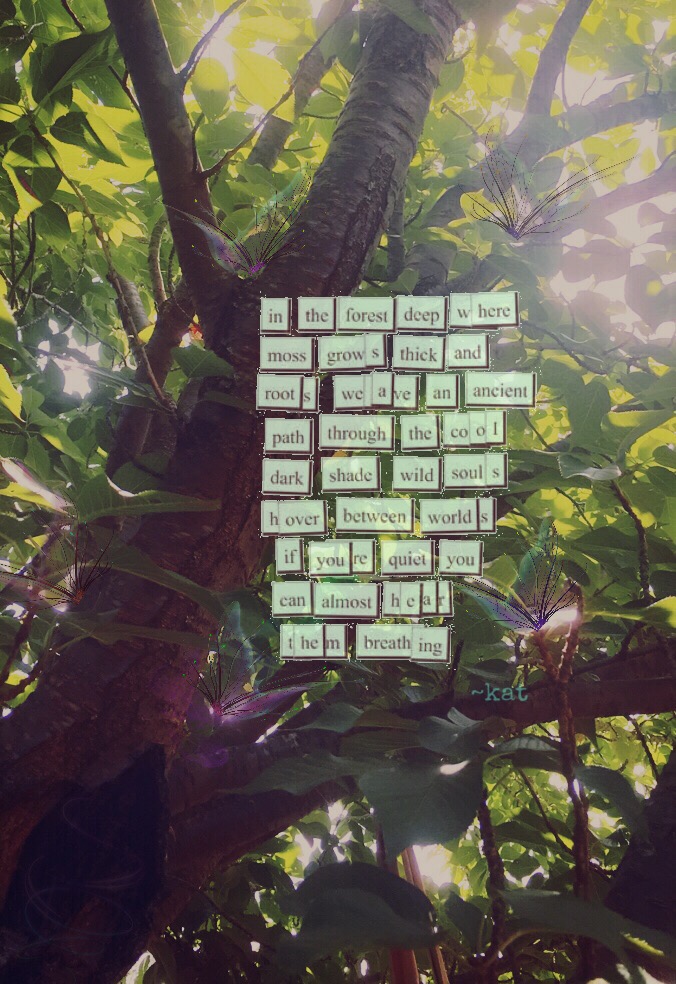
in the forest deep where
moss grows thick and
roots weave an ancient
path through the cool,
dark shade, wild souls
hover between worlds…
if you’re quiet you
can almost hear
them breathing
~kat
Magnetic Poetry – Nature Kit

Some believe innocence is only a casualty of childhood lost, but I know this is not true. Even grown ups cling to wisps of innocence, suffering its loss when it slips away. The only difference is we call it hope.
The hope that deep down all people are decent and good and will do the right thing if given the chance.
The hope that bad things and people eventually pay for the harm they perpetuate.
The hope that people see us for who we are inside, not judging us for our faith, the color of our skin, where we were born, or who we love.
The hope that everything happens for a reason and in the end all things work together for good.
Children aren’t the only ones at risk of losing innocence. And there are many ways to suffer it’s loss. A parent will cushion the harsh blow when their child discovers that there is no Santa Claus, Easter Bunny or Tooth Fairy, by telling them the truth; that those fantastical characters are in fact a mommy and daddy who love them very much and just wanted to make their life special. But who is there to reassure us as adults when the world we hoped in, and believed existed, begins to crumble away?
Some turn to faith, while some look to others to make things right. But even the strongest faith or the greatest savior in the flesh can leave us feeling empty, inconsolable because of the gnawing questions everyone asks in times of lost innocence, lost hope….”How could…Why would…What now…Who can I trust?”
The honest answer, the one we may not want to hear, is that some things can’t be fixed, made right, or restored. Just as a child can’t unknow the truth that Santa is not real, we cannot unknow the reality of the world, with its imperfections and cruelty, once it reveals itself in the light.
But one thing I do know is that the end of the world as we once knew it is not the end of the world. We go on. We always go on, a little wiser perhaps, but hopefully not jaded. Innocence is a bit overrated in my opinion. Hope can be too, when reality is not taken into account. I’ll take truth and light over the alternative any day… even if it hurts.
harmony murmuring
sifts first through sludge and shale
a sight deemed tasteless
where’s the lens filter
to reignite hope’s embers
shell shards spawn the shore
I just don’t think I’m into roughing it
Who likes cookies?
incogitant tweet perhaps,
spoken from privilege
only for a season
you can ask any child
if we could remember
storms, singing in the rain
~kat
A shi sai or ReVerse poem is a summary poem with a single line lifted from each entry of a collection of work over a particular timeframe and re-penned in chronological order as a new poem. Unlike a collaborative poem, the shi sai features the words of one writer, providing a glimpse into their thoughts over time. I use it as a review of the previous week.