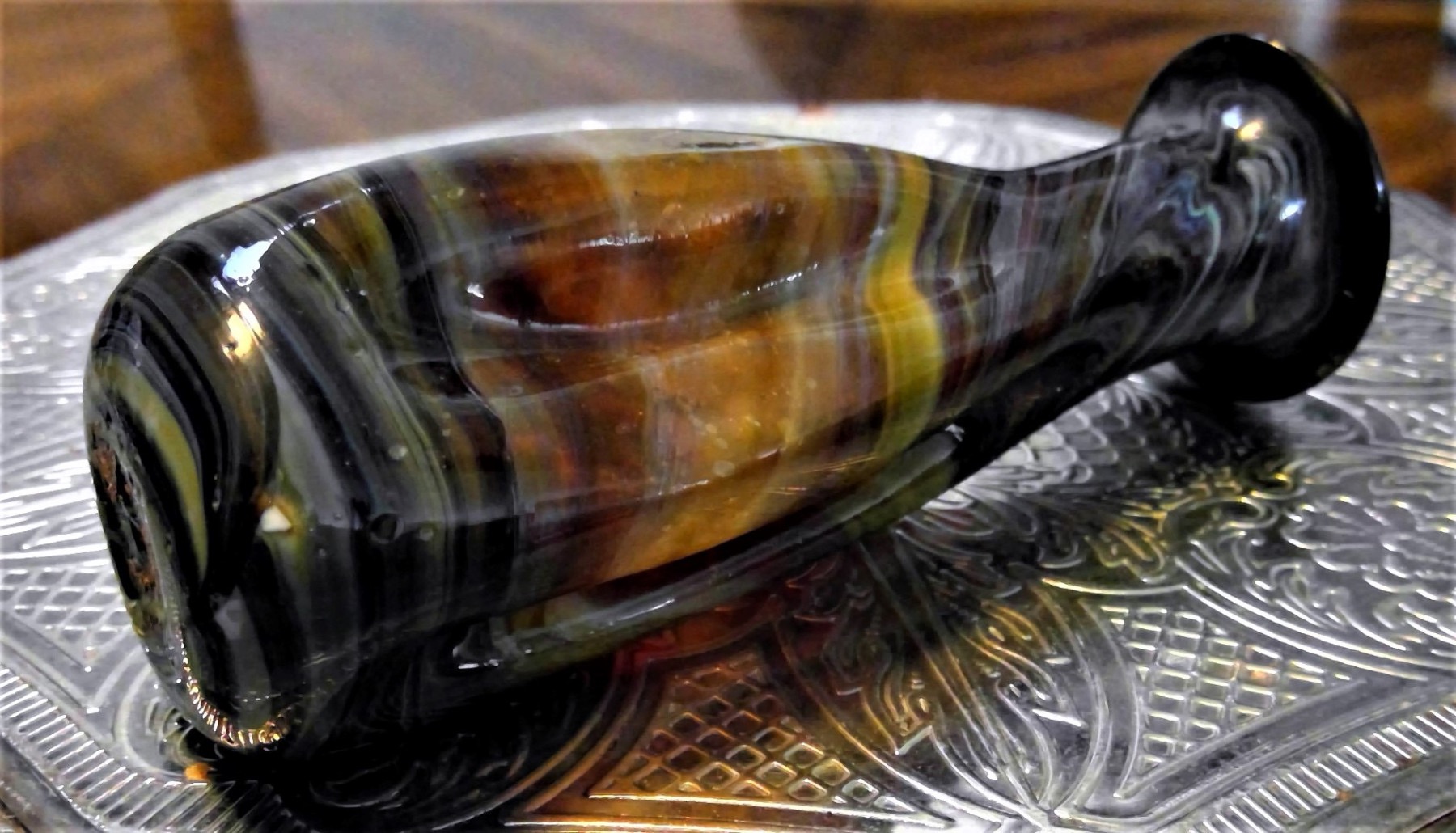
swirl of fired sand
jar once filled with spice and oil
evanescence gone
~kat
For TJ’s Household Haiku Challenge, prompt words, Lost (gone) and Perfume (spice, oil), inspired by TJ’s photo of this ancient Roman vessel.

swirl of fired sand
jar once filled with spice and oil
evanescence gone
~kat
For TJ’s Household Haiku Challenge, prompt words, Lost (gone) and Perfume (spice, oil), inspired by TJ’s photo of this ancient Roman vessel.

Legacy
Since moving from the Midwest to the South some 30 years ago, I have become keenly aware of class and rank and, I’m just going to say it, blatant racism in the United States of America. It is as thick as the honey dripping from a southern belle’s lips when she coos, “bless their hearts.” I was shocked to learn that the southern-born locals, especially here in Virginia “Where the Nation Reunited”, yearn to have one last (un)Civil battle to set things right…the way things shoulda’ been…the way things always had a’ been before the War of Northern Aggression took away their right to own people, and later dared to demand that they allow their lily-white, privileged, progeny attend school with the coloreds. I know my words sound harsh. I mean for them to sound that way. It was a culture shock to me back then, just as the current state of unrest in this country is a shock to some folks now.
Fast forward to the 21st century and it’s plain to see that the bitter divisions we are suffering are nothing new. None of us should be surprised by the ugliness that has been unearthed by this latest battle of Conservatives versus Liberals.
I listen to pundits on tv who wonder how long it will take to undo the damage done in less than a year by politicians who seek to destroy government on the backs of the middle class and the poor, while lining the pockets of the rich, and their own. I’ve thought about it and I don’t expect us to recover anytime soon. In fact, the way I see it, this was just a relapse. Eventually we may slip into remission; the ugly underbelly of our worst devils may crawl back under their rocks. It’s been a sickness raging just under our skin for several centuries now.
And make no mistake, here in the South the Rebs are in no hurry to stop this train. They finally have a hero who talks like they think; mean and spiteful and hateful. With rebel flags flapping in the wind they’re locked and loaded and ready for that do-over to set things right. Those who refuse to learn the lessons of history are doomed to repeat it…and repeat it.
i wasn’t prepared
for the venomous rancor,
lines drawn in concrete,
pompous trumpeter swagger,
all civility be damned
i wasn’t prepared
for the costly price of love;
humanity’s end
~kat
For Colleen Chesebro’s Weekly Poetry Tuesday Challenge, a Haibun/Tanka/Haiku prompted by the words Hate and Pride.
For Ronovan Writes Haiku Challenge, prompt words Painted & Lady.
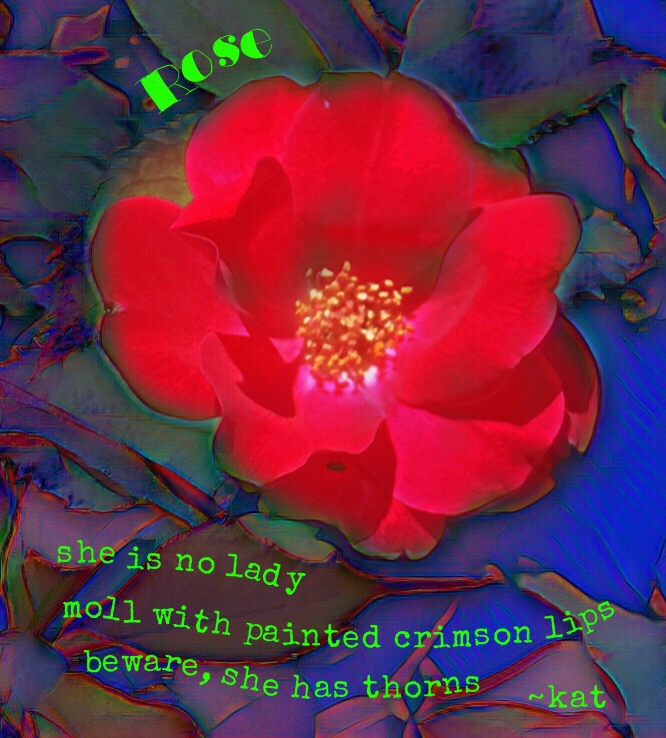
“Rose”
she is no lady
moll with painted crimson lips
beware, she has thorns
~kat
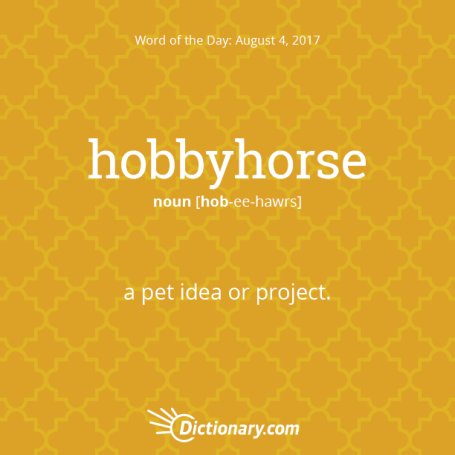
When I think of a hobbyhorse I imagine a stick with a horse’s head or a rocking horse, ridden by children, which is, in fact the second definition for today’s word of the day on dictionary.com. The first definition, a pet idea or project is not something I ever associated with the word hobbyhorse.
A look at the word’s origin tells a different story. According to etymology online the word hobby actually means a “small, active horse,” from hobi short for hobyn (mid-14c.; late 13c. in Anglo-Latin), and was probably originally a proper name for a horse that is now extinct. Hobby as a shortening of hobbyhorse also was used in the “morris horse” sense (1760), or as Dictionary.com states “in the 16th century hobbyhorse meant several things, e.g., a figure of a horse made of wicker worn in morris dances, pantomimes, and burlesques; a child’s toy consisting of horse’s head on the end of a stick or a rocking horse; a horse on a merry-go-round or a carousel in the 1680’s. By the 17th century hobbyhorse developed the meaning “pet project, favorite pastime.” Hobbyhorse entered English in the 16th century.”
Is it just me or does the term hobbyhorse sound a bit redundant? Basically one is saying horse (hobby) horse. But I digress.
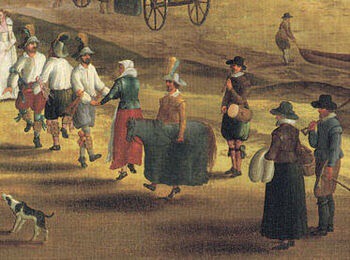
Painting of a hobby horse with Morris dancers beside the River Thames at Richmond, London, c.1620
*Tourney horses- meant to look like a person riding a small horse that is wearing a long cloth coat or caparison (as seen in medieval illustrations of jousting knights at a tourney or tournament)
* Sieve horses – a simpler version of the tourney horse. Known only in Lincolnshire, made from a farm sieve frame, with head and tail attached, suspended from the performer’s shoulders. The performer wears a horse blanket (the kind that includes a headpiece with holes for the eyes and ears) that covers them and the sieve.
* Mast horses – are meant to represent the horse (or other animal) itself. They had a head made of wood, or sometimes an actual horse’s skull was used; it usually has hinged jaws that can be made to snap. The head is attached to a stick about 1 m (3 ft) long. The person acting the creature is covered by a cloth attached to the back of its head; he (or, rarely, she) bends over forwards or crouches, holding the head in front of their own and resting the other end of the stick on the ground. A tail may be attached to the back of the cloth.
And this is only a sampling of the types of hobbyhorses used in Great Britain. In fact many countries and cultures have used a form of hobbyhorse in ceremonial dance, festivals, customs and theatre for centuries. You can read all about them at Wikipedia HERE.
So how did the word hobbyhorse become associated with an obsession? According to Wikipedia the term “hobby horse” came from the expression “to ride one’s hobby-horse”, meaning “to follow a favourite pastime”, and in turn, the modern sense of the term hobby. Makes perfect sense to me! 😉
Of course there is also the literary reference to the word penned by none other than the Bard himself, “Cal’st thou my love Hobbi-horse?” (Translation: A loose woman or strumpet) – William Shakespeare, Loves Labour’s Lost, in 1588. And there is the ‘velocipede’ (sounds like a very fast many-legged slug…the stuff of nightmares!)…also called a ‘pedestrian hobbyhorse’ or ‘dandy horse’. it was a two wheeled ‘bicycle’ that the rider propelled by pushing the ground with each foot alternately. This modern marvel, a forerunner to the modern pedaled version was all the rage in the early 19th century. It was featured in The Gentleman’s Magazine, February 1819.

So there you have it; a glimpse into today’s word of the day. And here’s a little Haiku to bring it all home…
this blogs a hobby
could say, it’s my hobbyhorse
my tack is a pen
~kat

Today’s word of the day at Dictionary.com is a French word: “ballon”. At first I wondered if it was a typo. “Shouldn’t that be ‘balloon’?” I thought. And then I looked at the definition and especially the origin of the word. It all began to make sense. From dictionary.com:
Origin of ballon
Ballon is a French term used especially in ballet, describing a dancer who appears to be floating in the air while executing a jump or other movement, like “His Airness,” Michael Jordan. Earlier English spellings of the word include balonne, baloune, and balloone as well as balloon. The original sense of the word in the early 17th century was “ball,” specifically a large, sturdy, inflated leather ball hit with the arms protected with wooden boards or kicked like a soccerball. By the late 17th century ballon and balloon had developed the meaning “a large globular glass vessel” used for chemical distillation; and by the late 18th century, balloon (thus spelled) also meant “a round, flexible, airtight bag that rises into the air when inflated with heated air or gas.” Balloon becomes the standard English spelling in the late 17th century. Ballon, as a ballet term, entered English in the 19th century.
So, ballon in ballet is about floating on air, and balloons? Well they are floaty orbs, unless they’re filled with water or made of glass. I got the impression that the original balloon was more about its shape than its floating qualities. And then I started to think of round, inflated ballerinas bursting at the seams of their leotards, tutus stretched tight and stiff around their middles, and I couldn’t help but giggle.
Which came first the ballon or the balloon? The latter, of course. Ballon, in ballet, entered the English vocabulary rather late to the dance in the 19th century. We humans had been filling animal bladders and other hollow bulbous things for centuries.
Somewhere between heaven and earth the idea of floating on air became associated with balloons and voila! We now have ballon to help us describe the amazing acrobatic, gravity-defying leaps of ballerinas. Being inflated and puffy not required!
I’m feeling silly today. I best give you my Haiku. Have a great weekend!
suspended, graceful,
the skilled ballon of dancers
defies gravity
~kat