Tag Archives: digital art.

A ReVerse Poem – 14 May 2023

It’s been a fortnight since I did a ReVerse poem. In that time I explored the Elfchen and the Than-Bauk, with a detour into a magnificent spring day! A happy digression. 😊 I must say, I love this ReVerse poem. All those short little micropoetry lines add up nicely. I imagine it is because the brevity of short form forces one to be succinct. At any rate it is a good look back!

I hope this day finds you well and happy. It’s been an overcast damp few days here on Bramlett Mountain, but I can’t complain. Everything is magnificent! Green and lush. How many springs have I rushed through on my way to summer? I am just glad that I am finally noticing the gift of spring. It would have been such a shame to exit this life having missed it! Peace, love, and spring bliss to you! 💚🌷💚


A ReVerse Poem - 14 May 2023

gather ‘round the bonfire
solving the world’s problems
work to live
treasured gifts
idle chitchat
sunlight tendrils streaming through
day fading into night
me, watching you
don’t say, “love you”
you make me wait
how green the earth
my cue to breathe
assuring us all is well, all is well
‘til the page turned
fine lines were real
they were deceived
charming untruths
joy and tears…
mind your business
I could go on
takes a pure heart
funny thing, bliss

~kat

A ReVerse poem (a practice I started many years ago) is a summary poem with a single line lifted from each entry of a collection of work over a particular timeframe and re-penned in chronological order as a new poem. Unlike a collaborative poem, the ReVerse features the words of one writer, providing a glimpse into their thoughts over time.

pink moon

pink moon

bloom
flower moon
I hardly noticed
day fading into night
bright

~kat

I have enjoyed spending a week with the Elfchen. Come Monday looking forward to a new, new poetry form to practice…the Than-bauk! With three four syllable lines in total, easy-peasy right?! Ah, but there is a bit of a twist! Stay tuned! 😊

The Elfchen, known as an “elevenie” in English, the German elfchen (which loosely translates to “little eleven” or “wee eleven”) contains 11 words separated into five lines: one word, then two, then three, then four, then one again. The first line of an elfchen is traditionally some single-word concept, thought, or thing, which the rest of the poem describes—what it does, how it looks, how it makes you feel, whatever strikes your fancy. The last line is often a synonym or some other overarching reflection of your first word.

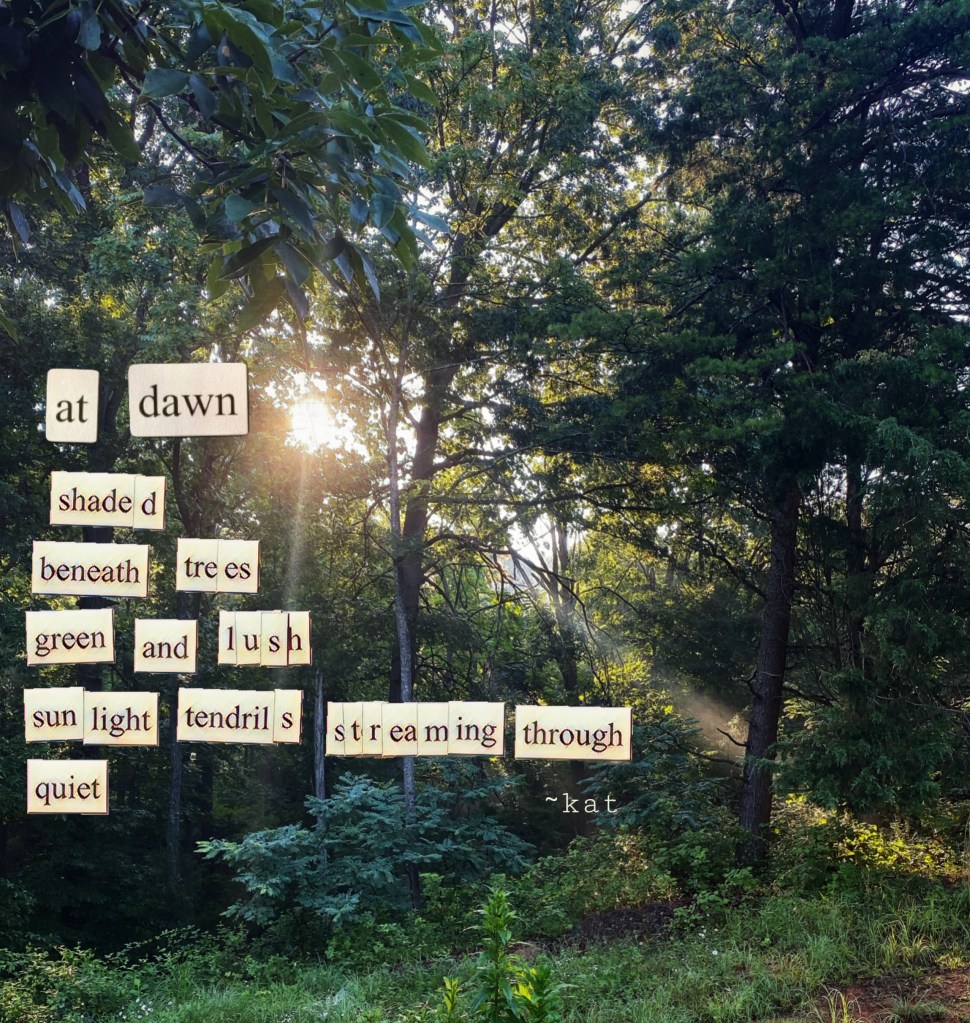
at dawn

at dawn

shaded
beneath trees
green and lush
sunlight tendrils streaming through
quiet

~kat

It’s a Saturday, so I decided to combine poetry forms: an Elfchen using Magnetic Poetry tiles from the Nature Collection because…hey, why not! 😊

An Elfchen is known as an “elevenie” in English, the German elfchen (which loosely translates to “little eleven” or “Elfchenwee eleven”) contains 11 words separated into five lines: one word, then two, then three, then four, then one again. The first line of an elfchen is traditionally some single-word concept, thought, or thing, which the rest of the poem describes—what it does, how it looks, how it makes you feel, whatever strikes your fancy. The last line is often a synonym or some other overarching reflection of your first word.


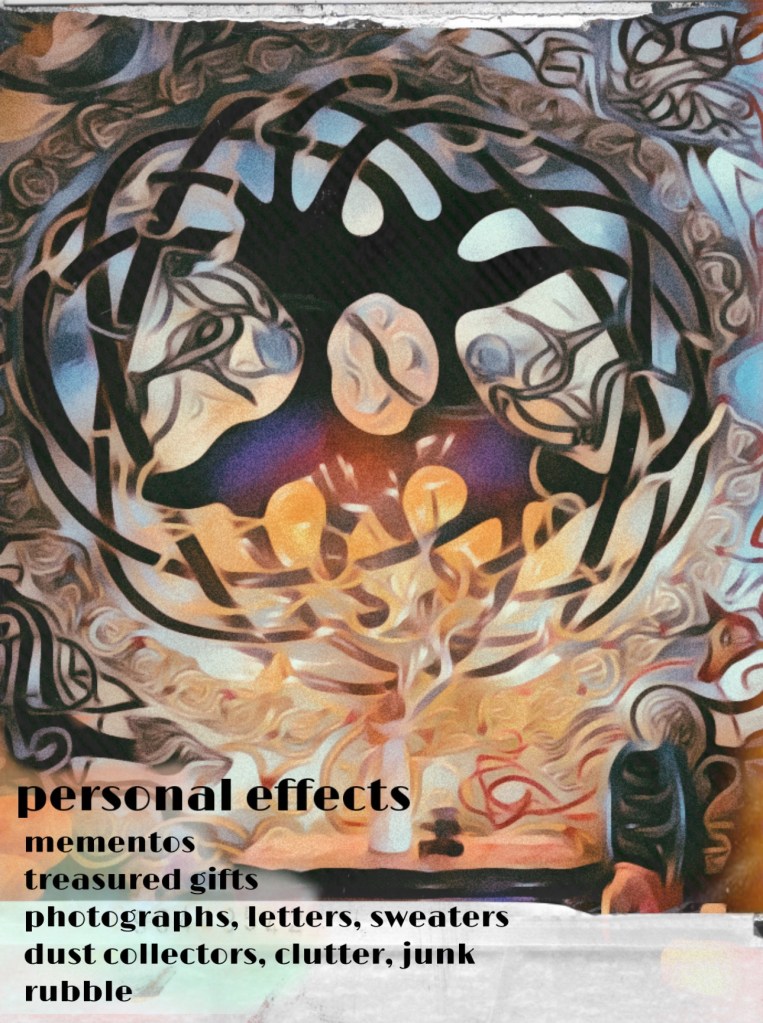
personal effects

personal effects

mementos
treasured gifts
photographs, letters, sweaters
dust collectors, clutter, junk
rubble

~kat

Elfchen

Known as an “elevenie” in English, the German elfchen (which loosely translates to “little eleven” or “wee eleven”) contains 11 words separated into five lines: one word, then two, then three, then four, then one again. The first line of an elfchen is traditionally some single-word concept, thought, or thing, which the rest of the poem describes—what it does, how it looks, how it makes you feel, whatever strikes your fancy. The last line is often a synonym or some other overarching reflection of your first word.


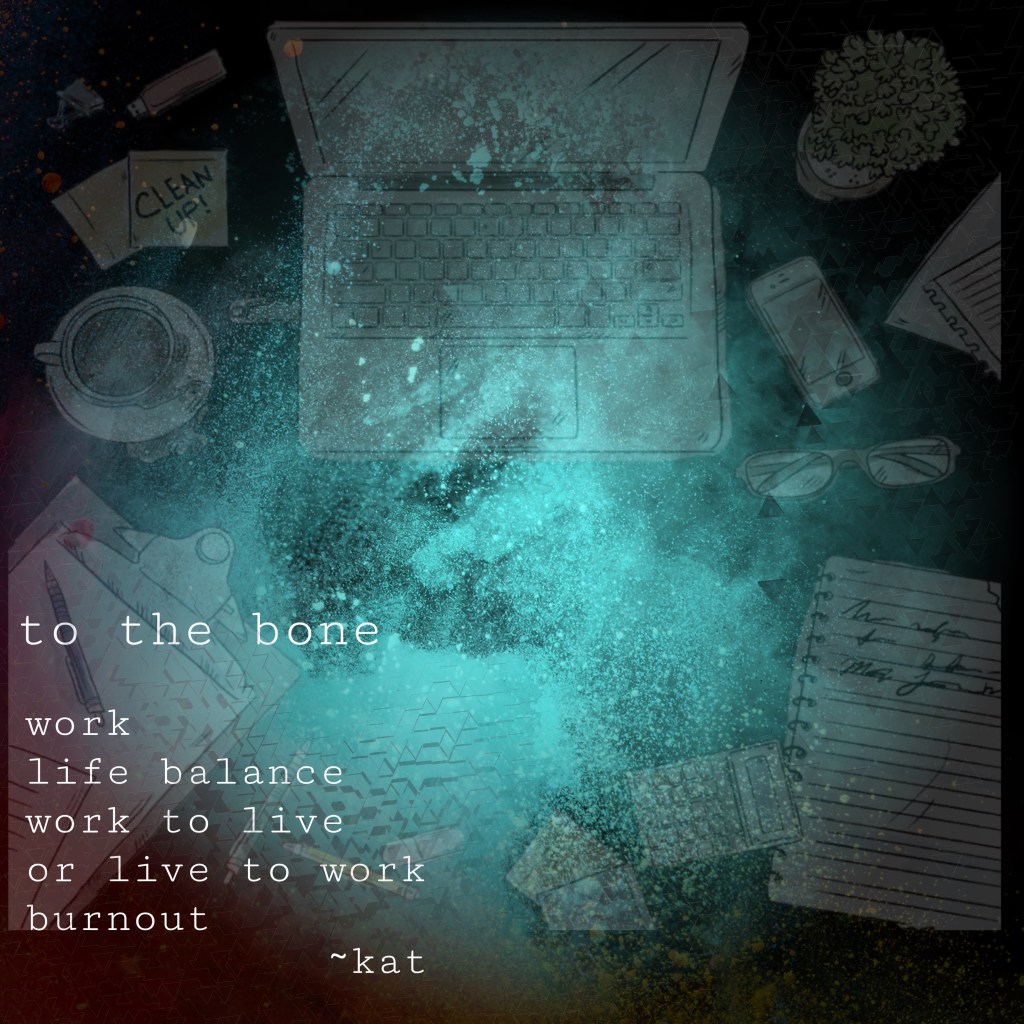
to the bone

to the bone

work
life balance
work to live
or live to work
burnout

~kat

More fun with the Elfchen…

Known as an “elevenie” in English, the German elfchen (which loosely translates to “little eleven” or “wee eleven”) contains 11 words separated into five lines: one word, then two, then three, then four, then one again. The first line of an elfchen is traditionally some single-word concept, thought, or thing, which the rest of the poem describes—what it does, how it looks, how it makes you feel, whatever strikes your fancy. The last line is often a synonym or some other overarching reflection of your first word.