Tag Archives: digital art.

NaPoWriMo 2024 – Day 4 – Lemmings

Does this fellow’s face looking disturbingly familiar? ,,, nah! SMH! 🤣
The Suicide Marches of Lemmings

every four years or so, or eight
lemmings emerge and fall in line
entranced, though certain death awaits
undeterred, they lose their minds

resistant to all reasoning
when truth is plain, as plain as day
pressing on, it’s frightening
to watch them sell their souls this way

and as each one succumbs to lies
their numbers dwindle as they go
over the edge, shutting their eyes
and ears to what onlookers know

how tragic is the lemmings’ fate
as if they never had a choice
deceived, thinking things could be great
they drank the koolaid, lost their voice

~kat

NaPoWriMo 2024 – Day 4 Challenge: write a poem in which you take your title or some language/ideas from The Strangest Things in the World. First published in 1958, the book gives shortish descriptions of odd natural phenomena, and is notable for both its author’s turn of phrase and intermittently dubious facts. Perhaps you will be inspired by the “The Self-Perpetuating Sponge” or “The World’s Biggest Sneeze.” Or maybe the quirky descriptions of luminous plants, monstrous bears, or the language of ravens will give you inspiration.

My inspiration:

The Suicide Marches of Lemmings

NaPoWriMo 2024 – Early Bird Challenge

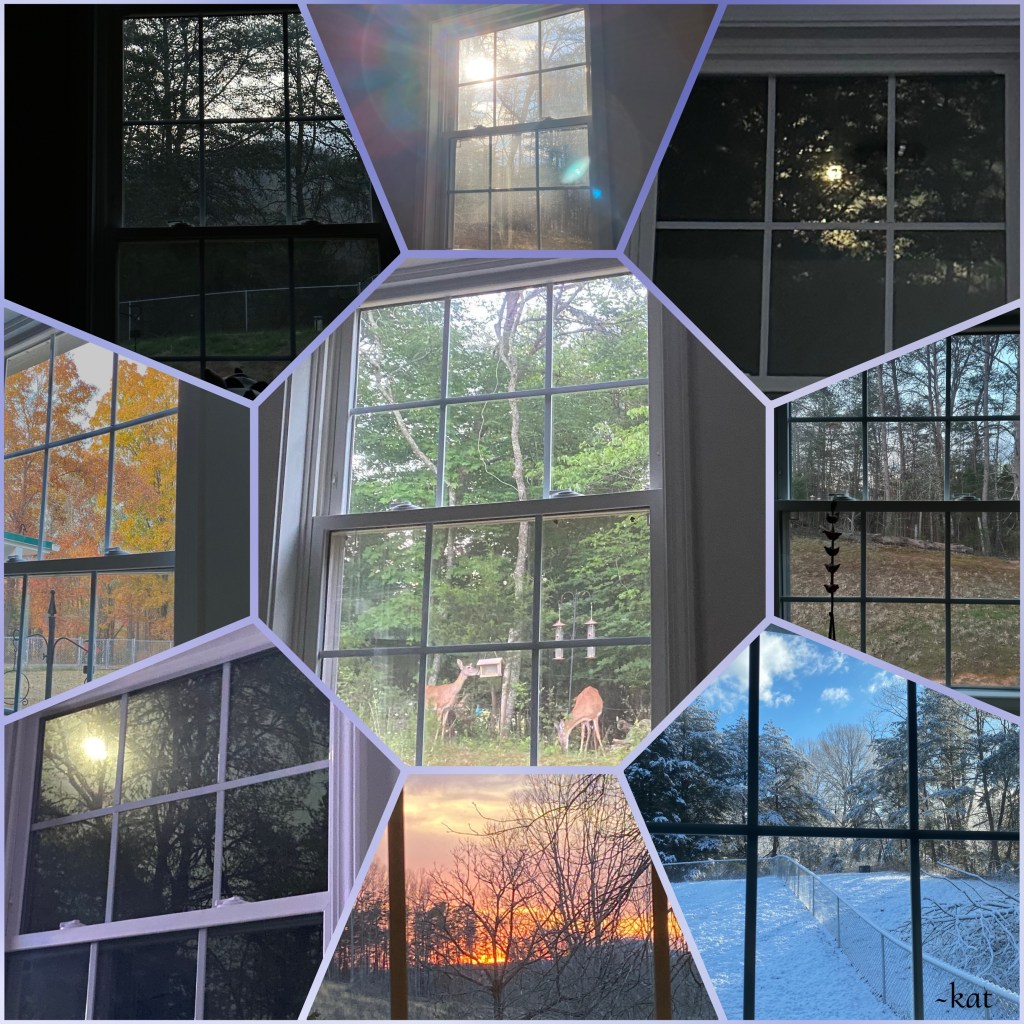
the windows

the windows in this house have never been dressed
they are naked but for the soul of Gaia adorned in the season’s greens, pastels, ambers, gray-blacks, and whites
the moon in her phases, new to full and
the sun, midst a galaxy of stars streaming in

~kat

NaPoWriMo 2024

Early bird Challenge: Write a poem titled either “A [your word]” or “The [your word]” in which you explore the meaning of the word, or some memory you have of it, as if you were writing an illustrative/alternative definition. Word: window.


The Poetry Form:

The Gogyohka by Enta Kusakabe (1983).

• Gogyohka is a new form of short poem that is based on the ancient Japanese Tanka and Kodai kayo.

• Gogyohka has five lines, but exceptionally may have four or six.

• Each line of Gogyohka consists of one phrase with a line-break after each phrase or breath.

• Gogyohka has no restraint on numbers of words or syllables.

• The theme of Gogyohka is unrestricted.


ode to spring

ode to spring

day
light lingering
night
rushing toward the dawn
bud-swelled tree tops pop in white, pink, blue
the breeze
warm and fragrant whispers
it’s time…turn your face
to the sun
bid winter adieu

~kat on the first day of spring 2024

A Pi-Prime 11 poem for this first day of Spring!

Pi digits: 3.1415926535. Each digit in the series corresponds to the syllable count for each line starting with 3 for the poem’s title.


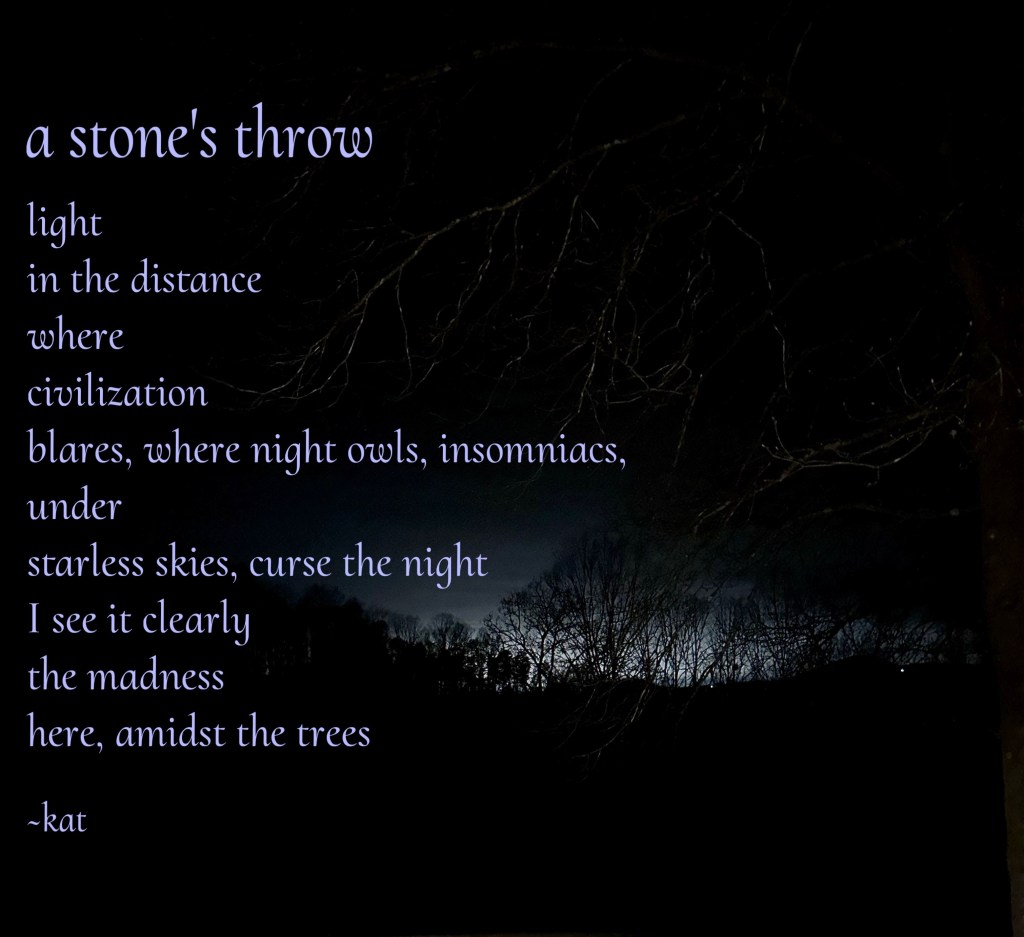
a stone’s throw

a stone’s throw

light
in the distance
where
civilization
blares, where night owls, insomniacs,
under
starless skies, curse the night
I see it clearly
the madness
here, amidst the trees

~kat

A Pi Prime-11 poem is an 11 line poem based on the first 11 digits of Pi with syllable counts for each line based on those digits. The first line is a 3 syllable title. (3.1415926535)


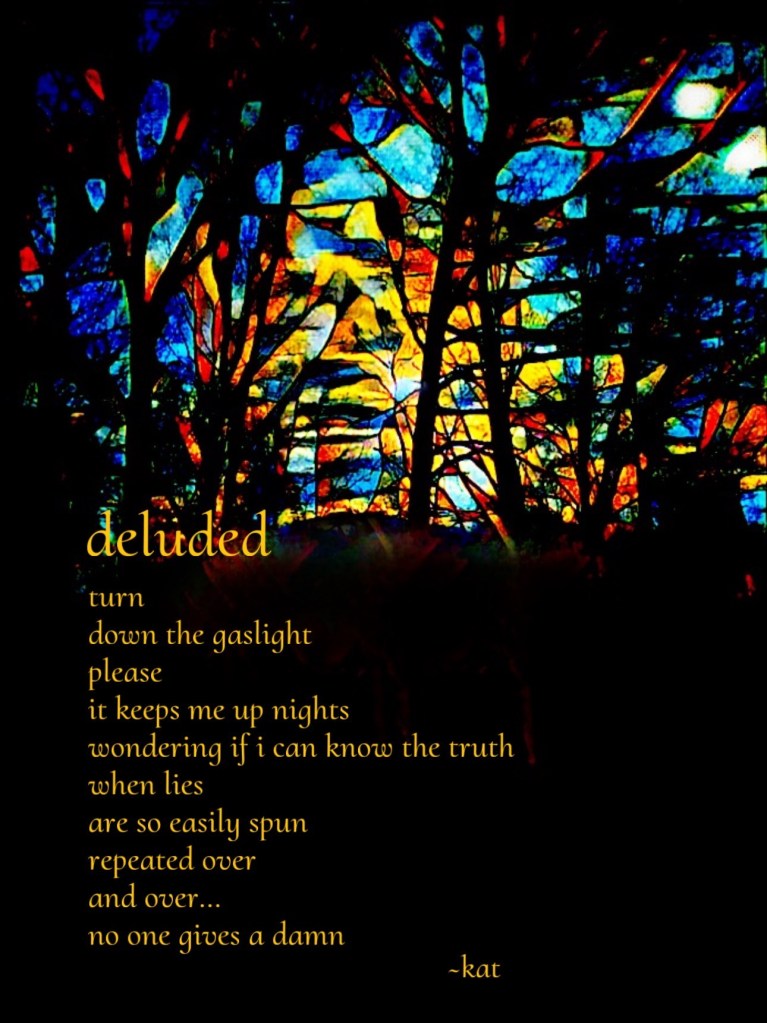
deluded

deluded

turn
down the gaslight
please
it keeps me up nights
wondering if i can know the truth
when lies
are so easily spun
repeated over
and over…
no one gives a damn

~kat

It’s March, and geeky me loves a good Pi base when writing a poem.

Here are a few digits of Pi (π).

3.1415926535

For this poem I decided to write an 11-line poem matching the syllable count for each line with the digits of Pi. The 3. is of course the title set apart by the period separating it from the series that follows. And you may have noticed that the line count is 11…a prime number. 😊Im calling this form Pi-Prime. Geek out!