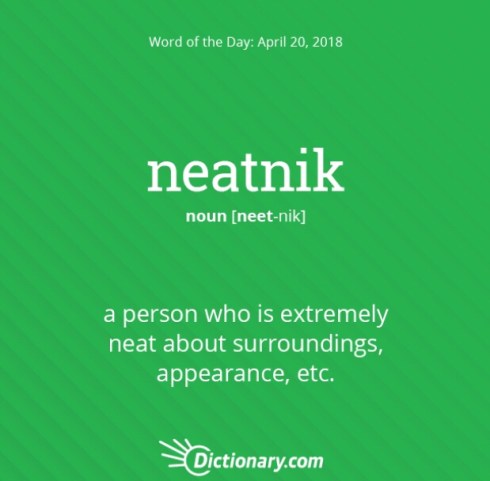
Today’s word of the day at dictionary.com is neatnik. Neatnik is a slang word that means a person who is extremely neat about surroundings, appearance, etc. It originated, according to dictionary.com, in opposition to the word beatnik,defined as a scruffy, unshaven member of the “beat” generation (coined in 1958). The common element in both words is the suffix -nik. -Nik is a Yiddish term Slavic in origin. Its meaning is similar to the English suffix -er as in doer, thinker, dancer, etc. Its use denotes a person associated with a specified thing or quality.
Words with the suffix -nik gained popularity in the mid to late 1960’s when the Soviet Sputnik, the worlds first man-made satellite, came on the scene. By definition, a sputnik is a person (or thing) who travels with you on a path (put)* – in other words, a traveling companion. During this time there seemed to be no end to the new words (often derogatory in nature) that were coined using this suffix.
Of course there is our word of the day, NEATNIK, and its cousin, BEATNIK. And there were these iterations that you might recognize:
KAPUTNIK/FLOPNIK (1957), failed U.S. satellite attempt;
MUTTNIK (1957), Soviet satellite with dog aboard;
PEACENIK (1963), originally, opponent of the war in Vietnam;
PROTESTNIK (1965), protester against the war in Vietnam;
REFUSENIK (1975), Soviet Jews denied emigration, and also (1983), one who refused to obey orders as a form of protest;
NOSHNIK, one who likes to nosh (Yiddish for ‘eat snacks’); STRAIGHTNIK, a heterosexual; FILMNIK; JAZZNIK; FOLKNIK; BACHNIK; FREUDNIK; (definitions self explanatory)
BUSHNIK, admirerers of George Bush;
NOGOODNIK, a no-good person;
KIBBUTZNIK, a person who lives on a kibbutz;
BEARDNIK, a person with a beard;
SICKNIK, a sicko; a person who is perverse or mentally disturbed;
NUDNIK, a person who is very annoying; a persistent nag.
And of things political in Russia:
RASKOLNIK (1723), a dissenter from the national Church in Russia;
CHINOVNIK/TCHINOVNIK (1877), in Tsarist Russia, a government official, a civil servant, especially a minor functionary, a clerk;
NARODNIK (1885), ‘member of the (common) people,’ a supporter of a type of socialism originating amongst the Russian intelligentsia in the late 19th century and which looked on the peasants and intellectuals as revolutionary forces; a Russian populist. In extended use: a person who tries to politicize a community of rural or urban poor while sharing their living conditions; the name by which pre-Marxist Russian socialists are now generally known;
KOLKHOZNIK (1955), a member of a collective farm (a kolkhoz – 1921) in the U.S.S.R.
Here’s a a link to Wikipedia and an exhaustive list of all things -nik. Oh yes, there are more!
Just in the nick of time, 😉 here is a short three line verse (that is not a proper haiku, though it follows the 5-7-5 syllable rule) to put today’s word of the day to rest. What word would you coin using the suffix -nik? It would be a shame to let such a versatile suffix go to waste! 😊
when a neatnik is
the roommate of a beatnik
it’s an odd coupling
~kat

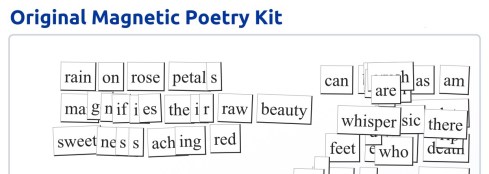 rain on rose petals
 eternity’s embrace
 innocently charmed
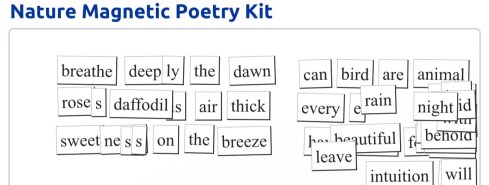 breathe deeply the dawn







 like mercury colliding...