Category Archives: Poetry

April Poetry Month – A Poem a Day #13

Happy Poetry Month this 13th day of April! Today’s poetry form, the Sijo originates from Korea and like its cousins, the haiku and tantra, is comprised of three lines. Each line should have 14-16 syllables, pausing in the middle, the first half containing 6 to 9 syllables with the balance in the second. A Sijo may be narrative or thematic. It develops in three parts: introduction of a situation or problem; development or “turn” in line two; and resolution in the third, often employing a twist or surprise in the first half of the line. Sijo is strongly based in nature and may take on religious or metaphysical themes as well. Unlike haiku, sijo relies heavily on the use of metaphors, symbols, puns, allusions and other word play. Some modern print restrictions may show a sijo in six lines.

I take my inspiration today from an amazing “volunteer” tomato plant. I found it last summer, thriving in the middle of my compost heap. I am not a gardener. I barely knew what to do with it once I found it. But despite my inadequacy, Nature saw fit to provide me with a dozen or so plump tomatoes.

Nature has a way of surprising us with her wild chaotic unruliness. She has been sustaining life for eons, long before the first human thought to contain her in tidy rows with hoe in hand. It’s comforting to those of us who tend to go with the flow to know that Nature has our back…and a few tomatoes to spare.
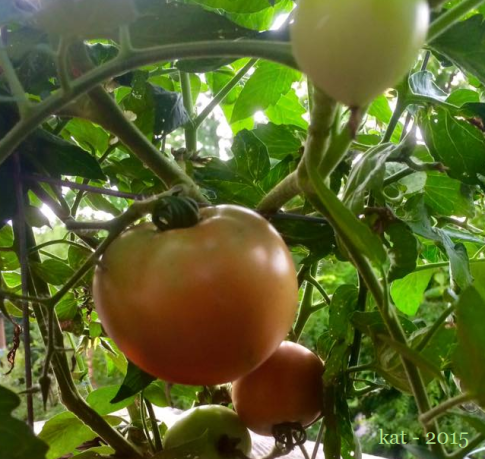
tomatoes

This is an actual photo of my wild tomatoes from Summer 2015!

Nature’s Garden

Gardeners, who fancy their thumbs green, primp and prune and toil
Sowing seeds, midst fussy plots of weeds, their empty plates to fill.
My garden thrives in a compost heap, vines bursting tomatoes!

kat ~ 13 April 2016
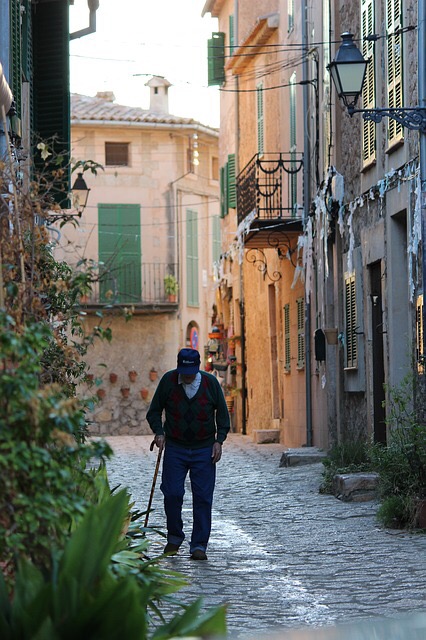


Walking Stick – Haiku

Photo Credit: Pixabay.com

Softly the raindrops
Mimic grandpa’s walking stick
I remember when

kat ~ 12 April 2016

This Haiku is in response to TJ’s Household Haiku Challenge – prompt words “walking stick”. Read other haiku or enter your own HERE.


Life Path Haiku

IMG_4340

Life & Path

Bumpy is the path
to those seizing life fully
suffer no regrets.

Their paths collided
as soulmates spanning life times
promises to keep.

I love life
each twisty turny
path to bliss.

kat ~ 12 April 2016

A few haiku in response to RonovanWrites Haiku Challenge prompted by the words: Life & Path. To read more or enter your own, click  HERE.


April Poetry Month – A Poem a Day #12

It is day 12 of Poetry month. Today’s poetry form is all about the number 12. Developed in 12th century Japan, it is a variation of the Haiku.  But instead of three lines in 5-7-5 syllable sequence, it contains four lines of 12 syllables each, pausing mid-line after 7. Called the Imayo, this lyrical form is often employed in Kabuki Japanese theatre, and is associated with the type of song that requires recitation in a high pitch.

Here is the breakdown of an Imayo poem: 4 lines; each line 12 syllables broken by a pause after the 7th syllable.


Parched

Rain settles on parched soil, pooling in puddles,
never to quench thirsty roots, darkness imprisoned.
Truth settles on shuttered minds, spinning in sound bites,
never to be enlightened, prisoners of fear.

kat ~ 12 April 2016


April’s Poetry Month – A Poem a Day #11

crazycat

Photo Credit: pixabay.com…It’s been a day!


Happy…happy? Monday? Sometimes Mondays are…MONDAYS! Oh I’m being polite. Sometimes Monday’s are a BITCH! Today was one of THOSE Mondays!

But I made a commitment to try a new poetry form each day this month, and so I shall! I give you the “Lai”. It’s French for “Lai”. At least that’s what my translator says. Original eh?!

The Lai is at least one stanza of nine lines with 2 rhymes between lines “a” and “b”. The rhyme sequence is: aabaabaab. And just to make it interesting, the “a” lines have 5 syllables and the “b” lines have 2 syllables. Got it?

It’s a challenging little form. If you’re adventurous, there is a variation called the Lai Nouveau with similar rhyme sequences, 16 lines and repeating lines! Yikes! I think I’ll save that for a day when I have a brain! Today all I got is a lai poem about a lai!

The Lai

This form is called Lai
one stanza, nine lines
Let’s see…
It follows strict rhyme
Line “A” rhymes six times
“B” three
“A” syllable’s five
Two “B”
A challenge to try
This I can’t deny
Oh me!!!

kat ~ 11 April 2016
(I’m even more confused!!!!)