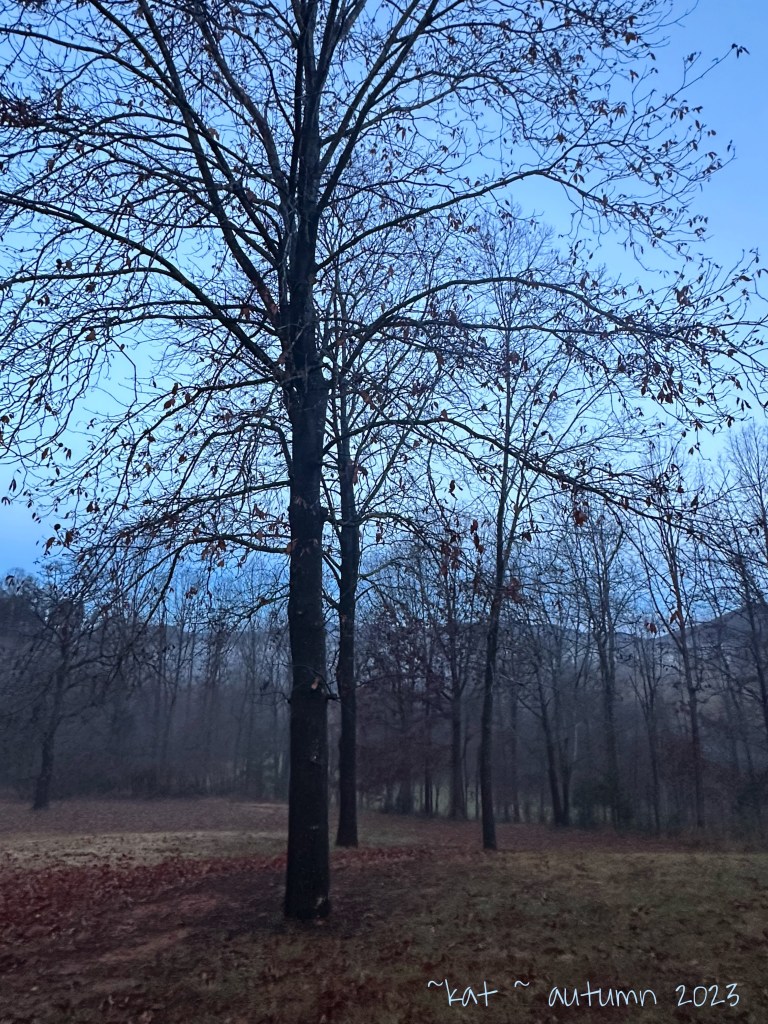
day light lingering night rushing toward the dawn bud-swelled tree tops pop in white, pink, blue the breeze warm and fragrant whispers it’s time…turn your face to the sun bid winter adieu
~kat on the first day of spring 2024
A Pi-Prime 11 poem for this first day of Spring!
Pi digits: 3.1415926535. Each digit in the series corresponds to the syllable count for each line starting with 3 for the poem’s title.
on the cusp of spring when the world is damp and bleak when tall tree limbs stretch toward the heavens stripped bare by the fierce nor’easters of winter their brittle fingers clutching air against the gray I wonder what if winter hangs on and spring never comes? how easy it is to teeter on the edge, weary from long, dark nights, from the frigid nip of ice-laced wind against my face chilling me to the bone how silly of me to think it
spring always comes
as if on cue the song of peepers from the edge of a nearby creek echoes through the mist snapping me out of all doubt settling my wild musing reassured now, as if… and I think, I just may have a few more springs in me left until winter wraps me in eternity just a few more
I feel it in my bones hours before the first drop when the sky floods gray and heavy, my knees scream my back aches and my hair becomes a web of straw clinging to my head…my thought process grows sluggish…and I think the very best I can manage is a nap, a very long nap in fact wake me up come spring when the rain is sweet and cool not this bone-chilling deluge that drenches fallen leaves grinding them into loam tree limbs overhead stripped bare, unable to shade the carnage below oh that it would snow, this season in between has lost its charm the letting go, the letting go… to death…I feel it in my bones
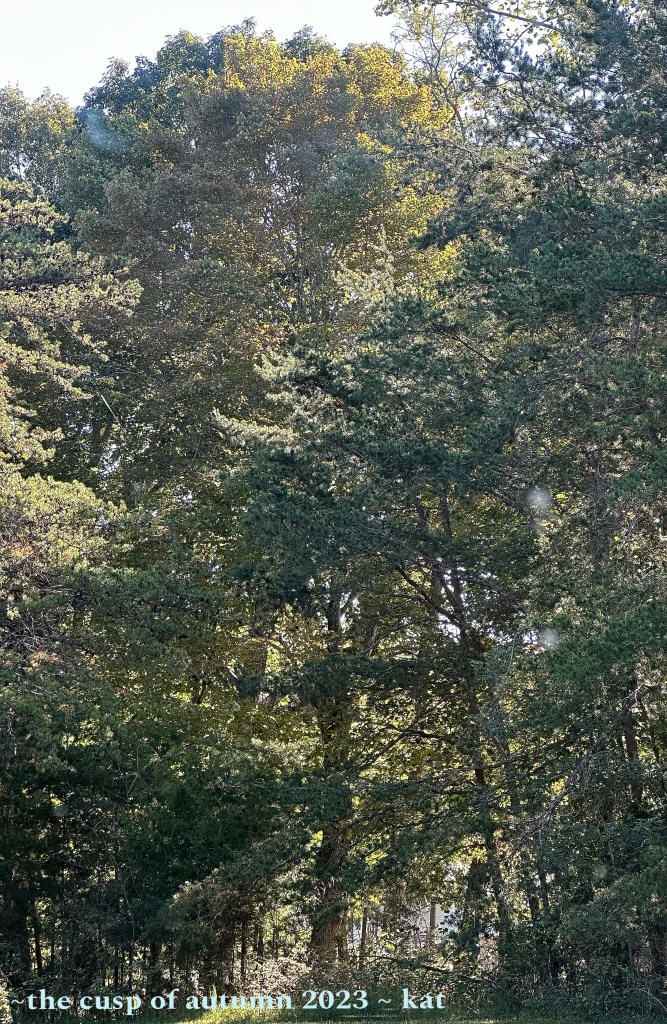
i can almost see the neighbors now their white-washed porch and blue metal roof, the brown-white marbled coats of their horses grazing along the perimeter, just beyond the thinning tree barrier between us trees still green with life, slowly fading, tip tops aglow in shades of amber and rust empty nests teetering like bristly blobs in the wind, nestled in nooks high above the bustle below at long last, autumn has settled in for a spell season of bonfires, apple cider, pumpkin spice, sweaters season of letting go, of gleaning what we’ve sown and offering what’s left back to the earth and sky I can see the neighbors now as the air grows chill as winter looms close and days grow dark as the veil grows thinner…thinner still it’s comforting you know, to remember that I am not…that we are never truly alone i see you…i see you
So it is easier for you to find all the parts/chapters of my ongoing fiction series, I created a new page that lists all the links. You can check it out HERE!
Unauthorized use and/or duplication of this material without express and written permission from this site’s author and/or owner is strictly prohibited. Excerpts and links may be used, provided that full and clear credit is given to Kat Myrman and Like Mercury Colliding with appropriate and specific direction to the original content.