
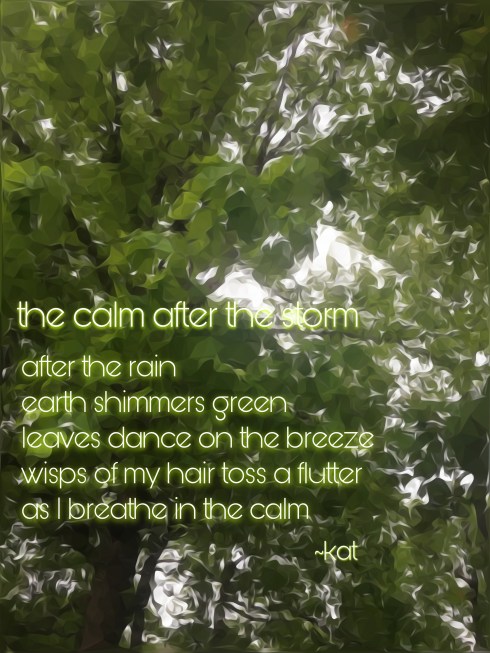
the calm after the storm
after the rain
earth shimmers green
leaves dance on the breeze
wisps of my hair toss a flutter
as I breathe in the calm
~kat
A Gogyohka for today. What a lovely day it is! Peace to you! ❤️
the calm after the storm
after the rain
earth shimmers green
leaves dance on the breeze
wisps of my hair toss a flutter
as I breathe in the calm
~kat
A Gogyohka for today. What a lovely day it is! Peace to you! ❤️
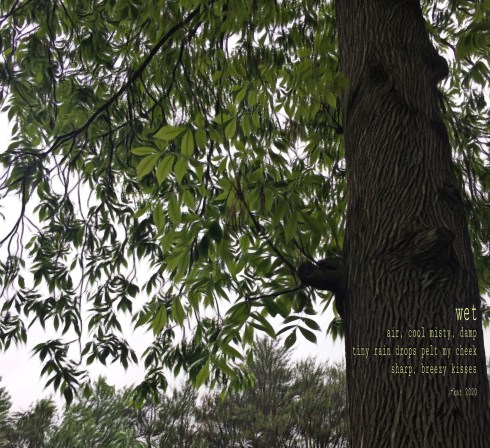
wet
air, cool misty, damp
tiny rain drops pelt my cheek
sharp, breezy kisses
~kat 2020
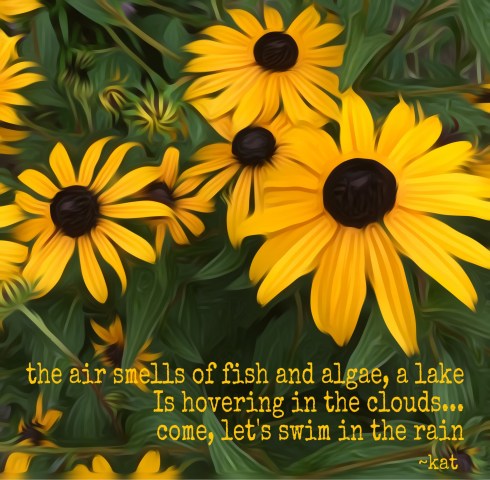
the air smells of fish and algae, a lake
is hovering in the clouds…
come, let’s swim in the rain
~kat
Kimo poems are an Israeli version of haiku. Apparently, there was a need for more syllables in Hebrew. That said, most of the rules are still familiar:
• 3 lines.
• No rhymes.
• 10 syllables in the first line, 7 in the second, and 6 in the third.
Also, the kimo is focused on a single frozen image (kind of like a snapshot). So it’s uncommon to have any movement happening in kimo poems.
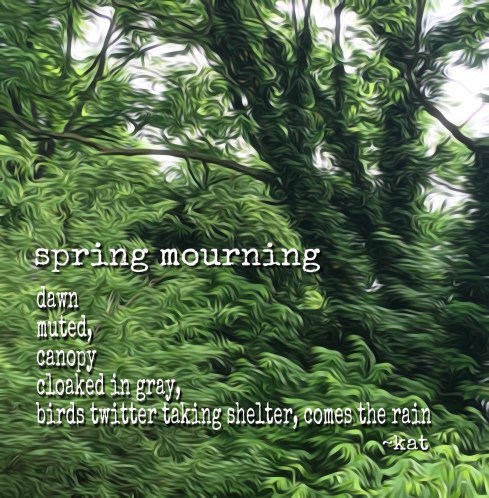
spring mourning
dawn
muted,
canopy
cloaked in gray,
birds twitter taking shelter, comes the rain
~kat
Poetry form for the month of May: Tetractys/5 lines/syllable count 1-2-3-4-10.






 like mercury colliding...