too soon
she blushes
midsummer flush
in a rush, longing for
autumn

~kat
Cinqku
The “cinqku” is a new Tanka analogue; a seventeen syllable cinquain that assimilates as much as possible from the Japanese haiku and Tanka traditions into the English poetic tradition.
Form Type: Syllabic Origins: American Creator: Denis M. Garrison Number of Lines: 5 Rhyme Scheme: Not Applicable Meter: Not applicable
Rules 1. A strict syllable count (2,3,4,6,2) making 17 syllables on 5 lines
2. No title
3. Tanka style free diction and syntax
4. No metrical requirements
5. A turn that may be similar to kireji or a cinquain turn.
Cinqku’s can be linked. A linked sequence may have a title.
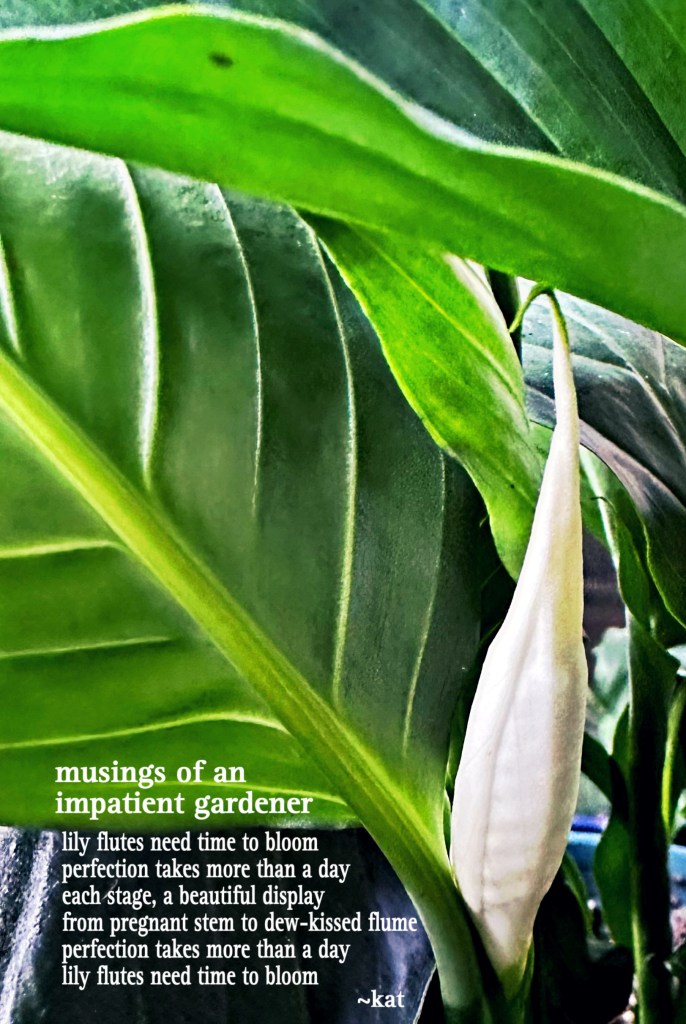
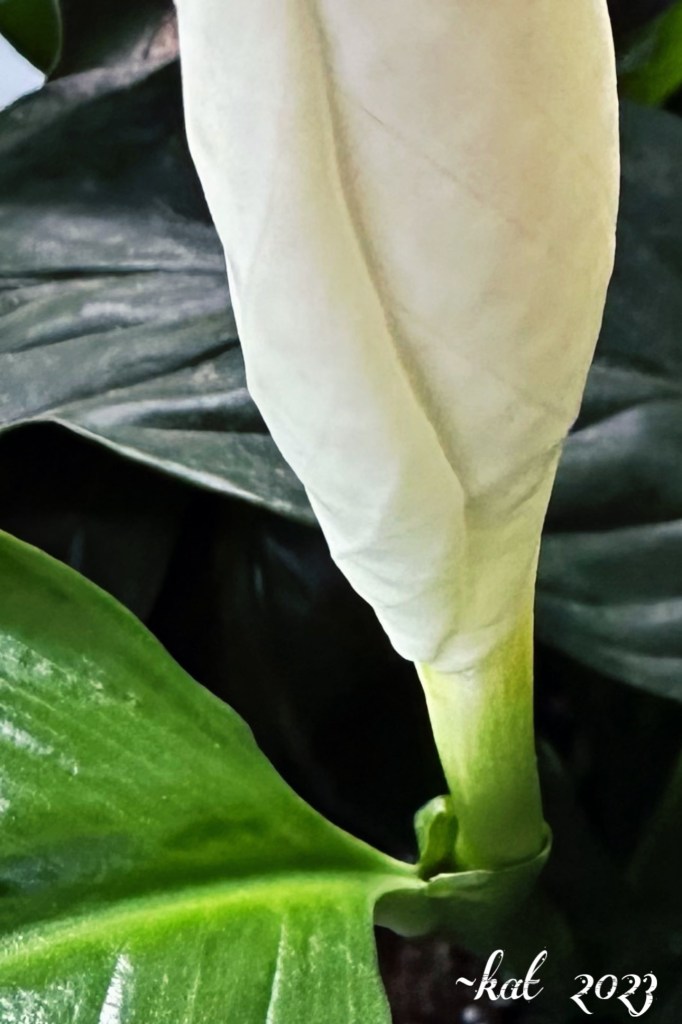
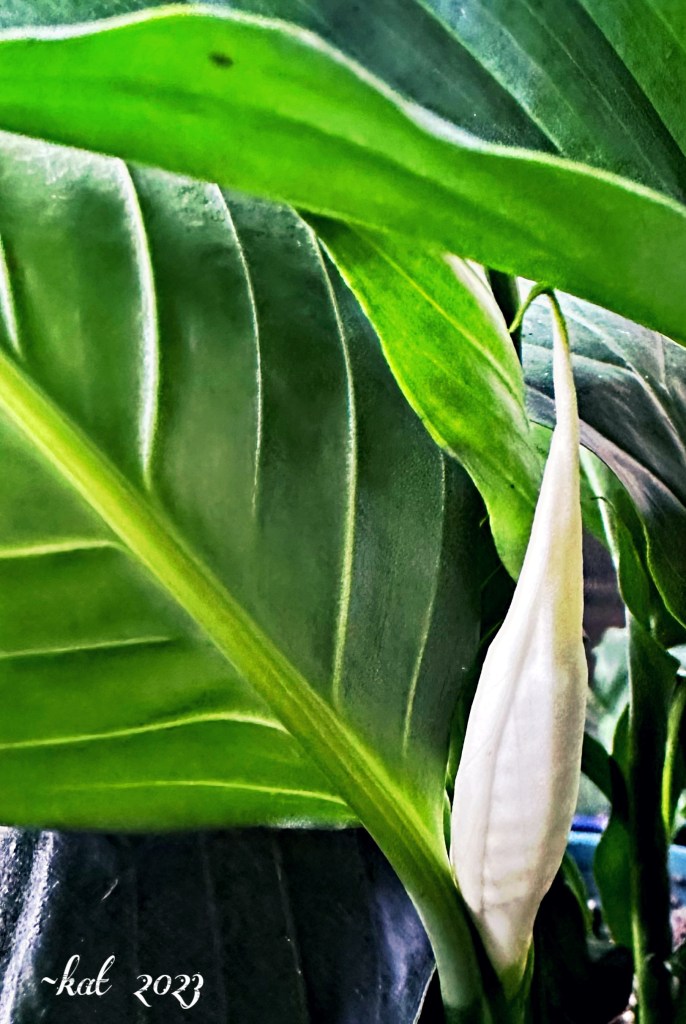
lily flutes need time to bloom perfection takes more than a day each stage, a beautiful display from pregnant stem to dew kissed flume perfection takes more than a day lily flutes need time to bloom
~kat
The Biolet
The biolet was invented by the Brazilian poet Filinto de Almeida and first appeared in print in his book Lyrica in 1887. It is a six line poem where the first two lines are repeated as the last two lines, however in reverse. The rhyme scheme is ABbaBA (with the capital letters representing the repeated lines). Most of Almeida’s original biolets in Portuguese were in iambic tetrameter (8 syllables), but you could also try iambic pentameter (10 syllables), iambic hexameter (12 syllables), and unmetered lines of random lengths as well.
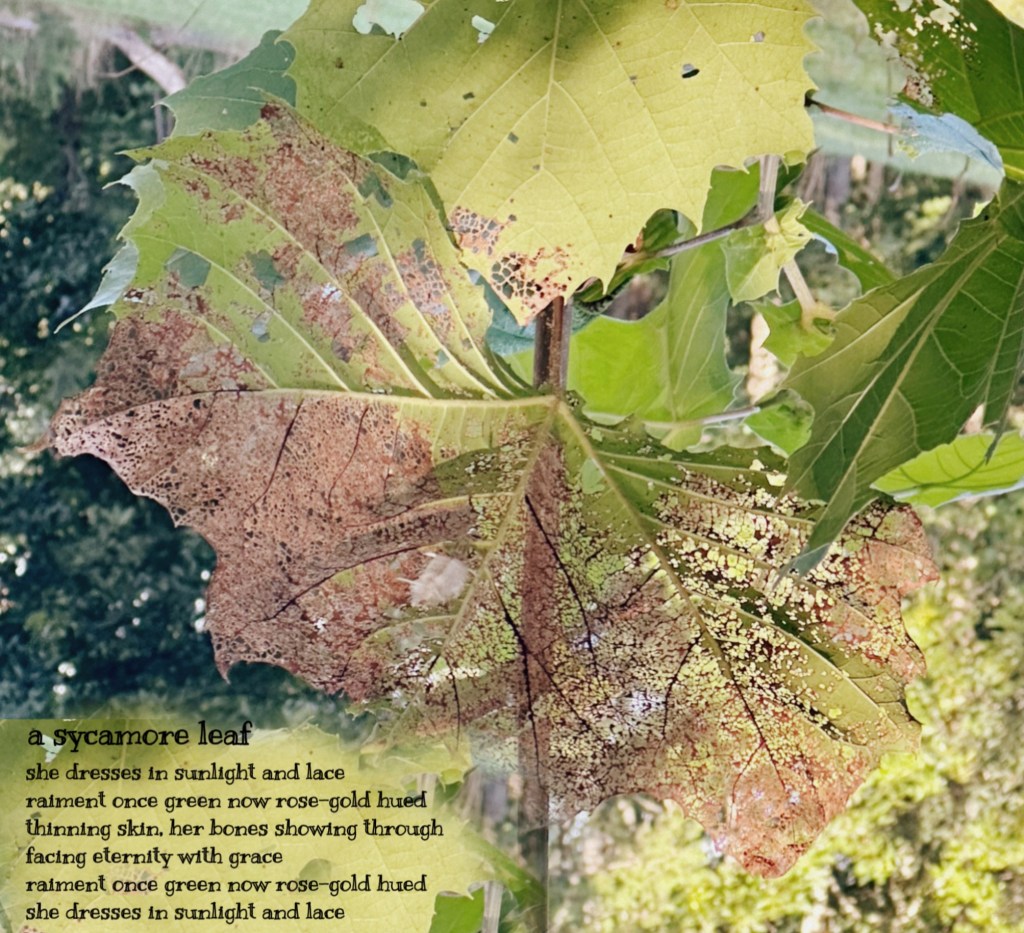
she dresses in sunlight and lace raiment once green now rose-gold hued thinning skin, her bones showing through facing eternity with grace raiment once green now rose-gold hued she dresses in sunlight and lace
~kat
And yet another treasure discovered in these 2 acre woods here under the shadow of Bramlett Mountain…a young sycamore tree, her leaves fading in this hot summer heat. More lessons to be gleaned from this natural wonderland I call home! Happy Saturday to you!
The Biolet
The biolet was invented by the Brazilian poet Filinto de Almeida and first appeared in print in his book Lyrica in 1887. It is a six line poem where the first two lines are repeated as the last two lines, however in reverse. The rhyme scheme is ABbaBA (with the capital letters representing the repeated lines). Most of Almeida’s original biolets in Portuguese were in iambic tetrameter (8 syllables), but you could also try iambic pentameter (10 syllables), iambic hexameter (12 syllables), and unmetered lines of random lengths as well.
I found this hollow hallowed loam while walking by the forest’s edge just beyond the blackberry hedge a place once used by fawning doe while walking by the forest’s edge I found this hollowed hallow loam
I paused a spell to take it in underneath the juniper tree space enough for two or three this shelter from the rain and wind underneath the juniper tree I paused a spell to take it in
when my soul’s in need of healing you might find me nestled here where kindred faerie folk and deer hiddled ‘neath the emerald ceiling you might find me nestled here when my soul’s in need of healing
~kat
I missed a day and had planned to stray a wee bit by expanding this one stanza 6-line micropoem to two…but then it was clear I needed three stanzas to give it proper due. At any rate this is a real place that I found last night while walking on the wood’s edge. What a find! I discover something new to fill my soul every day. I hope you too happen upon a treasure like this wherever you are. Miracles are everywhere! 😊 Peace to you!
The Biolet
The biolet was invented by the Brazilian poet Filinto de Almeida and first appeared in print in his book Lyrica in 1887. It is a six line poem where the first two lines are repeated as the last two lines, however in reverse. The rhyme scheme is ABbaBA (with the capital letters representing the repeated lines). Most of Almeida’s original biolets in Portuguese were in iambic tetrameter (8 syllables), but you could also try iambic pentameter (10 syllables), iambic hexameter (12 syllables), and unmetered lines of random lengths as well.
don’t ask unless you want to know I’m over it…won’t over-share with busybodies who don’t care a pleasant “fine” is all they’re owed I’m over it…won’t over-share don’t ask unless you want to know
~kat
The Biolet
The biolet was invented by the Brazilian poet Filinto de Almeida and first appeared in print in his book Lyrica in 1887. It is a six line poem where the first two lines are repeated as the last two lines, however in reverse. The rhyme scheme is ABbaBA (with the capital letters representing the repeated lines). Most of Almeida’s original biolets in Portuguese were in iambic tetrameter (8 syllables), but you could also try iambic pentameter (10 syllables), iambic hexameter (12 syllables), and unmetered lines of random lengths as well.
So it is easier for you to find all the parts/chapters of my ongoing fiction series, I created a new page that lists all the links. You can check it out HERE!
Unauthorized use and/or duplication of this material without express and written permission from this site’s author and/or owner is strictly prohibited. Excerpts and links may be used, provided that full and clear credit is given to Kat Myrman and Like Mercury Colliding with appropriate and specific direction to the original content.









 like mercury colliding...