Category Archives: Essays

Olykoek – Friday’s Word of the Day Haiku

olykoek

Today’s Dictionary.com Word of the Day comes to us from the Dutch. It is “olykoek” which translated means, “oily cake” or “oil cookie”. Here in the US we would simply call one of these fried confections a donut. I would imagine this is today’s word because today is, in fact, National Donut Day here is the US.

According to Dictionary.com olykoek is an Americanism with roots in New York Dutch. It is formed on the basis of the Dutch oliekoek meaning “oilseed cake,” equivalent to olie, “oil” plus koek, “cake.”

Wikipedia offers additional insight into this word. Olykoek has gone through several evolutions trading popularity with a similar term oliebol or olybollen, translated “oily ball(s)”, depending on which dictionary one consulted at a particular point in history. In fact, “the 1868 edition of the Van Dale dictionary included the word obiebol, while its rival Woordenboek der Nederlansche taal didn’t include it until 1896, stating that the “oliekoek” is a more commonly used term.” And yet another shift occurred in the early twentieth century when oliebol once again became the popular term.

At any rate, olykoeks have been featured in fine art and literature, most notably, Washington Irving’s The Legend of Sleepy Hollow. It seems Ichabod was more enraptured with the sight of sweet Dutch pastries than he was of beautiful voluptuous maidens encountered in Van Tassel’s parlor! Here’s an excerpt:
“Fain would I pause to dwell upon the world of charms that burst upon the enraptured gaze of my hero, as he entered the state parlor of Van Tassel’s mansion. Not those of the bevy of buxom lasses with their luxurious display of red and white, but the ample charms of a genuine Dutch country tea-table in the sumptuous time of autumn. Such heaped up platters of cakes of various and almost indescribable kinds, known only to experienced Dutch housewives! There was the doughty doughnut, the tender oly koek, and the crisp and crumbling cruller, sweet cakes and short cakes, ginger cakes and honey cakes and the whole family of cakes.”  Such lovely words!!!

There is also a wonderful legend surrounding this origin of this word. From Wikipedia:
“They (oliebollen) are said to have been first eaten by Germanic tribes in the Netherlands during the Yule, the period between December 26 and January 6 where such baked goods were used. The Germanic goddess Perchta, together with evil spirits, would fly through the mid-winter sky. To appease these spirits, food was offered, much of which contained deep-fried dough. It was said Perchta would try to cut open the bellies of all she came across, but because of the fat in the oliebollen, her sword would slide off the body of whoever ate them.”

Quite an interesting word. As for me, I will likely stick to the familiar term for this pastry, the “donut” or as we say here in Virginia, another word synonymous with the olykoek…the irresistible “Crispy Kreme”!

Here are a few Haiku on the Olykoek:

The Olykoek Haiku

Dutch oily balls and cakes
Oliebollen…olykoeks
aka…donuts!

Lovely olykoeks
deep-fried dough doused in sugar
not just a donut!

When Yuletide is nigh
stuff yourselves with olykoeks
to outwit Perchta.

kat – 3 June 2016


Echoes of my Neighborhood

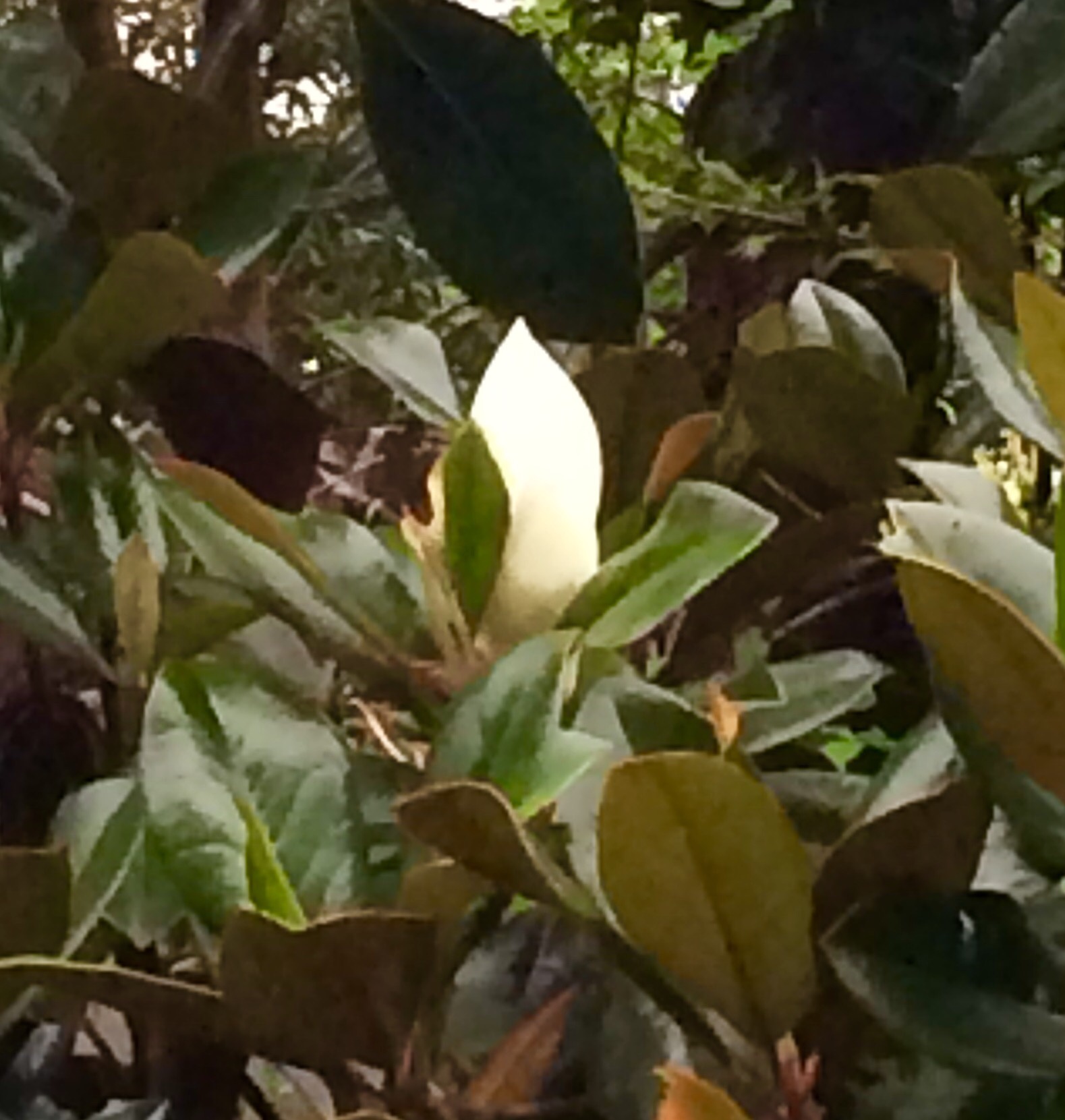
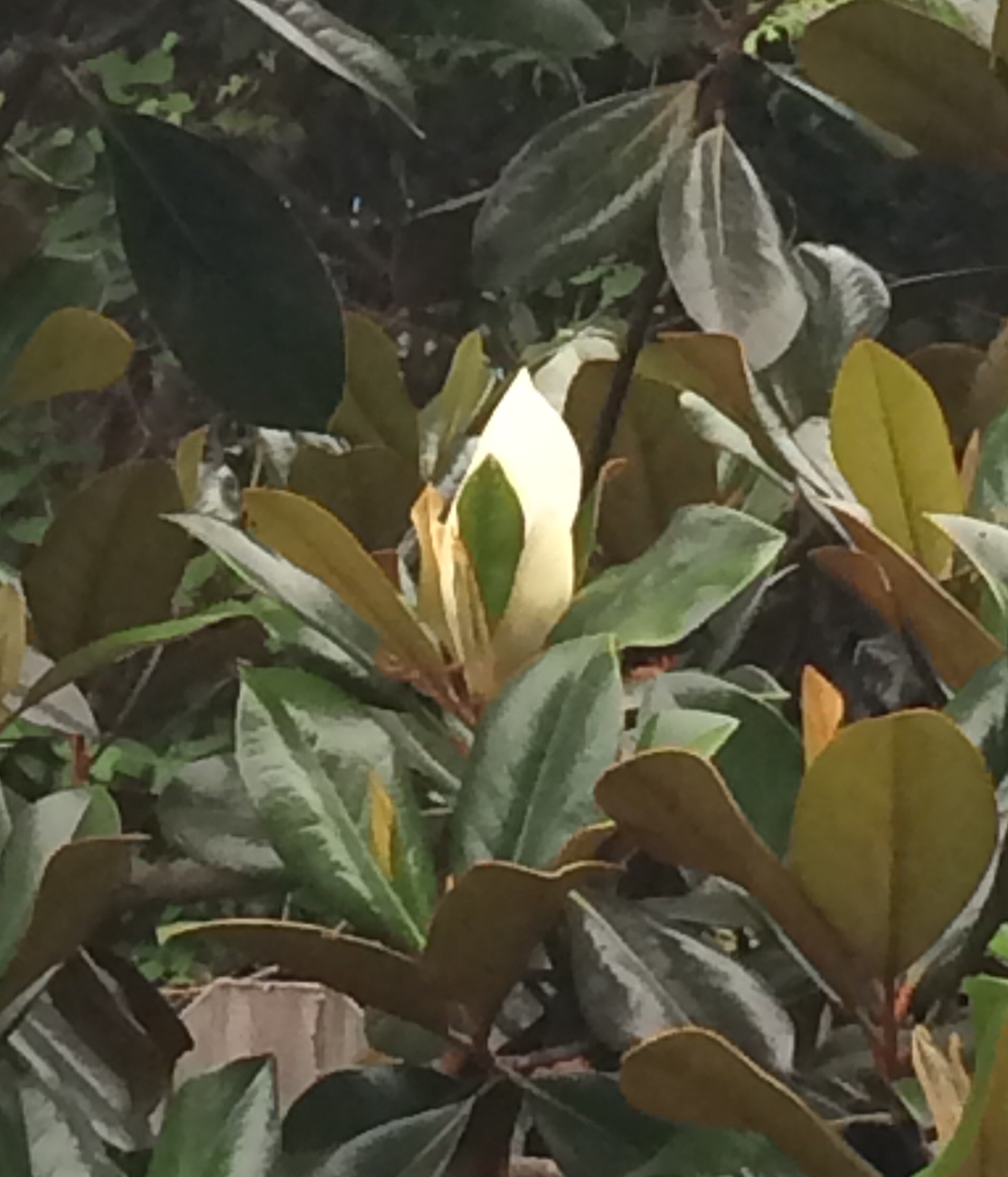
I am staying with the Tree theme this week for my Echoes of my Neighborhood entry. I have been keeping a close eye on my young Magnolia tree. She has not had a blooming season yet in her young life, until this year. As temperatures warmed she burst into new growth, more than I had seen in Spring’s past. And most recently I noticed a single bud forming. 

As my birthday approached this week I secretly hoped for a a full bloom on my special day. And to my great delight, that is exactly what happened. I like to call events like this serendipitous. It is a truly humbling and wonderful blessing! And so I am sharing with you photos that I took this morning and again this evening. What a wonderful gift! 

There is quite a bit of symbolism at play as well. The Chinese people celebrate a 60th birthday as a completion of a full life cycle. It is a day of rebirth. When you see some of the symbolism associated with the Magnolia blossom, you will see what I mean when I say this flowering is serendipitous! 

The Symbolism of the Magnolia Blossom

Magnolia blossoms are considered the very first or most primitive flowers. Because of this, they are also said to be a symbol of long life. White Magnolia blossoms represent purity, feminine sweetness and perfection and are symbols of Luna or moon goddesses. They are associated with life force and birth. The name Magnolia is the number 9 in Numerology, signifying the completion of a cycle and standing as a universal number. It likewise symbolizes a lifetime of fulfillment and nobility. Receiving a magnolia bloom brings the message, “You are worthy of a beautiful magnolia.” ❤

What a blessing that my little tree blossomed today of all days! 

June 2. 2016 – 6:30 am


June 2, 2016 – 6:00 pm – Beginnings of an open blossom!


Serendipitous, indeed! 🙂


Life Lessons from a House Cat – Haiku

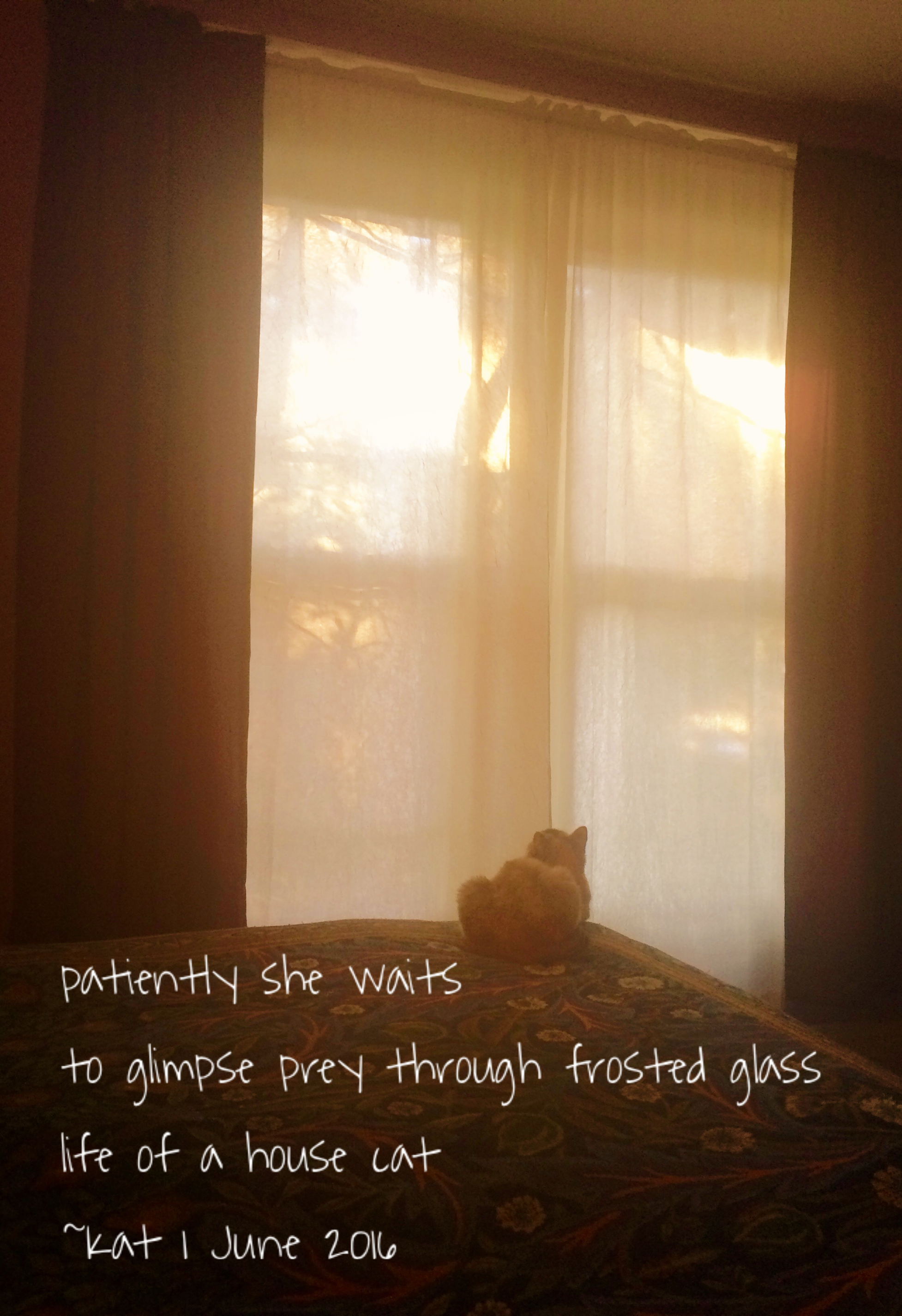
I never tire of this view. It is my 13 year old kitty Casey as she watches and waits for a random bird or squirrel sighting in the form of shadows dancing on the drapes in my room at sunrise. She will do this for hours. The fact that she can never catch the objects of her desire matters not. It is the thrill of the hunt that calls her back again and again.

And I realize that too often I get so focused on the prize, or the goal or deadline, that I forget to enjoy the process. The older I get the more I realize that the greatest reward and importantly, the best memories are found along the way, not at the finish line.

Wherever you find yourself on your particular path this first day of June, pause to forget your destination, just for a moment…long enough to take in the view. And be blessed! ❤️


Life Lessons from a House Cat – Haiku

patiently she waits
to glimpse prey through frosted glass
life of a house cat

~kat 1 June 2016


Shi Sai Sunday’s Week in ReVerse ~ 29 May 2016

Perfection! I am in love with this week’s ReVerse! I have been less chatty this week but it is because I am approaching a big milestone this coming week. It is quite natural to look back when one reaches a decade birthday. Add to my own personal reflection the fact that the New Moon is also coming this week. It is the perfect blank slate to launch the next chapter of my life! I am so grateful to be here. 

Have a wonderful week! I hope you have the occasion to eat cake! ❤️

Shi Sai Sunday’s Week in ReVerse ~ 29 May 2016

I might give my younger self…
who fancied tufted tuffets
along the treaded road to home
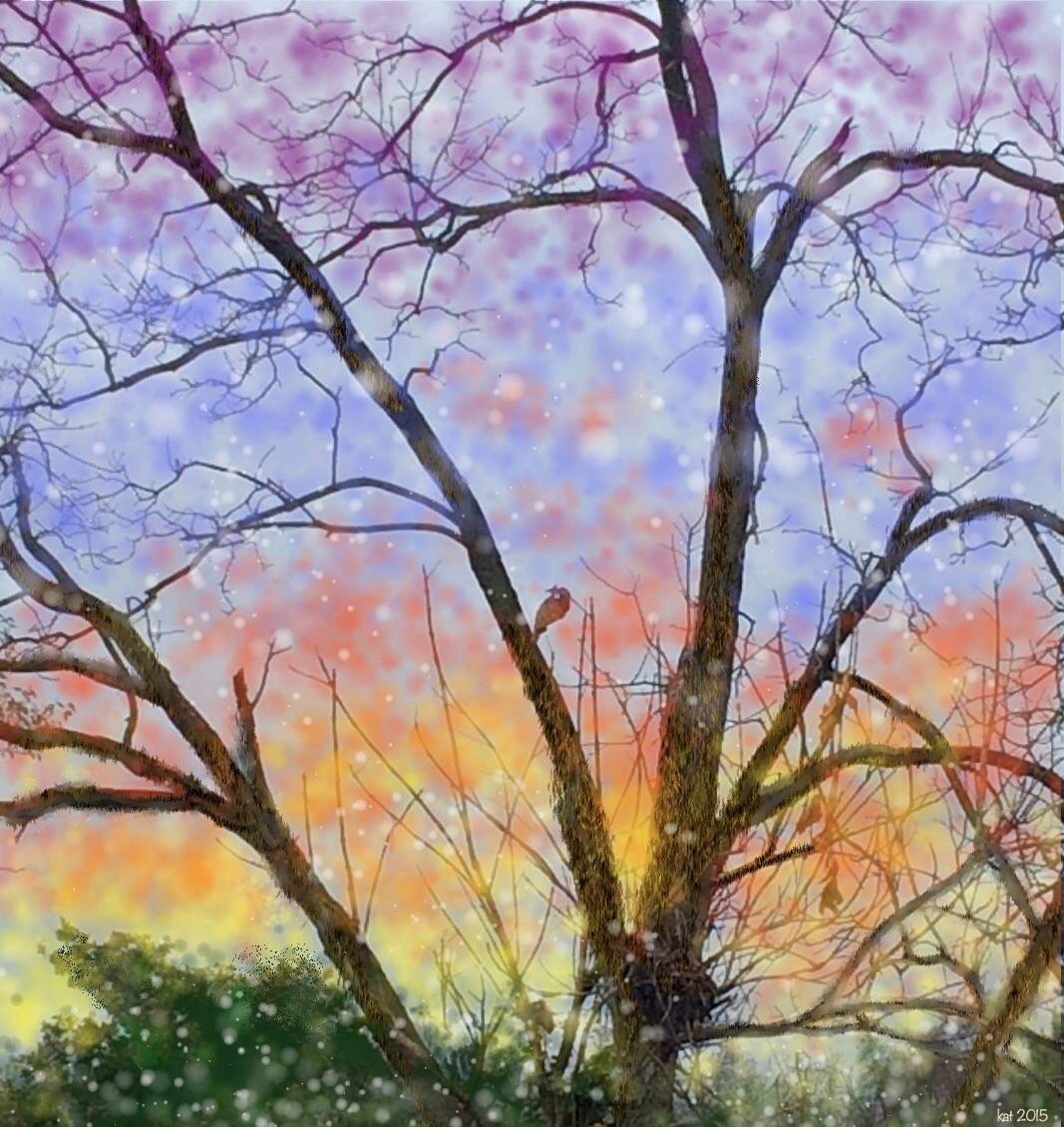
the tree with a bird shaped leaf in winter
tattered, frayed on the edges
It’s only skin deep
urgency as if
I am Love and Magic.

~kat

The Shi Sai, a form created by Kat Myrman in April 2016, is a poem created by taking one line of verse from several poems of an author’s own collection. The shi sai is done as a review of a series or collection of poems and therefore, each line should flow in chronological order of the dates the poems were written (from oldest to new). The lines chosen should be the author’s favorite from each poem. This form works best if the author resists the temptation to read the full new poem before all the verses have been added. (It helps one to resist the impulse to change a line to make it “fit”)


Fard – Friday’s Word of the Day Haiku


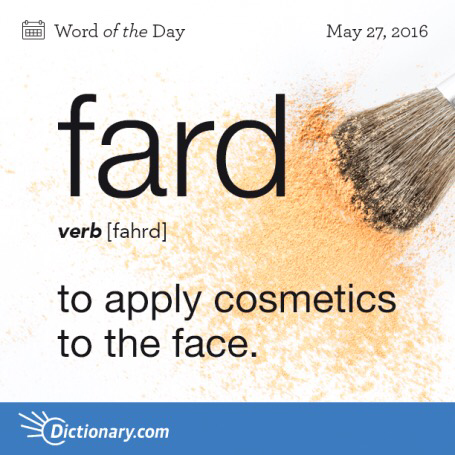
Today’s Dictionary.com word of the day has multiple applications depending on who you ask. Fard as first presented is a noun as well as a verb, originating in the mid 1400’s or so, from the old French term farder, meaning “to apply makeup” or as a word for the makeup itself. An archaic definition is also cited; its meaning, “to gloss over.”

It is a simple, sort of silly sounding word that truly gets interesting when Google is consulted. 

The urban dictionary, for example provides a myriad of definitions ranging from the combination of a certain expletive with the word “hard” (meaning something “very hard”), to the description of crude bodily functions. Most memorable is its application when describing a fart so powerful it vibrates nearby body parts (paraphrased here to avoid utter crudeness!) Think about that when you are applying makeup (aka fard) to your face! 

But we’re not finished. Wikipedia elevates the discussion with a loftier take:

“Fard is an Islamic term which denotes a religious duty commanded by Allah (God). The word is also used in Persian, Turkish, and Urdu (spelled farz) in the same meaning. Muslims who obey such commands or duties are said to receive hasanat, ajr or thawab each time for each good deed.” 

I think it’s safe to assume this application of the word does not include farting!

But there is more! According to another wiki reference, in India a fard is a document that provides revenue details for property. It is not proof of ownership per se, like a deed, but can provide documentation when attempting to establish owenership.

What an interesting little word. To be safe I should probably stick with dictionary.com’s initial definition for my haiku. But I might slip in a few references of its other meanings just to make this challenge FARD!

Fard – A Haiku

A daily practice…
Farding one’s wan face with fard
It’s only skin deep.

kat ~ 27 May 2016