
I took some poetic liberty with today’s ReVerse lifting single words from my favorite lines instead of penning the entire line; still sequential, still a snapshot of last week…a reVerse condensed. But I love this week’s stream of consciousness.
On this eve of Autumn my heart is singing. It is my favorite season. Cooling, shorter days, bursts of jewel tone colors, the crunch of leaves and acorns underfoot, the smell of wood burning, first puffs of smoke from chimneys on cool nights, the rustling of squirrels gathering for winter, the mournful last songs of crickets at dusk, pumpkins, gourds, silver corn stalk bundles, the abundance of earthy root vegetables, harvest celebrations, sunflowers, soup simmering on the stove, wafts of garlic, celery and onion melding, bread, sweet and buttery warm, fresh from oven…
I love this season of letting go and settling in, of longer nights, the flicker of candle light and crackling hearths. And I love this week’s ReVerse poem. Out of a week’s worth of words, a harvest of beautiful words. It’s a pity Autumn can’t last all year, but then again, I’d miss the snow, the blooming buds, flowers, trees, bursting lush and verdant, dancing in the breeze, thunder storms, days that last forever…
Autumn is just a sleep away. I am so excited!!! There’s just one thing…I think I’ll pass on that pumpkin-spiced latte! 😉 I’m more of a mulled cider, mead kinda girl…Cheers…Skål…Sláinte…Santé…Prost…Salute!!!!!! Until we meet again!
Sunday’s Week in ReVerse – 22 September 2019
twilight to tranquility
unearthed
casting shadows
touch
cool on skin, breath
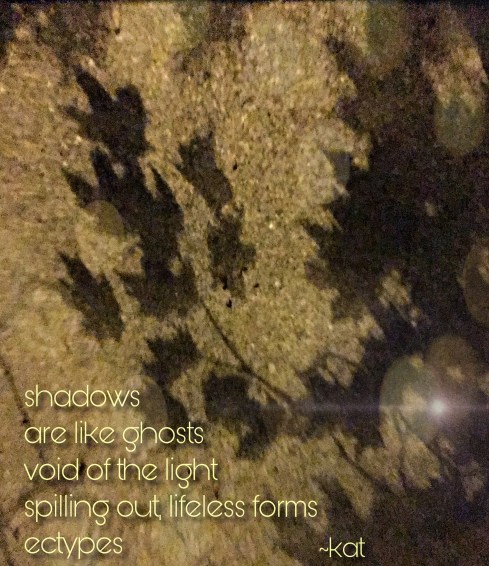
void of the light
wrapped in the night
those who dream
~kat
A ReVerse poem is a summary poem with a single line lifted from each entry of a collection of work over a particular timeframe and re-penned in chronological order as a new poem. Unlike a collaborative poem, the ReVerse features the words of one writer, providing a glimpse into their thoughts over time. I use it as a review of the previous week.









 like mercury colliding...