to live in harmony with nature, let the wind breathe life into your soul feel its purity deeply and rest in the ancient knowing that you are one with everything you see
~kat
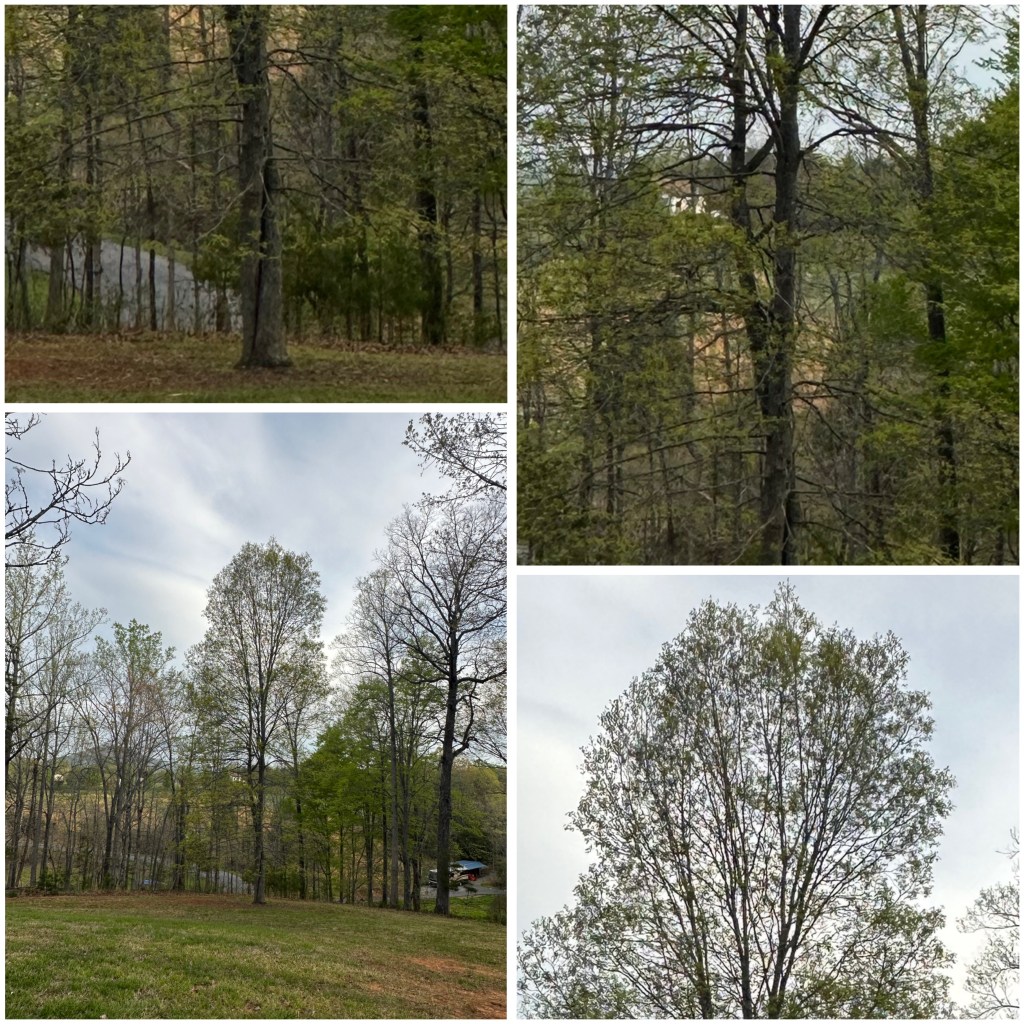
It was a beautiful spring morning here in my little spot on the planet. The trees have filled out and green in various shades has blossomed into a beautiful canopy. While it is lovely to take it all in, it’s good to be reminded that we are not just spectators but a part of all we see in the natural world. When I consider this fact it makes perfect sense to tread lightly on the planet, to conserve its resources and to take care of the earth just as she takes care of us.
Much love, peace, and glimmers to you!
~kat
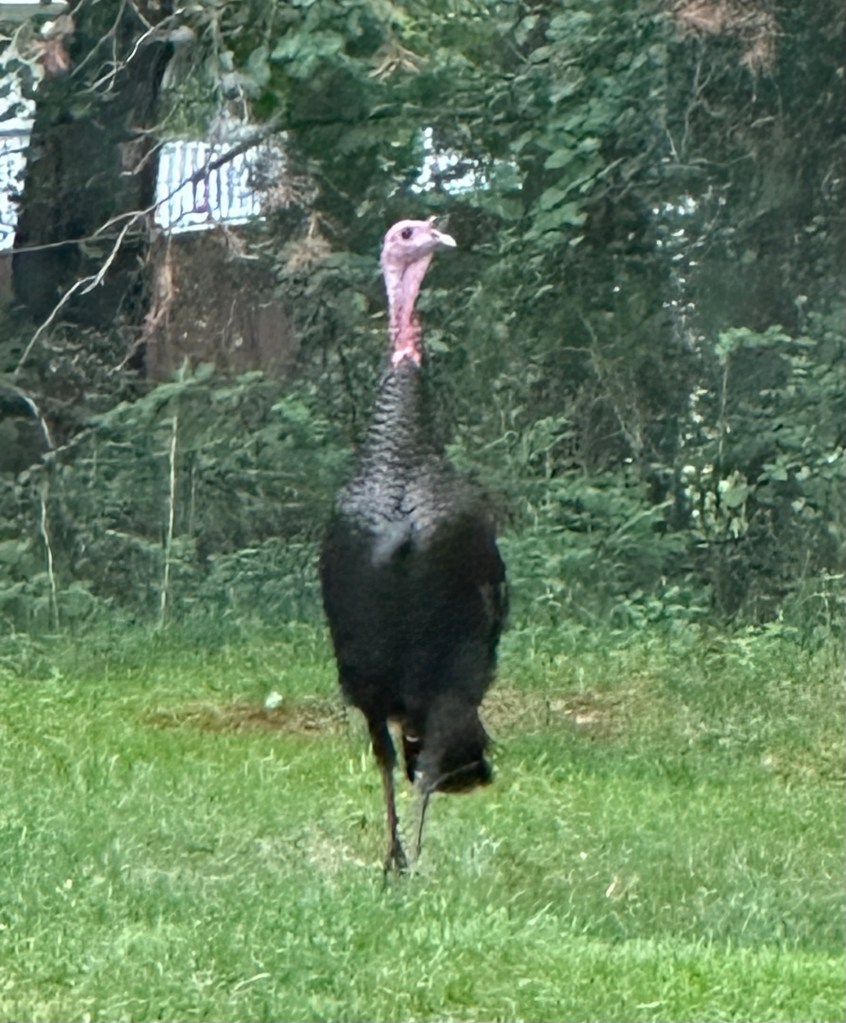
Oh…and this guy? He’s my old cousin Tom, several times removed, of course! But family nonetheless…can you see the resemblance?! 🤣
what if it was impossible to tell a lie? would we say less to each other? would we avoid the hard conversations? or would we finally become real… able to look into the eyes of that face in the mirror with acceptance, embracing all that we are, all that we hope to be? what if we weren’t afraid to say what we feel, what we need, what we think, what we know is true imagine the freedom of fully trusting in absolutes, in right and wrong, in light and dark, day and night, imagine how the world might be if the history we tell ourselves and our children actually happened, the good and the bad, no judgement, but used to apply lessons learned to make the future brighter, a gift to our children and their children… once upon a time when someone told the first untruth we lost our way because lies grow like a cancer until the truth is impossible to know how different would life be if we could start over refuse the lie that some lies are okay commit to what is real and right and true I can only imagine it… can you?
~kat
today’s glimmer
love’s tree
if love were a tree she’d be two trees intertwined from root to blue sky
~kat
NaGloPoWriMo 19 April 2025 prompt from gooduniversenextdoor: We’re making it up as we go along “If only….” or “Suppose….” For today’s poem, let’s suspend reality and write a poem that starts with a preposterous notion… then follows it. / Recommended reading: “Invisible Nests” by Kelly Madigan and “Restaurant of Dreams” by Robert Okaji
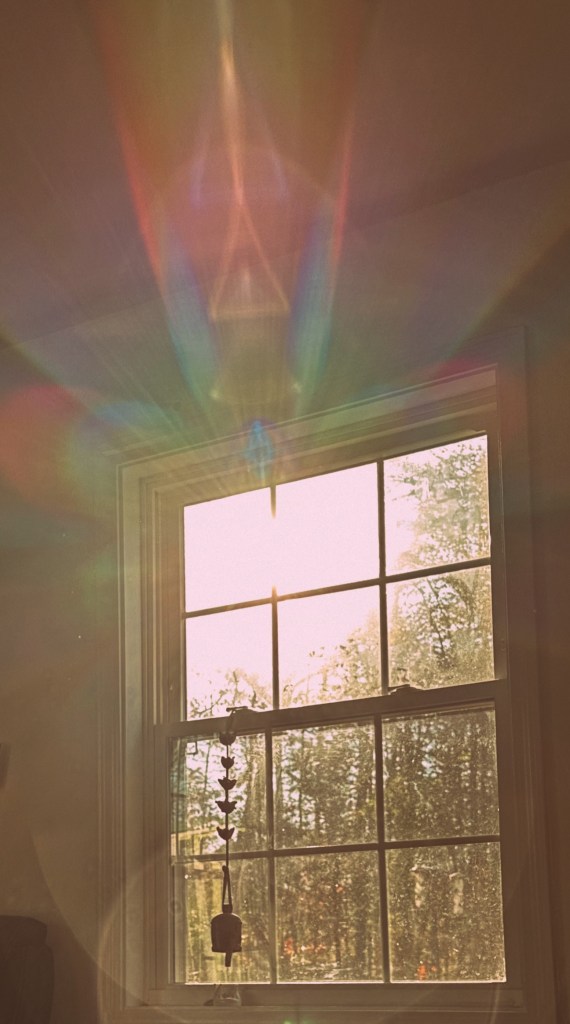
This is a photo taken of the morning sun using my iPhone camera. ~kat
beyond the frame

my room has frames of living art
shades of green and blue and gold
rain-splashed watercolored trees
clustered leaves in pale chartreuse
exposed patches of earthen clay
rich in grubs, where turkeys play

each window of my country home
reveals the splendor just outside
i wake up to the sun at dawn
and drift to sleep by moon at night
my walls in general are bare
paint on canvas can’t compare
with nature’s perfect masterpiece
where I am a one with all I see

~kat
I have stated before that when we moved to our little country home in the Blue Ridge foothills we decided to leave the windows undressed. It felt weird at first. I felt exposed, vulnerable even. But as I settled into this new experience after decades of shuttering myself off from the world outside; from the noise and nosy passersby, I realized what a gift it is to live so close to the natural world. I experience the seasons intimately as the landscape moves through spring, summer, autumn and winter. Wildlife passes by everyday, the birds, the deer, raccoons, squirrels and opossums. Storms rush in, shaking the roof, bending the trees and soaking the earth before fading to mist under an occasional rainbow. I wake to the rising sun and sleep under a starry moonlit sky. I didn’t realize when we moved how much I needed this place. It has saved me in so many ways and I am reminded that I am not separate from the world around me, but intrinsically a part of it. I left town and gained the world.
Much love, peace, and glimmers to you. Every day is a glimmer waiting to be discovered!
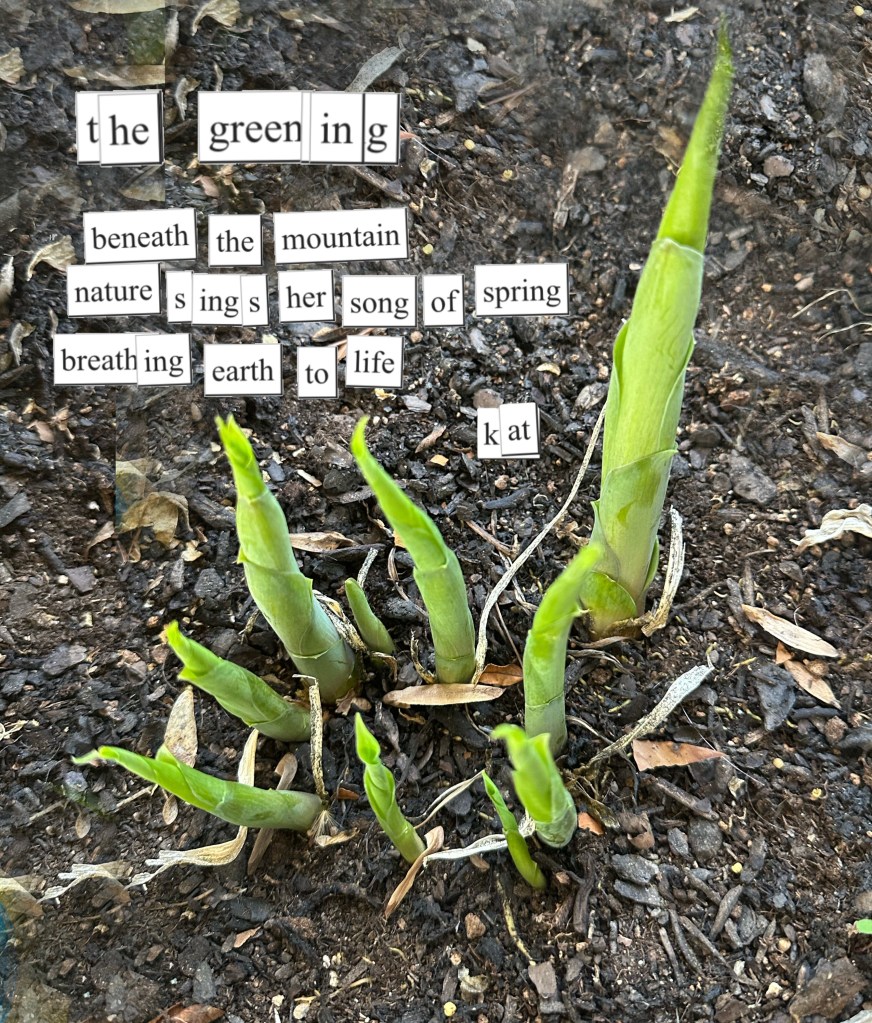
beneath the mountain nature sings her song of spring breathing earth to life
~kat~
Today was a perfect spring day. The sun was shining. The sky blue with wisps of clouds. The hummingbirds are due back in about a week. And there is the sweetest warm breeze tossing the trees. I look forward to the leaves popping from the tree limbs. This year we had so many wind storms that there is nothing left on the forest floor. I’ve never seen things so blighted. But I do rest in the hope that nature will restore what winter swept away. When spring bursts to life it will fill me with joy. There is also joy in the anticipation; in the knowing that the seasons are ever faithful.
No matter what challenges may confront me, I try to remember these lessons from nature…the rising sun at dawn, its setting at dusk, the shape shifting moon of many faces, the stars in constellation fixed in place, the movement of the planets, the tides’ ebb and flow, the abundance of the harvest every year, and the new life that bursts onto the scene every spring. What a wonderful life this is. And how blessed we are to be alive to witness it.
I know, I know, the news…it was another shocking day of injustice and abuse of power by the miscreants in the US white house and the halls of congress…just as it will be tomorrow and the next day. I’m afraid that is our lot right now. I’m engaged in the opposition….and a safe place and helper when opportunities present themselves.
But the world…my world right here, right now is alive in anticipation of the fullness of spring. Today, that’s what I’m focusing on. It is after all, what truly matters. not to mention, it give me hope. ✨💚✨
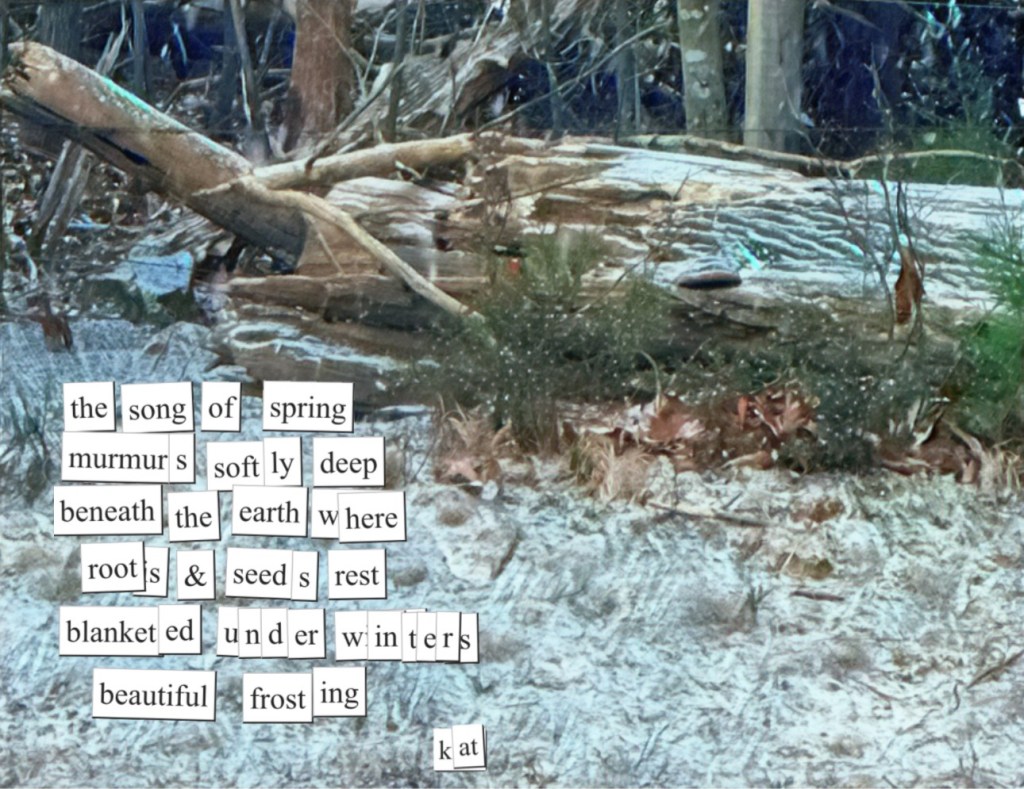
the song of spring
murmurs softly deep
beneath the earth where
roots and seeds rest
blanketed under winter’s
beautiful frosting

~kat
As we brace for another of winter’s last tantrums…his days are numbered and he knows it…I imagine the magnificent miracle of life rumbling just beneath my feet. Winter lasts for a season. spring is coming.
Peace, Love, and Frosted Glimmers to you! Spring will be here soon!
So it is easier for you to find all the parts/chapters of my ongoing fiction series, I created a new page that lists all the links. You can check it out HERE!
Unauthorized use and/or duplication of this material without express and written permission from this site’s author and/or owner is strictly prohibited. Excerpts and links may be used, provided that full and clear credit is given to Kat Myrman and Like Mercury Colliding with appropriate and specific direction to the original content.