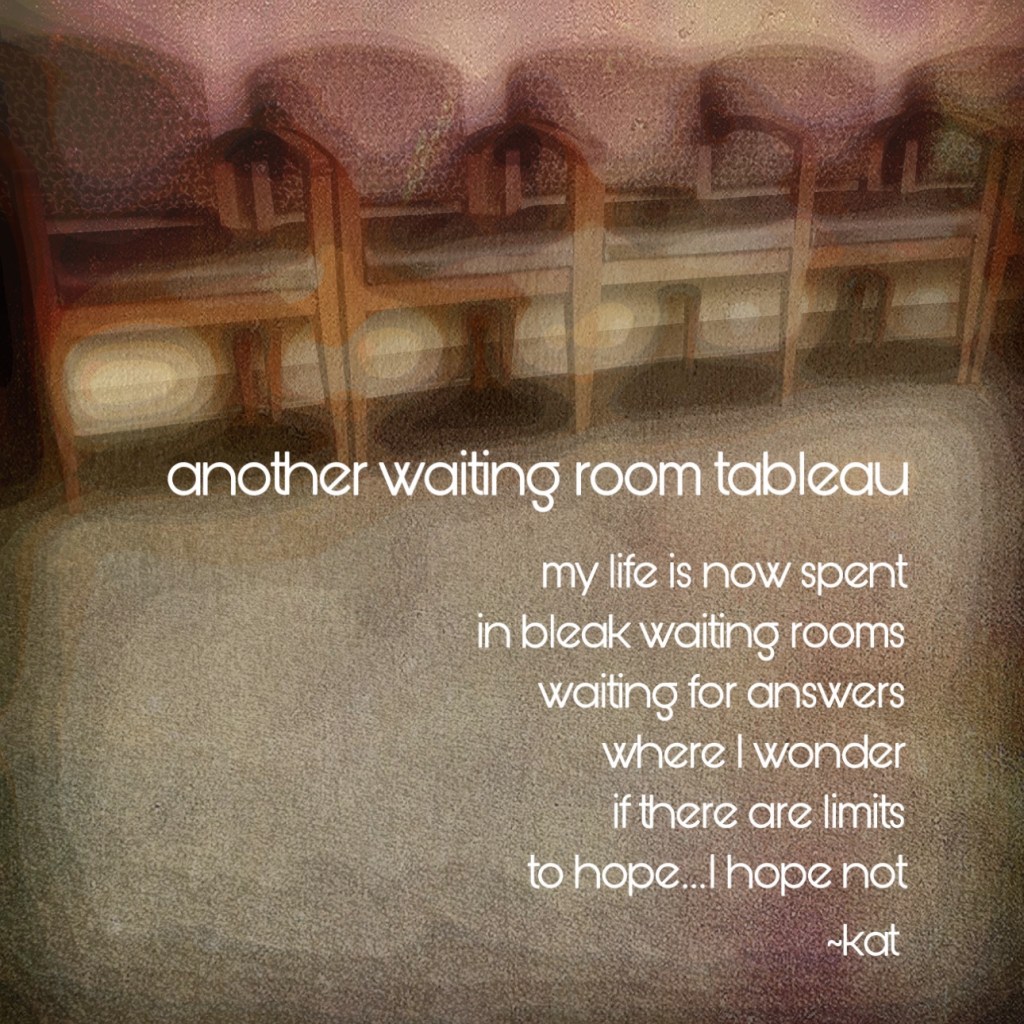
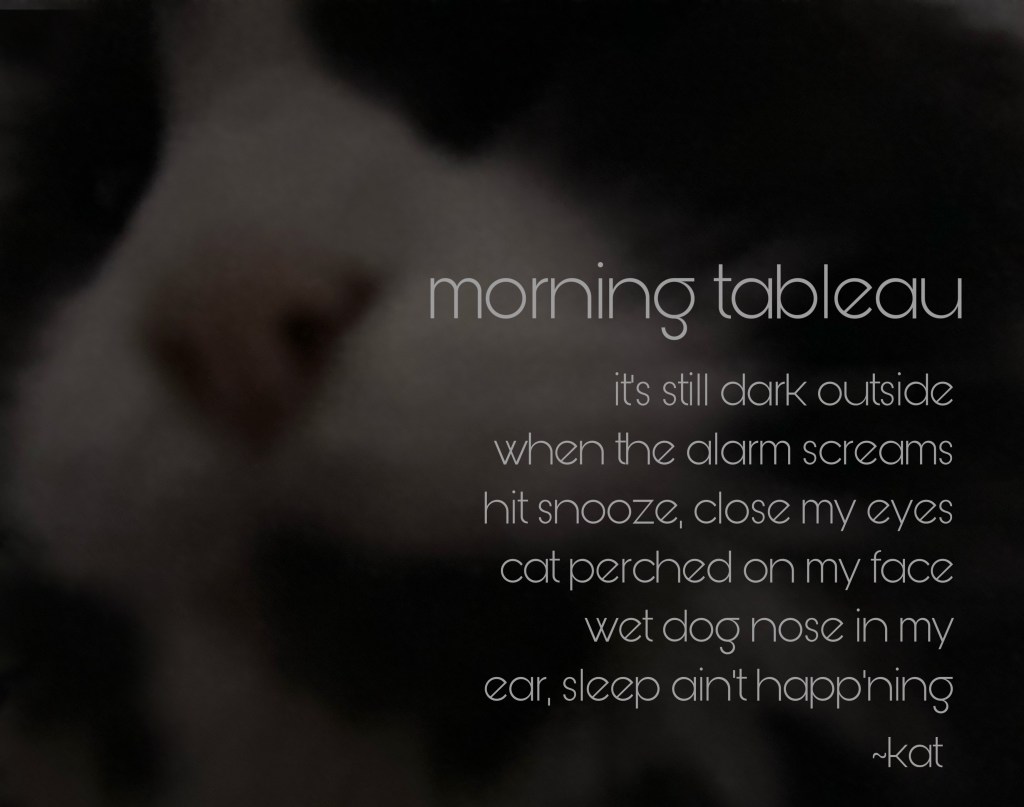
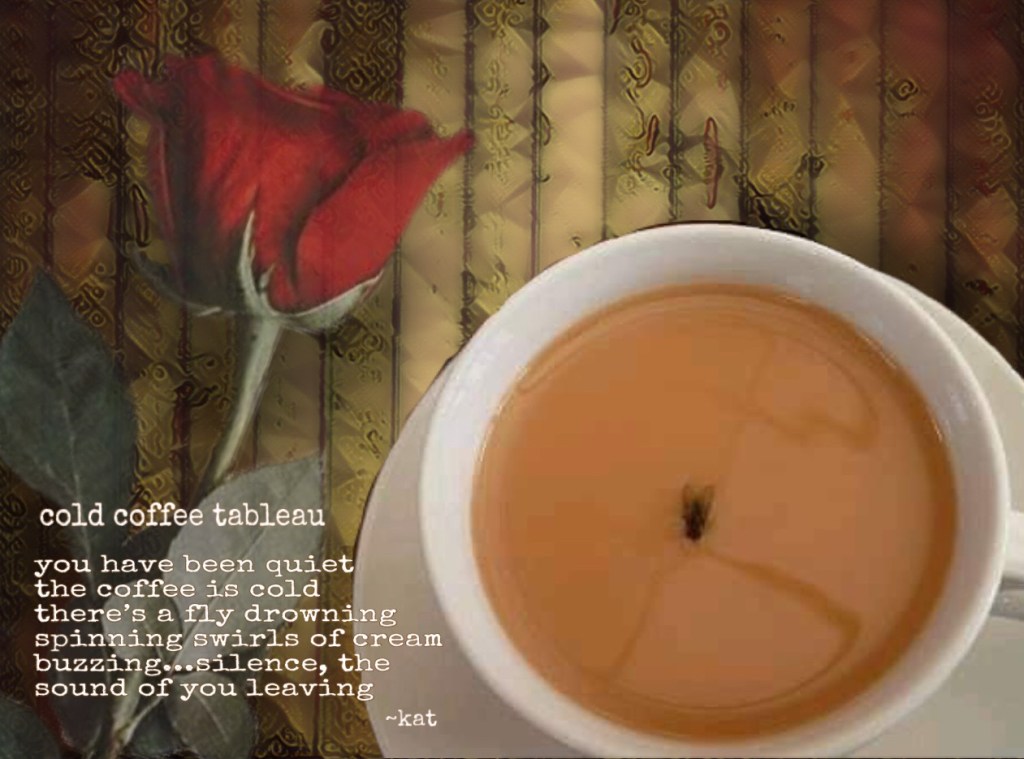
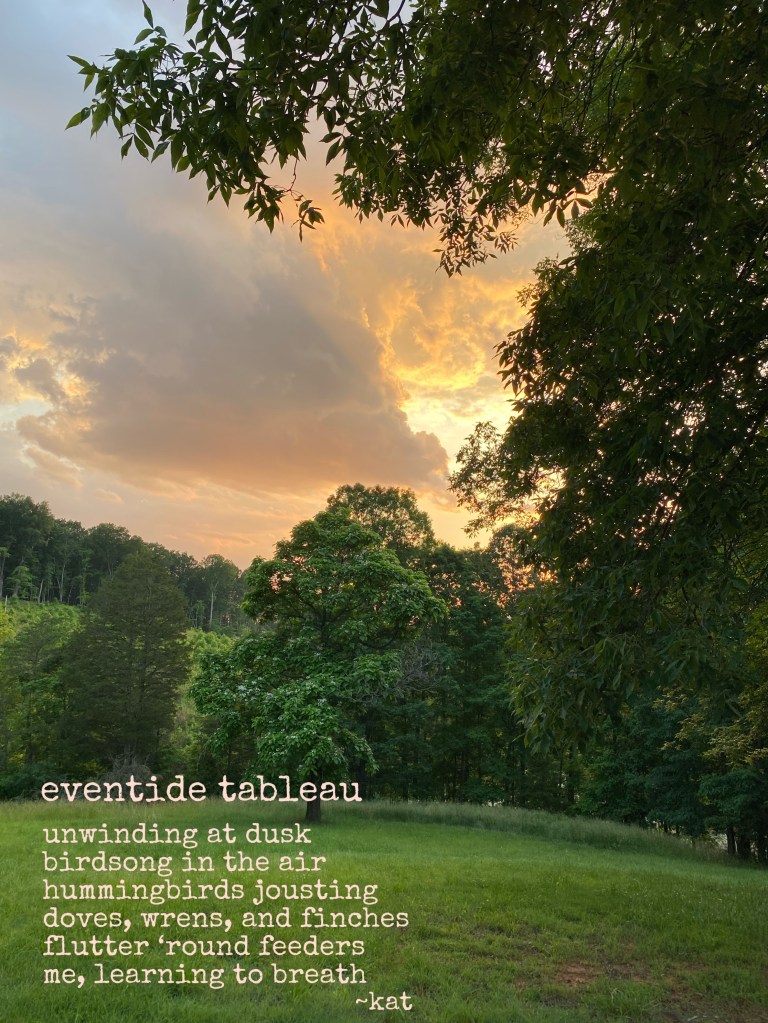
The Tableau, a poetry form created by Emily Romano in October of 2008, consists of one or more verses, each having six lines. Each line should have five beats. There is no set rhyme scheme, although rhyme may be present. The title should contain the word tableau.
Since the dictionary states the word tableau means picture or representation, the poem should reflect this. A picture should come to mind as the poem is read.
The Tableau, a poetry form created by Emily Romano in October of 2008, consists of one or more verses, each having six lines. Each line should have five beats. There is no set rhyme scheme, although rhyme may be present. The title should contain the word tableau.
Since the dictionary states the word tableau means picture or representation, the poem should reflect this. A picture should come to mind as the poem is read.
The Tableau, a poetry form created by Emily Romano in October of 2008, consists of one or more verses, each having six lines. Each line should have five beats. There is no set rhyme scheme, although rhyme may be present. The title should contain the word tableau.
Since the dictionary states the word tableau means picture or representation, the poem should reflect this. A picture should come to mind as the poem is read.
The Tableau, a poetry form created by Emily Romano in October of 2008, consists of one or more verses, each having six lines. Each line should have five beats. There is no set rhyme scheme, although rhyme may be present. The title should contain the word tableau.
Since the dictionary states the word tableau means picture or representation, the poem should reflect this. A picture should come to mind as the poem is read.
no amount of sun will burn this fog away somewhere in the world a fire burns hints of blue sky visible beyond the smoky veil forecast: hot as hell with a chance of wildfires and then it rained…and rained…and rained
~kat
And so ends our week with the Gogyohka. Though it presented very few rules aside from five lines, it was the condition that each line be a complete thought that had me a bit flummoxed. I’m finding that even relatively easy forms at first glance present their own challenges! Next week I’ll be exploring the Tableau. It’s metered and rhymed, and allows run-on lines (which I love), all packed into six lines. It also allows me to incorporate my photo art creations given that a tableau is defined as …
1. a picture, as of a scene
2. a picturesque grouping of persons or objects; a striking scene.
So we shall see. I am looking to this form to force me to be present in a specific moment that I plan to memorialize with a photo on my phone. Being present, pausing, breathing, and visualizing into verse. 😊
And finally, in case you’d like to try it, here are the bones of a Gogyohka…
Gogyohka
Five rules of Gogyohka by Enta Kusakabe (1983).
• Gogyohka is a new form of short poem that is based on the ancient Japanese Tanka and Kodai kayo.
• Gogyohka has five lines, but exceptionally may have four or six.
• Each line of Gogyohka consists of one phrase with a line-break after each phrase or breath.
• Gogyohka has no restraint on numbers of words or syllables.
So it is easier for you to find all the parts/chapters of my ongoing fiction series, I created a new page that lists all the links. You can check it out HERE!
Unauthorized use and/or duplication of this material without express and written permission from this site’s author and/or owner is strictly prohibited. Excerpts and links may be used, provided that full and clear credit is given to Kat Myrman and Like Mercury Colliding with appropriate and specific direction to the original content.







 like mercury colliding...