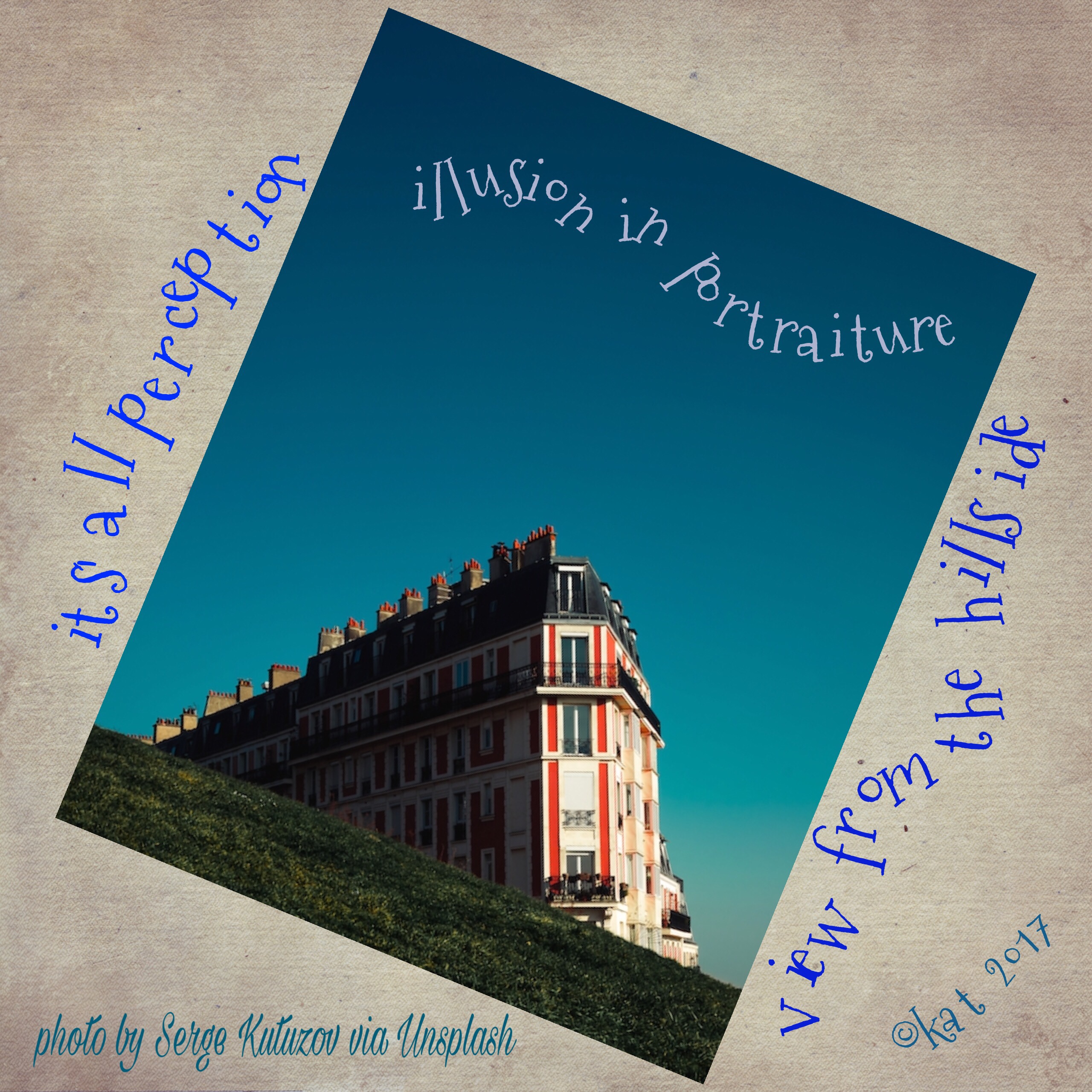
it’s all perception
illusion in portraiture
view from the hillside
-kat – 11 April 2017
A Three Line Tale based on the photo by Serge Kutuzov via Upsplash
it’s all perception
illusion in portraiture
view from the hillside
-kat – 11 April 2017
A Three Line Tale based on the photo by Serge Kutuzov via Upsplash

It’s Friday. Thank goodness it’s Friday! Today’s dictionary.com Word of the Day is “Inveterate”. It is defined as: settled or confirmed in a habit, practice, feeling, or the like: an inveterate gambler; firmly established by long continuance, as a disease, habit, practice, feeling, etc.; chronic.The Collins Dictionary also adds an obsolete meaning: full of hatred; hostile.
Dictionary.com gives us a nice bit of history on the word:
Inveterate comes from the Latin verb inveterāre “to grow old,” a derivative of the adjective vet(us) “old.” Latin vet- is related to Greek ét-os (Doricwét os) “year” with its derivative etḗsios “yearly” (cf. “etesian winds”). The Latin nouns vitellus and vitulus “calf, bull calf, yearling” are also derivatives of vet(us). The Latin name for Italy, Italia, has the rare form Vitalia (cf. Oscan Víteliú), both of which are from Greek italós (Doricwitalós) “bull,” because Italy was rich in cattle. Inveterate entered English in the 16th century.
There is not much in the way of backstory that I could find for this word apart from its peculiar etymological link to cattle; bulls in particular. If you ask me, there are quite a few derivatives in the above blurb, which makes me a bit suspect. But for the sake of discussion I can probably squeeze some sort of relevance out of all this. For example, bulls are generally seen as stubborn, immovable, etc. Not exactly following the “because Italy was rich in cattle” part. Um, okay…if you say so…that’s nice to know…not.
As for the “growing old” part, it is true that some old people are set in their ways. Routine and habit are comforting ruts for some. But I would venture a guess that not all elder folk are inveterate; some are quite comfortable with movement and change (including me. And I do qualify as a first person expert. I have my AARP card to prove it!). But that’s about all I could muster on this week’s word. It is what it is. As with all bland, so-so words, use em or lose em.
I did discover that as a ten letter word, inveterate will land you a whopping 63 points in Scrabble. Good luck with that. I am lucky when I can use all SEVEN of my allotted letters, let alone TEN! But you can store that in the “obscure word fact” file in your brain. Never know when you might need it.
Have a great weekend!
Signed,
An Inveterate Optimist 🙂
Truth is elusive
to inveterate liars
fiction is the truth
~kat – 7 April 2017
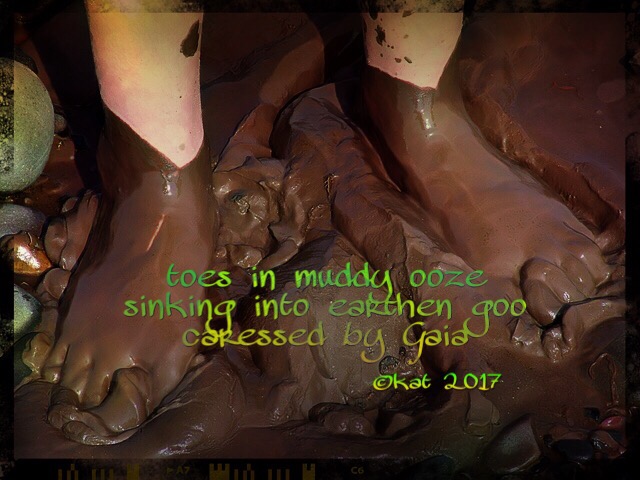
Photo from Pixabay digitally enhanced by kat m
toes in muddy ooze
sinking into earthen goo
caressed by Gaia
~kat – 5 April 2017
For Haiku Horizons based on the prompt word “Sink”.
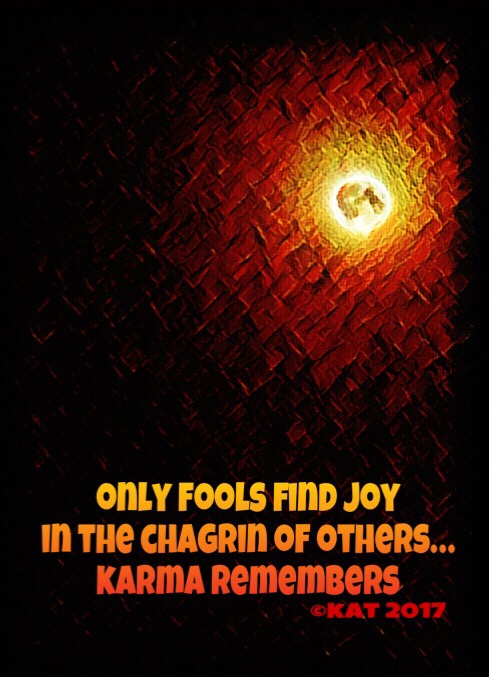
only fools find joy
in the chagrin of others…
karma remembers
kat – 5 April 2017
A Haiku proverb of sorts for Ronovan Writes Haiku Challenge based on the prompt words: Chagrin & Joy.
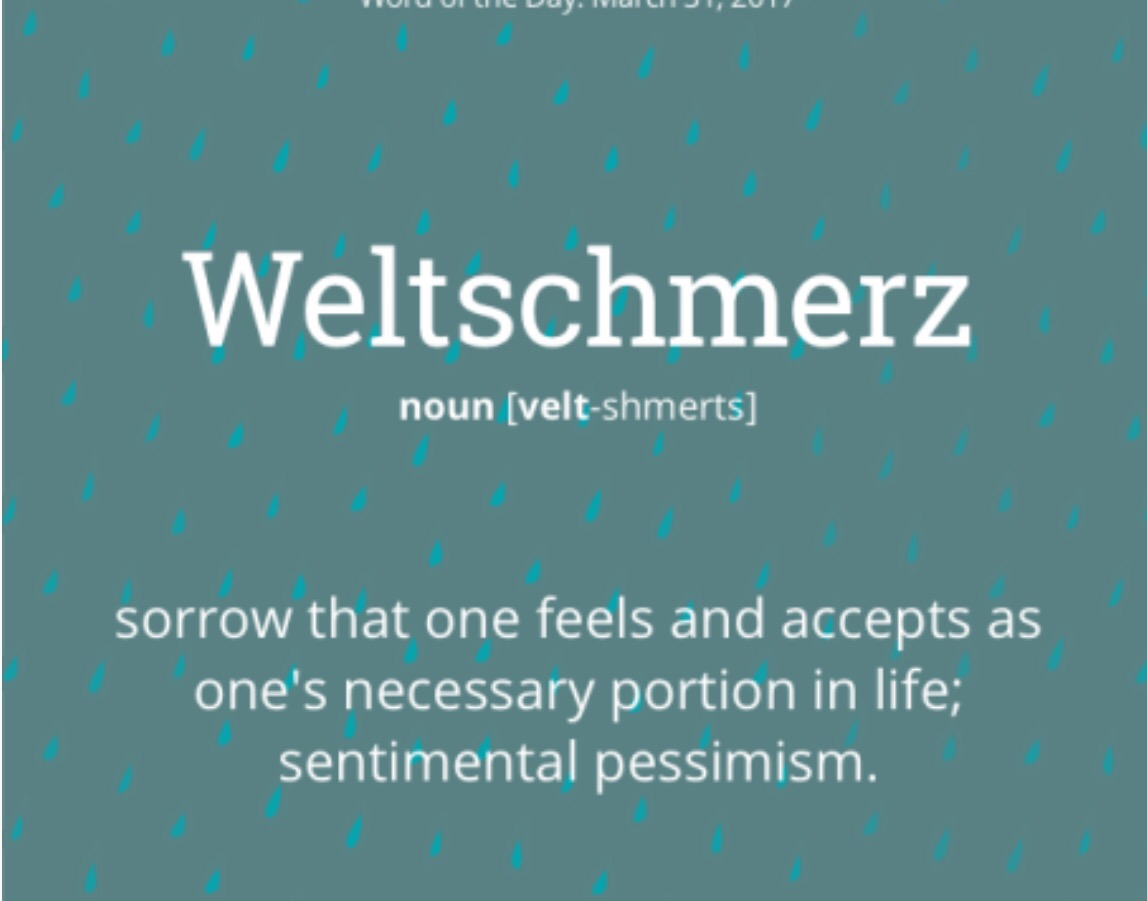
It’s Friday in most parts of the world right now. I was going to say as I usually do, “Happy Friday” but I can’t assume to know if it is happy where you are. I’m not even sure if I am happy in this moment. Content maybe, but happy? Happiness takes effort. Which brings me to today’s dictionary.com Word of the Day, Weltschmerz. Leave it to the Germans to fashion a word that captures the day in day out ruts that we find ourselves languishing in.
Do you ever wonder if this is all there is? Weltschmerz is “the sorrow that one feels and accepts as one’s necessary portion in life.”
It is also defined as “sentimental pessimism”. As you can imagine, many a writer has penned this word.
Weltschmerz (the w sounds like a “v”) even sounds resigned to a certain apathetic resolve. It is what it is…weltschmerz. It’s a combination word that means “world” (welt) and “pain” (schmerz) first appearing in the 19th century by German Romaric Writer Jean Paul, pen name of Jean Paul Friedrich Richter (1763-1825), in his novel Selina (1827). But it also found its way into English 50 years later and into modern literature by such authors as John Steinbeck, Kurt Vonnegut, Ralph Ellison and Henry Miller.
In researching this word it was described as “obscure German sorrow”, which led me down another wormhole to discover a modern English version of this concept.
Created and written by graphic designer and editor John Koenig, the Dictionary of Obscure Sorrows is a melancholic writer’s treasure trove of newly created “feeling” words. It’s an amazing collection. If you want to explore more check out his blog here or better yet check out his YouTube entries; beautiful narrations set to music and photos that illustrate these new words.
Back to weltschmerz and my task for today…to write a Haiku poem. While I can’t presume to know if your day is happy at the very least I can wish you happiness in this crazy spinning world. I hope you have a happy weekend too. 😊
moments slip away
mindlessly lost in weltschmertz
no seizing the day~kat – 31 March 2017