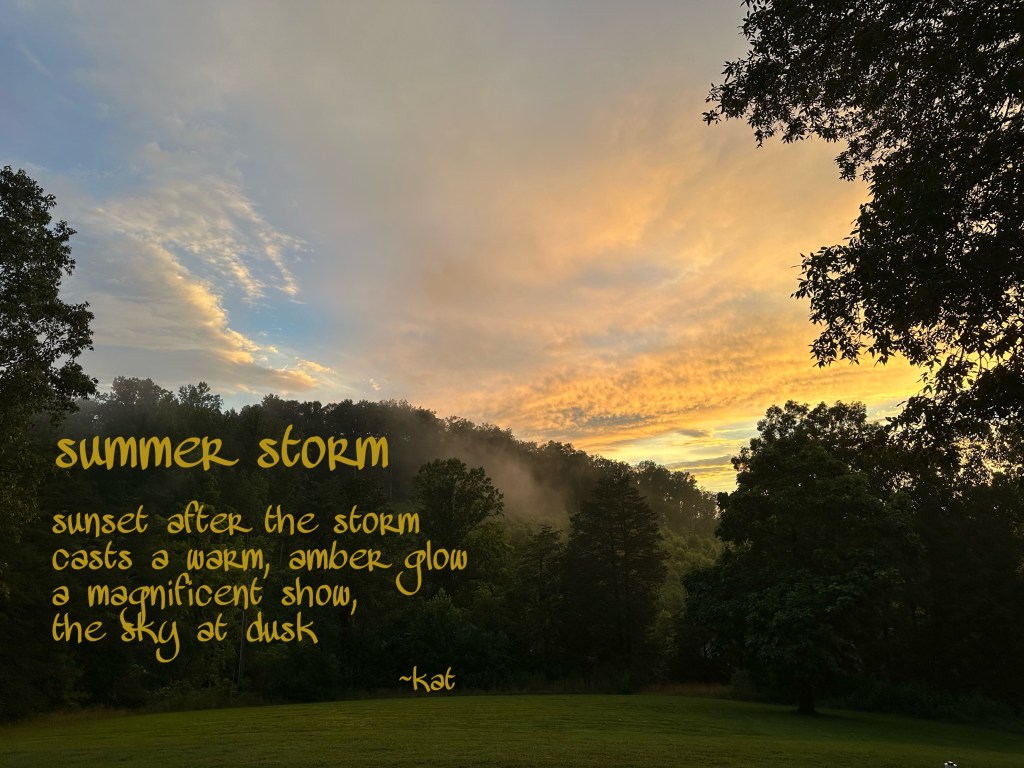
sunset after the storm casts a warm, amber glow a magnificent show the sky at dusk
~kat
Abhanga
Abhanga are written in any number of 4-line stanzas with 6-6-6-4 syllables each. L2 and L3 rhyme. The end rhyme scheme is abbc. Don’t forget to title your poem.
the words roll off your tongue a bit too easily sorry, i don’t believe that you’re “okay”
or “fine”, that, “it’s all good” we both know that it’s not you seem to have forgot i’m here for you…
not going anywhere so tell me once again i’m listening, my friend this time…the truth
‘cause you’re not sparing me i’m stronger that you think i’ll hold you at the brink and won’t let go
~kat
Abhanga
Abhanga are written in any number of 4-line stanzas with 6-6-6-4 syllables each. L2 and L3 rhyme. The end rhyme scheme is abbc. Don’t forget to title your poem.
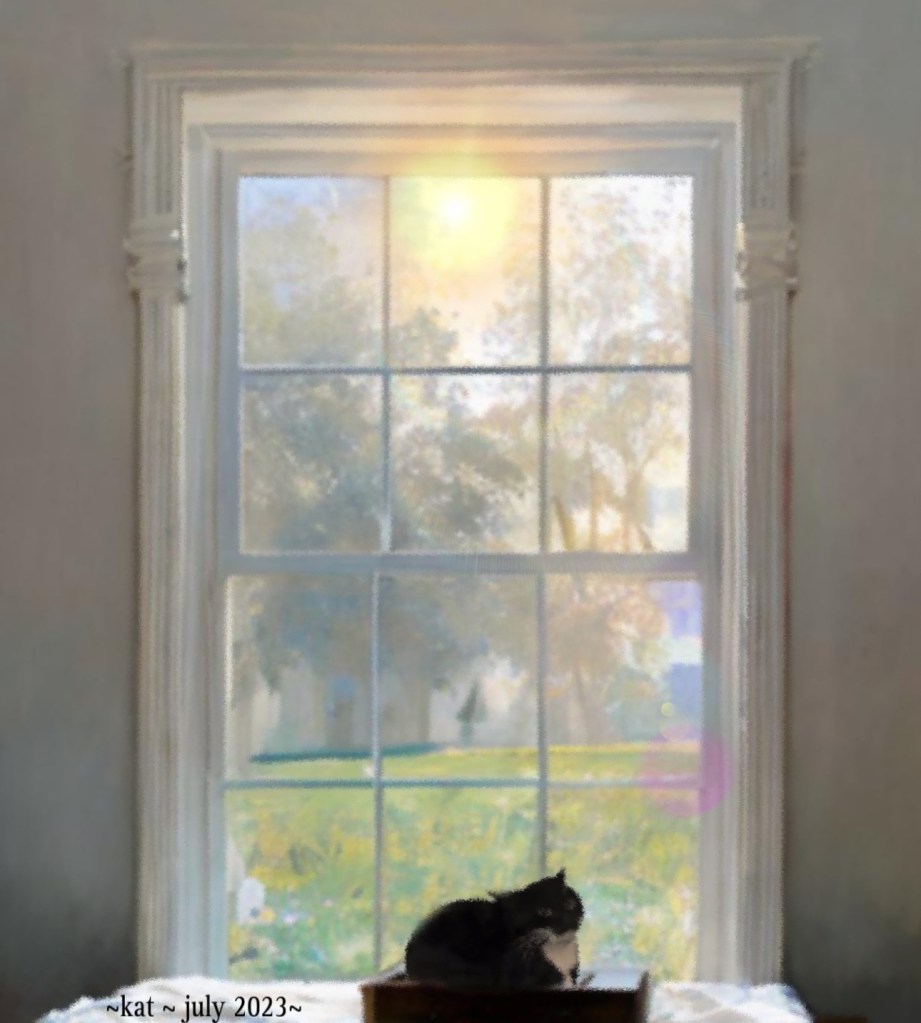
~ Photo partially enhanced by AI in the PicsArt app ~
bare windows

my windows don’t have shades
in these dense foothill woods
though others think they should
i don’t agree

i wake up with the sun
burning away the mist
dew droplets sparkling, kissed
diamonds at dawn

i love the warmth and glow
of spring and summer lush
of autumn’s amber blush
of winter’s snow

each season draws me out
there, just beyond these walls
i am part of it all
and it, in me

~kat
Abhanga
Abhanga are written in any number of 4-line stanzas with 6-6-6-4 syllables each. L2 and L3 rhyme. The end rhyme scheme is abbc. Don’t forget to title your poem.
I drifted off to sleep on one midsummer day lulled by the gentle sway of breeze kissed trees
I had no where to be and precious time to spare slumped in my favorite chair to rest a spell
til hummingbirds whizzed by my ears, now roused awake I smiled, sighed…they can wait those chores undone
a sip of cool iced tea a poem in my head to write ‘fore I forget this time well spent
taking care what matters emerging light as air refreshed, with not a care no where to be
~kat
Abhanga
Abhanga are written in any number of 4-line stanzas with 6-6-6-4 syllables each. L2 and L3 rhyme. The end rhyme scheme is abbc. Don’t forget to title your poem.
if it’s rewritten history can’t repeat itself lessons go unlearned
~kat
Senryu
Similar to haiku, senryu generally consist of 17 syllables (also called morae) divided over three lines in a 5-7-5 pattern, though these guidelines were less strictly followed as time passed. Senryu differs from haiku in that it is not required to reference the seasons or nature.
So it is easier for you to find all the parts/chapters of my ongoing fiction series, I created a new page that lists all the links. You can check it out HERE!
Unauthorized use and/or duplication of this material without express and written permission from this site’s author and/or owner is strictly prohibited. Excerpts and links may be used, provided that full and clear credit is given to Kat Myrman and Like Mercury Colliding with appropriate and specific direction to the original content.







 like mercury colliding...