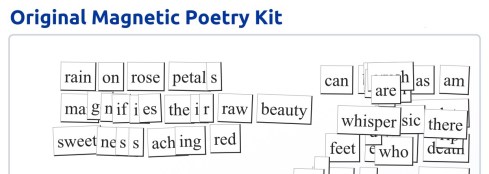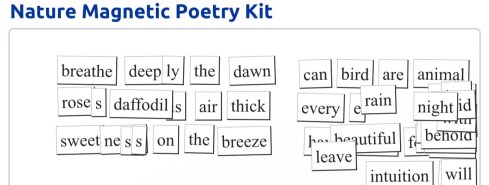
bonsai, Chinese elm tree
roots planted, shallowly
soil, pebbles, and peat, micro-sized
~kat
For Jane’s Day 21 Florescence. A few hours late. Was traveling today.

bonsai, Chinese elm tree
roots planted, shallowly
soil, pebbles, and peat, micro-sized
~kat
For Jane’s Day 21 Florescence. A few hours late. Was traveling today.
it’s a tale of woe if there ever was one
of a beautiful boy with beautiful hands
a spinner of deals, like no deals ever spun
a boastful lone tweeter who ruled o’er the land
above all, ‘twas loyalty, blind and unquestioning
that he demanded of those in his court
this one-sided toll would become the reckoning
of this narcissist leader who lied just for sport
he surrounded himself with fawners and yessers
with donors and wannabe moguls and fools,
oligarchs too, horsebacked underdressers,
gaslighting the masses, he broke every rule
then one day a hero emerged on the council
a true man of honor, a keeper of justice
one by one he indicted court jesters until
only two of the fawners were left on the list
a scrapper called fixer would squeal for his skin
while a stormy cloud’s lining loomed brash on display
with no favors to claim and his chips all cashed in
the man boy had run out of aces to play
It’s a sad day you know when not everyone’s thrilled
to be rid of the terrible reign of this fool
I’ve kept the main players anon, if you will
to say them out loud; that just wouldn’t be cool
some folks believe that this whole thing is fake
it’s hard to believe it could really be true
history will prove it when less is at stake
how a villainous braggart staged a great coup.
~kat
An Epic poem for NaPoWriMo Day 21, Prompt: try writing a poem that plays with the myth of narcissist in some way.

Today’s word of the day at dictionary.com is neatnik. Neatnik is a slang word that means a person who is extremely neat about surroundings, appearance, etc. It originated, according to dictionary.com, in opposition to the word beatnik,defined as a scruffy, unshaven member of the “beat” generation (coined in 1958). The common element in both words is the suffix -nik. -Nik is a Yiddish term Slavic in origin. Its meaning is similar to the English suffix -er as in doer, thinker, dancer, etc. Its use denotes a person associated with a specified thing or quality.
Words with the suffix -nik gained popularity in the mid to late 1960’s when the Soviet Sputnik, the worlds first man-made satellite, came on the scene. By definition, a sputnik is a person (or thing) who travels with you on a path (put)* – in other words, a traveling companion. During this time there seemed to be no end to the new words (often derogatory in nature) that were coined using this suffix.
Of course there is our word of the day, NEATNIK, and its cousin, BEATNIK. And there were these iterations that you might recognize:
KAPUTNIK/FLOPNIK (1957), failed U.S. satellite attempt;
MUTTNIK (1957), Soviet satellite with dog aboard;
PEACENIK (1963), originally, opponent of the war in Vietnam;
PROTESTNIK (1965), protester against the war in Vietnam;
REFUSENIK (1975), Soviet Jews denied emigration, and also (1983), one who refused to obey orders as a form of protest;
NOSHNIK, one who likes to nosh (Yiddish for ‘eat snacks’); STRAIGHTNIK, a heterosexual; FILMNIK; JAZZNIK; FOLKNIK; BACHNIK; FREUDNIK; (definitions self explanatory)
BUSHNIK, admirerers of George Bush;
NOGOODNIK, a no-good person;
KIBBUTZNIK, a person who lives on a kibbutz;
BEARDNIK, a person with a beard;
SICKNIK, a sicko; a person who is perverse or mentally disturbed;
NUDNIK, a person who is very annoying; a persistent nag.
And of things political in Russia:
RASKOLNIK (1723), a dissenter from the national Church in Russia;
CHINOVNIK/TCHINOVNIK (1877), in Tsarist Russia, a government official, a civil servant, especially a minor functionary, a clerk;
NARODNIK (1885), ‘member of the (common) people,’ a supporter of a type of socialism originating amongst the Russian intelligentsia in the late 19th century and which looked on the peasants and intellectuals as revolutionary forces; a Russian populist. In extended use: a person who tries to politicize a community of rural or urban poor while sharing their living conditions; the name by which pre-Marxist Russian socialists are now generally known;
KOLKHOZNIK (1955), a member of a collective farm (a kolkhoz – 1921) in the U.S.S.R.
Here’s a a link to Wikipedia and an exhaustive list of all things -nik. Oh yes, there are more!
Just in the nick of time, 😉 here is a short three line verse (that is not a proper haiku, though it follows the 5-7-5 syllable rule) to put today’s word of the day to rest. What word would you coin using the suffix -nik? It would be a shame to let such a versatile suffix go to waste! 😊
when a neatnik is
the roommate of a beatnik
it’s an odd coupling
~kat

dogwood trees are in bloom
petals, bright, chase the gloom
though stormy clouds may loom, life is good
~kat
Florescence Day 20 for Jane Dougherty’s Daily Poetry Challenge. Today a look up the street of my neighborhood…at the dogwood blooming. My favorite tree along with the Magnolia. Have a happy Friday everyone!

it turns out we were right to burn
our bras in 1968; to let our ta-tas fly
free… 2018 science has determined our
lymph nodes need a break from hard-wired
push up constriction, elastic straps and
padding…alas we are justified, no longer
chided for those days of our restless
discontent over corrupt leaders, the
establishment, unjust wars (our friends were
dying), our love of free love, pot and folk
ballads, wild psychedelic trips, mania, decades
of mad hazy memories, idealistic musings, we got
a few things right, the bra thing at least, except,
I still wear one every day, clogging, constricting my
lymphs, ignoring science, I’m rebellious that way,
it’s a habit, like flossing, not to mention
the true reason for burning them, and the
fact that no bras were actually burned or harmed,
but a metaphor…a mantra, “Let’s judge
ourselves as people”…it turns out
we were right to burn then…
we’re still burning
~kat
My rebellion poem for NaPoWriMo 2018 Day 20, prompt: write a poem that involves rebellion in some way. I am most comfortable with rhyming metered verses and lines. Testing out free verse, and what I consider to be streaming consciousness…I hope it doesn’t come off as rambling. Though it is not necessarily a bad thing to ramble. It might grow on me. 🙂