Tag Archives: poetry form

April Poetry Month – A Poem a Day #21

Happy Thursday! Our 21st poetry form is the Tanka, an ancient Japanese poetry form consisting of five lines with the syllable sequence: 5/7/5/7/7 for a total of 31 syllables. The word Tanka, means “little song” and was often presented as one continuous line or stream of thought. The modern American version breaks the tanka into 5 separate lines.

7th century nobles in the Japanese Imperial court engaged in tanka writing competitions and it was also a popular form of love note given to partner after an evening spent together.

Tankas can be written about any topic and should also contain an emotional element. It is not necessary to give a Tanka poem a title.

cropped-img_33902.jpg
I woke to birdsong
between cool silken bedsheets
still damp from our tryst,
hoping to glimpse you sleeping
but you had already gone.

~kat – 21 April 2016


April Poetry Month – A Poem a Day #19

Today I am looking at two forms, the Katouta and the Sedoka. The Katouta is a three-line unrhymed poem with a syllable count of 5/7/7 that is most often used to declare love for another. When you double a Katouta into a two stanza poem, it becomes a Sedoka. A Sedoka can be used to create a dialog or you can use each stanza to explore a topic from a different point of view.

glass

Photo from Pinterest

The Glass

A pessimist sees
a hypothetical glass,
moaning, it is half empty…

An optimist sees
promise in a glass half full
a reason to celebrate!

~kat – 19 April 2016


April Poetry Month – A Poem a Day # 18

Today’s form come to us from Andrea Dietrich, who created the HexSonetta, a variation of the sonnet that blends elements of Italian and English traditional sonnet forms. Rather than the familiar iambic pentameter, ten syllable/five foot form, the HexSonetta is a trimeter employing an iambic rhythm using only six syllables/three feet. The “hex” stands for the syllable count of each line…six. Like a sonnet it has 14 lines divided into two stanzas. Additionally, there is a final couplet at the end, intended as a summary. Or you may even use the couplet for a “twist” from the theme.

Here are the rules of a HexSonetta:

Meter: Trimeter
Rhyme Scheme: a/b/b/a/a/b  c/d/d/c/c/d  e/e

Here is my take on the HexSonetta:

muse

Muse

She hovers in the mist
at dawn, to whisper her
sweet nothings in my ear
oh, I cannot resist
our secret morning trysts
her voice is bliss to hear.

And in our reverie
she fills my hollow head
with lovely words she’s read
on waves of tranquil seas,
the leaves of ancient trees
and tears of sorrow shed.

No poet can refuse
to entertain a Muse!

~ kat ~ 18 April 2016


April Poetry Month ~ A Poem a Day #17

The Tetractys, is today’s poetry form. It’s an invented form by Ray Stebbing, consisting of at least 5 lines of 1, 2, 3, 4, 10 syllables (total of 20). Tetractys can be written with more than one verse, but must follow suit with an inverted syllable count. Tetractys can also bereversed and written 10, 4, 3, 2, 1. 

Double Tetractys: 1, 2, 3, 4, 10, 10, 4, 3, 2, 1

Triple Tetractys: 1, 2, 3, 4, 10, 10, 4, 3, 2, 1, 1, 2, 3, 4, 10

and so on.

Ray Stebbing had this to say about his inspiration for the Tetractys: “Euclid, the mathematician of classical times, considered the number series 1, 2, 3, 4 to have mystical significance because its sum is 10, so he dignified it with a name of its own – Tetractys. The tetractys could be Britain’s answer to the haiku. Its challenge is to express a complete thought, profound or comic, witty or wise, within the narrow compass of twenty syllables.”

It’s a simple form with no rhyme constraints; just follow the syllable rules. It’s the perfect poetry form for a restful Sunday morning. I came up with a  few.

If there were spiritual advice columns…

“Soul
Seeking
Nirvana”
Find lasting peace
By refusing to entertain Ego.

yielding 

Trees
Extend
To heaven
And burrow deep
Extremes of longing, that bend on a breeze.

Digital Wet Blanket

You
And me
This moment
Eternity….
Love is in bloom; we must take a selfie!

kat ~ 17 April 2016


April Poetry Month – A Poem a Day # 15

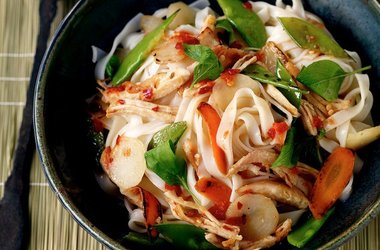
It’s Friday!   A special treat each week is going out to a great little Asian restaurant that features Thai, Japanese and Chinese cuisine. It’s become my favorite place. And so for this day’s poetry form I am sharing the Epulaeryu with you. It’s an obscure little form developed by one Joseph Spence, Sr. inspired by the memorable foods he experienced on his Mediterranean and Far East travels. There is literally a poem and poetry form for everything it seems!

Here’s are the details of a proper Epulaeryu:
-First and foremost it is all about delicious food!
-7 lines with 33 syllable
-The syllable scheme is: 7/5/7/5/5/3/1
-It may or may not rhyme
-Each line contains one thought describing the featured course with the last 1 syllable word expressing the writer’s feelings about the dish. To add drama, an exclamation point is always called for at the end.

I dedicate this one to all my foodie friends! 🙂

my-drunken-noodles-ivillage_380

This photo is from Pinterest

Drunken Noodling

Pepper infused, savory
veggies lightly tossed
drunken noodles sweating steam
aromatic pot
culinary treat
slippery
hot!

kat ~ 15 April 2016