
Each year, this particular tree clings tightly to a leaf that mystically takes on the shape of a bird. Of course having a vivid imagination helps, but before you dismiss me as completely looney, I’d like to point out that this year there are at least two leaf-birds. Can you see them?
I watch them as Winter comes, waiting for the inevitable … the day when the leaf can no longer hang on, only to be swept away on the wind for her first and final flight in complete surrender.
And each year I am reminded, in this season of letting go, to consider the things, people and thoughts that I may be clinging too tightly to, that no longer bring life and light into my life. Like my friend the tree, I am good at creating the illusion, even if only in my own mind, that I need these things in my life. But ultimately I know I must consider letting it all go. Just like the bird-shaped leaves on my tree, the fading, muted, useless “stuff” of my life is just a reflection of what could be if I make room for it by letting go.
Thanks for the reminder old friend, you and your shape-shifting bird-leaves! I’ll let go when you do. ❤️
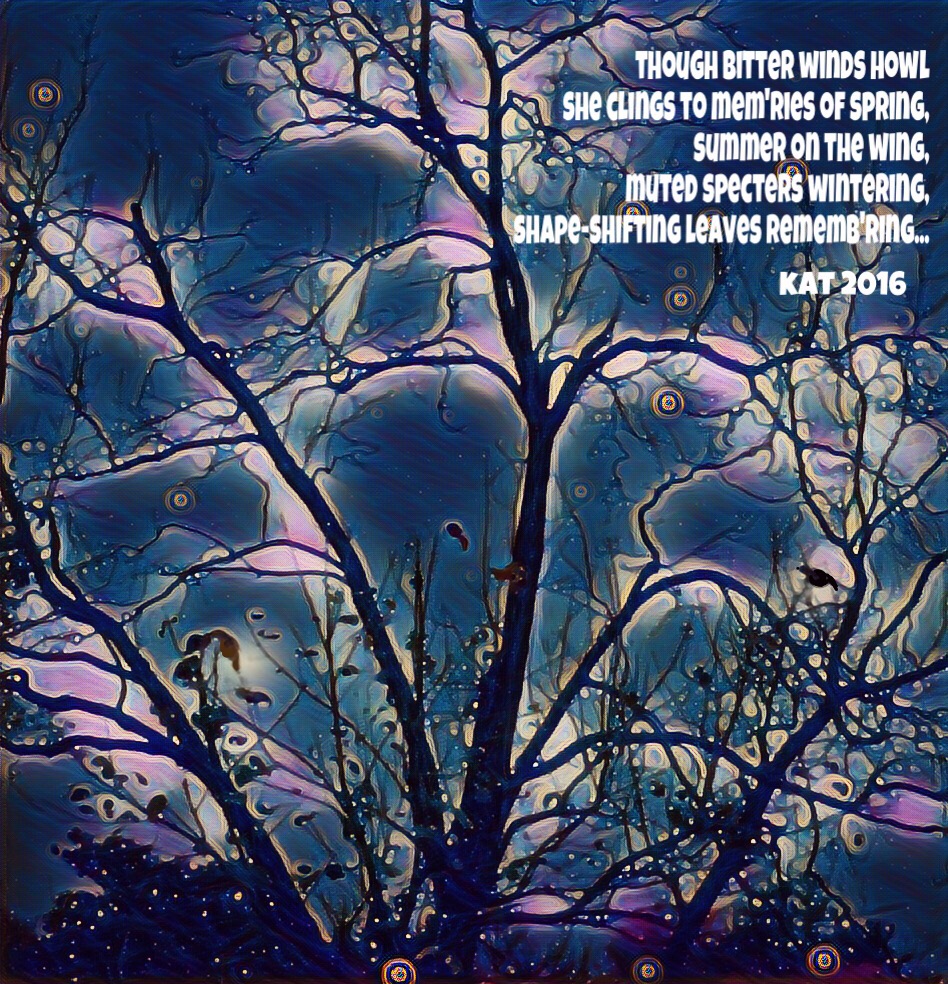
though bitter winds howl
she clings to mem’ries of spring,
summer on the wing,
muted specters wintering,
shape-shifting leaves rememb’ring…
kat ~ 23 November 2016
(Tanka – 5/7/5/7/7)






 like mercury colliding...