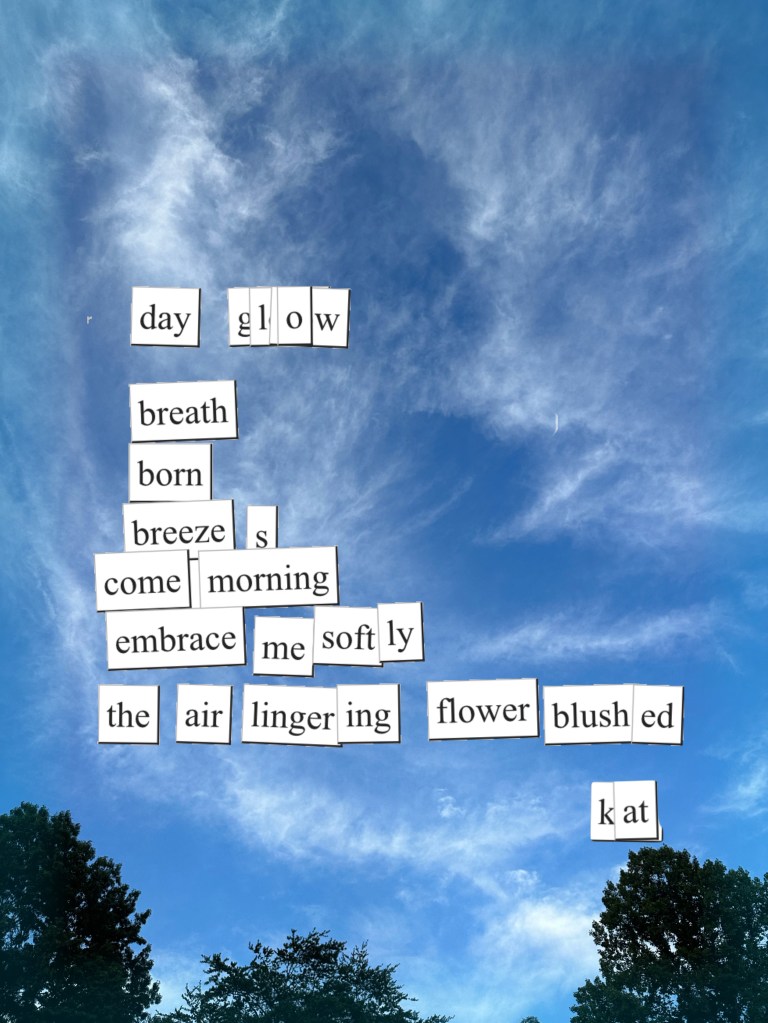
sleepless

sleepless

the raindrops wash my roof like a high hat,
a lullaby, smooth like jazz,
blue as insomnia

~kat

Kimo poems are an Israeli version of haiku. Apparently, there was a need for more syllables in Hebrew. That said, most of the rules are still familiar:

• 3 lines.

• No rhymes.

• 10 syllables in the first line, 7 in the second, and 6 in the third.

Also, the kimo is focused on a single frozen image (kind of like a snapshot). So it’s uncommon to have any movement happening in kimo poems.


bitter sweet

bitter sweet 

from birth living is about survival
amidst fleeting bursts of bliss
to sweeten the trauma

~kat

Kimo poems are an Israeli version of haiku. Apparently, there was a need for more syllables in Hebrew. That said, most of the rules are still familiar:

• 3 lines.

• No rhymes.

• 10 syllables in the first line, 7 in the second, and 6 in the third.

Also, the kimo is focused on a single frozen image (kind of like a snapshot). So it’s uncommon to have any movement happening in kimo poems.


here now

here now

heaven
is but a breath away
not a destination
one hopes to go one day
it’s here in this moment

~kat

…and a few more, since I was feeling inspired, to round out this week of exploring the Bob and Wheel. Next week I’m revisiting the Kimo! See you Monday!


new day

at dawn
lush green, drenched in dew
trees erupt in birdsong
golden streams breaking through
a new day has begun


perfection

i see you
when you don’t notice me
i know you well, your truths,
your vulnerabilities
perfection shining through

~kat

The Bob and Wheel

The bob and wheel, which has its origins in mediaeval poetry and song, takes its name from the craft of spinning. It consists of five lines; a short (two or three syllable) first line followed by four lines of six syllables each. The first, third and fifth lines rhyme, as do the second and fourth lines. We can present this schematically as follows:

xxA

xxxxxB

xxxxxA

xxxxxB

xxxxxA


Do say!

Do say!

whispering
makes listeners wonder
sets tongues a-twittering
rumbling like thunder
the gossips blithering

~kat

The Bob and Wheel

The bob and wheel, which has its origins in mediaeval poetry and song, takes its name from the craft of spinning. It consists of five lines; a short (two or three syllable) first line followed by four lines of six syllables each. The first, third and fifth lines rhyme, as do the second and fourth lines. We can present this schematically as follows:

xxA

xxxxxB

xxxxxA

xxxxxB

xxxxxA


maybe tomorrow…

maybe tomorrow…

waiting,
life spent standing in line,
plans on hold, delaying,
wasting moments in time
long held dreams, forsaking

~kat

The Bob and Wheel

The bob and wheel, which has its origins in mediaeval poetry and song, takes its name from the craft of spinning. It consists of five lines; a short (two or three syllable) first line followed by four lines of six syllables each. The first, third and fifth lines rhyme, as do the second and fourth lines. We can present this schematically as follows:

xxA

xxxxxB

xxxxxA

xxxxxB

xxxxxA