Category Archives: Blogging 101 Assignments

a storm’s a-coming

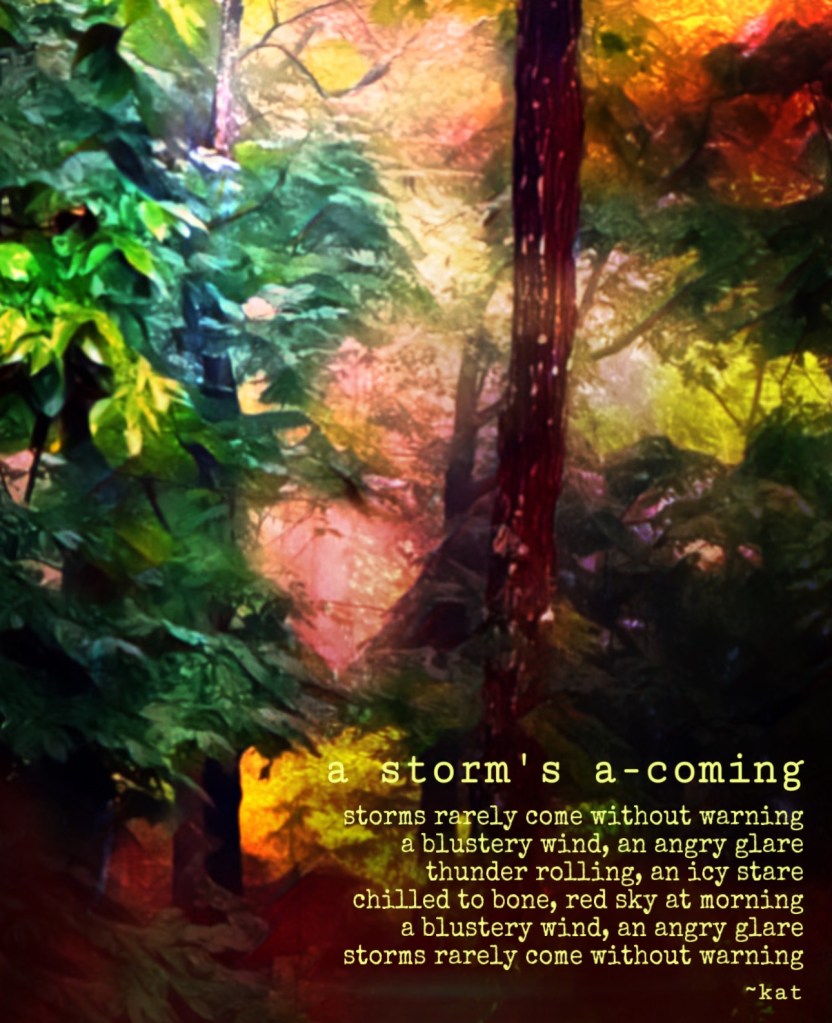
a storm’s a-coming

storms rarely come without warning
a blustery wind, an angry glare
thunder rolling, an icy stare
chilled to bone, red sky at morning
a blustery wind, an angry glare
storms rarely come without warning

~kat

The Biolet

The biolet was invented by the Brazilian poet Filinto de Almeida and first appeared in print in his book Lyrica in 1887. It is a six line poem where the first two lines are repeated as the last two lines, however in reverse. The rhyme scheme is ABbaBA (with the capital letters representing the repeated lines). Most of Almeida’s original biolets in Portuguese were in iambic tetrameter (8 syllables), but you could also try iambic pentameter (10 syllables), iambic hexameter (12 syllables), and unmetered lines of random lengths as well.

storied

storied

if it’s rewritten
history can’t repeat itself
lessons go unlearned

~kat

Senryu

Similar to haiku, senryu generally consist of 17 syllables (also called morae) divided over three lines in a 5-7-5 pattern, though these guidelines were less strictly followed as time passed. Senryu differs from haiku in that it is not required to reference the seasons or nature.


witch

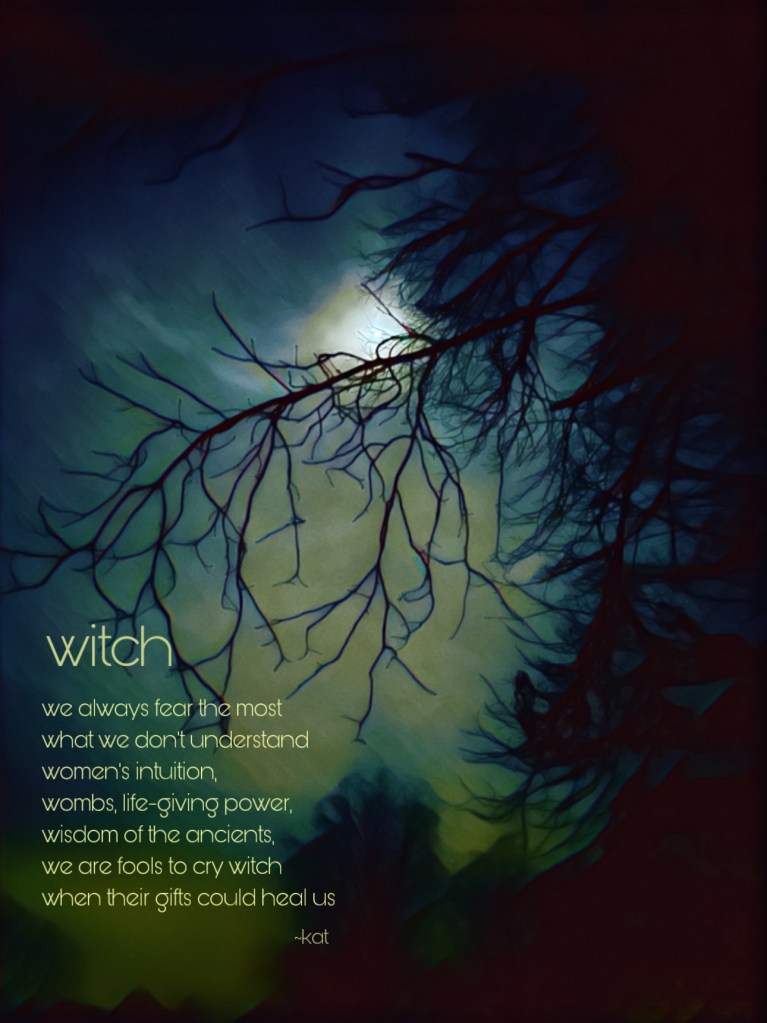
witch

we always fear the most
what we don’t understand
women’s intuition,
wombs, life-giving power,
wisdom of the ancients,
we are fools to cry witch
when their gifts could heal us

~kat

Pleiades

This titled form was invented in 1999 by Craig Tigerman, Sol Magazine’s Lead Editor. Only one word is allowed in the title followed by a single seven-line stanza. The first word in each line begins with the same letter as the title. Hortensia Anderson, a popular haiku and tanka poet, added her own requirement of restricting the line length to six syllables.

Background of the Pleiades: The Pleiades is a star cluster in the constellation Taurus. It is a cluster of stars identified by the ancients, mentioned by Homer in about 750 B.C and Hesiod in about 700 B.C. Six of the stars are readily visible to the naked eye; depending on visibility conditions between nine and twelve stars can be seen. Modern astronomers note that the cluster contains over 500 stars. The ancients named these stars the seven sisters: Alcyone, Asterope, Celaeno, Electra, Maia, Merope, and Tygeta; nearby are the clearly visible parents, Atlas and Pleione. 

The poetic form The Pleiades is aptly named: the seven lines can be said to represent the seven sisters, and the six syllables represent the nearly invisible nature of one sister.

Source: http://www.shadowpoetry.com/resources/wip/pleiades.html


Final Blogging 101 Assignment


Final assignment: Create an Editorial Calendar. As a way to promote consistency and discipline by sticking to a schedule for a particular blog feature.

I do blobber frequently when left to my own devices, but this new assignment will allow me to assess what is working, what is not, running themes that might be cropping up and will provide me a place to vent on current events. Keeping that blabber in one’s head could drive one loonie! 😊

I haven’t settled on a title yet but here are the particulars…

1. A review of my previous week’s posts…my thoughts, themes (is there a pattern happening that I missed), and links to interesting other blog posts that inspired me. 😉

2. A review of world events during the previous week, particularly the stuff that grabbed me. 😳

3. A brief look at the week ahead.

See next Sunday then for my first week in review.  Have a great week yourself!

kat


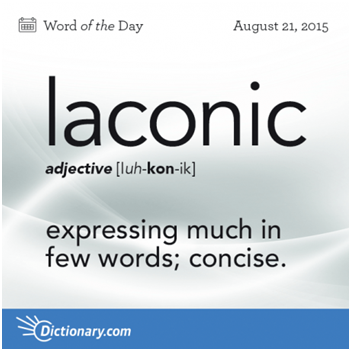
Friday Word of the Day Haiku Challenge! “Laconic”

As part of my Blogging 101 Day 15 Assignment: Creating a New Posting Feature, I have decided to give myself a challenge (and of course anyone else may join in!) by using Dictionary.com’s Word of the Day each Friday in a Haiku.  (A haiku is a three-line poem with 5 syllables in the first and last line and 7 syllables in the middle.)

Today’s word is PERFECT!

WOD1

Laconic Haiku

When braggarts are urged
to keep comments laconic…
silence is golden

~ kat ~ 21 august 2015