Category Archives: Haiku

Scapegrace – Friday’s Word of the Day Haiku

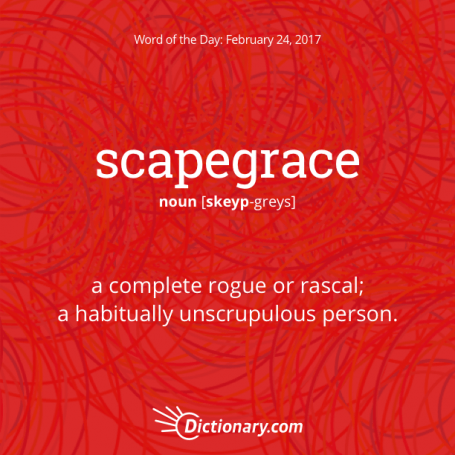
scapegrace

Happy Friday! Today’s Word of the Day from Dictionary.com is “Scapegrace”. When I first saw it, I thought of the common term scapegoat, but this word has very little to do with scapegrace, unless of course you are talking about the poor sap who finds himself in the company of a scapegrace; blamed for the unscrupulous deeds of their grace-less scoundrel of a friend! Then the two fit together, albeit uncomfortably, like two peas in a pod.

Scapegrace is defined by various online dictionaries as a complete rogue or rascal; a habitually unscrupulous person; scamp; a reckless and unprincipled reprobate; or a kinder definition states, “A man or boy of reckless and disorderly habits; an incorrigible scamp. Often used playfully.” A common synonym for the word is “black sheep”. You get the picture. You likely have a picture in your mind right now of a particular scapegrace you might know. (not going to mention any names here 😉 )

The word entered the English language in the mid 18th to early 19th century, over 200 years after the word “scapegoat” came into play, which is rather ironic in retrospect. It took two centuries for scapegrace to become a word, leaving poor old scapegoat to face the music alone. One wonders if it was just hiding all those years.

Scapegrace is made up of the verb “scape” which is a variant of “escape” and the noun “grace”, which literally means “one who escapes or flees the grace of God.”

Oh, and there is one other obscure meaning associated with the word. Scapegrace, in ornithological (the branch of zoology that deals with birds) circles, can also refer to a red-throated loon or diver. Like other loons scapegrace loons are primarily fish eaters and monogamous. Their red throat comes into play during mating rituals. They are not particularly graceful on land due to the positioning of their legs toward their back ends. In fact, the word loon is thought to be derived from the Swedish “lom” which means “lame” or “clumsy”, but this is said to give them great mobility and thrust in and under water. They are excellent swimmers taking to the water only days after hatching.

They are also associated with the creation mythology of indigenous peoples, given the name “earth-diver” in one such story. As legend goes, the Red-Throated Diver was asked by a great shaman to bring up the earth from the bottom of the sea. This is how the world’s dry land was formed.

Through the years the loon was also used as a weather predictor. Move over Mr. Ground Hog! Depending on the location, some people believed it would be fair or rainy based on the direction of the scapegrace’s flight (inland – nice weather or out to sea – not so nice). Other communities relied on its various calls to determine the weather; a gaa-gaa-gaa or turkatrae-turkatrae meant nice weather, whereas meowing like a cat was a sure prediction of rain. With few predators the oldest known Red-Throated Loon, found in Sweden, lived to be about 23 years.

So there you have it, a glimpse into another odd word that we rarely use these days with an avian link associated with its meaning. I’m beginning to see a trend here! What to do, what to do with this week’s Haiku…scapegoats, but not scapegoats and scapegraces and loons…

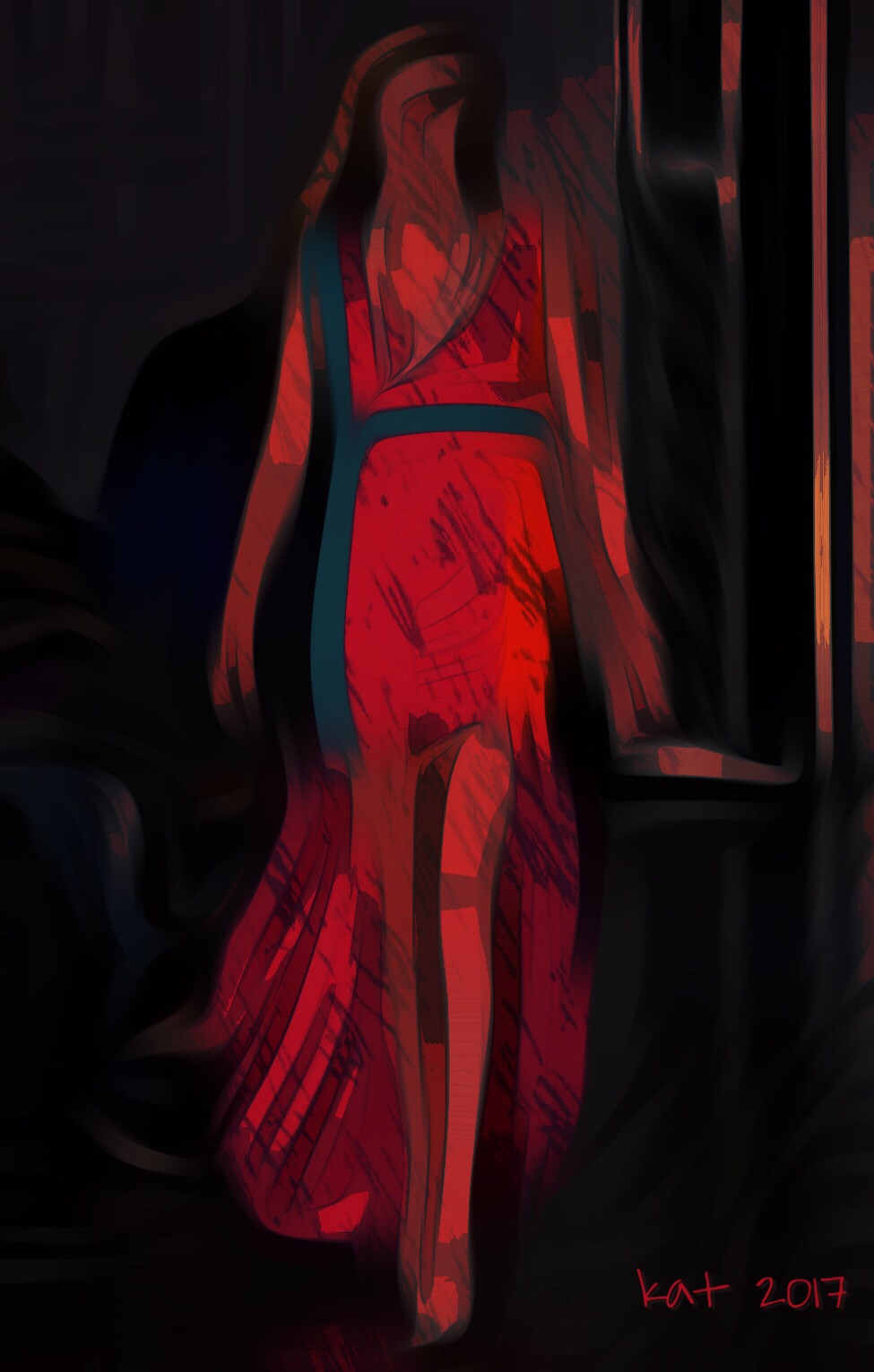
If you’re a scapegoat
you likely know a scapegrace
who is a bad egg!

~kat – 24 February 2017

Have a great weekend!


Break – A Haiku

A Haiku for Haiku Horizons’ Haiku Challenge. This week’s prompt word is “Break”.

and when the bough breaks
what of the shattered remains?
cleanup…aisle heaven

kat ~ 21 February 20171


Sweat & Heat – Haiku

For Ronovan Writes Haiku Challenge, prompt words Sweat & Heat. 

Photo from Pixabay.com


the heat was rising
the defendant was sweating
the verdict…guilty


smooth damp skin
sweat beads glistening
fire meet ice

kat ~ 21 February 2017


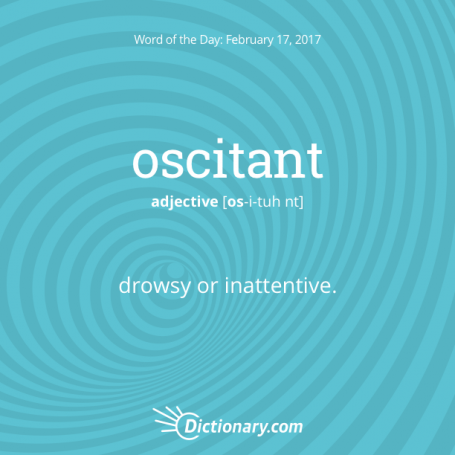
Oscitant – Friday’s Word of the Day Haiku

oscitant.png

Today’s Dictionary.com word of the day is “oscitant. It’s a rather matter-of-fact word, with little backstory or legend to be found in its etymology. I suppose we need a few to the point with no detour words so we don’t get completely confused. According to Dictionary.com oscitant is defined as:

1-drowsy or inattentive.
2-yawning, as with drowsiness; gaping.
3-dull, lazy, or negligent.

It originates from the Latin verb ōscitāre which means “to yawn, gape (of animals); “to turn toward the sun (of plants”; and by the extension “to be listless, drowsy, inactive, half asleep.” It entered the English language in the early 17th century.

“Surely there is something interesting to report on this word,” you might be thinking. But nope. What you see is pretty much what you get. Much like its definition, it is rather boring, yawn-inducing…oscitant in fact.

But I did become intrigued with a word very much related to oscitant. It is word yawn. Here are a few fun facts regarding yawns.

  • Commonly associated with tiredness, stress, sleepiness or even boredom and hunger, a yawn is in fact thought to have more to do with the cooling of one’s brain. (Who knew?!)
  • Yawning consists of the simultaneous inhalation of air and the stretching of the eardrums, followed by an exhalation of breath.
  • In some cultures yawning is considered an action that has spiritual significance. In this case an open mouth is associated with letting one’s soul out or allowing evil spirits in. It is believed that this may be why we have been trained to cover our mouths when we yawn, so as not to be vulnerable to losing one’s soul or becoming possessed by a demon!
  • Yawning “loudly” is considered the height of rudeness and in former societies could even lead to contempt of court charges.
  • Contagious Yawning is a real thing seen in humans and animals as an empathetic response or positive feedback.
  • Contagious Yawning may also be an instinctual herd instinct that has kept animals alert giving them an evolutionary advantage.
  • In primates, a yawn is a threat gesture and a way of maintaining social structure.
  • Humans can pass a contagious yawn to dogs.
  • Excessive yawning can be a symptom of disease such as multiple sclerosis or brain stem ischaemic stroke, particularly as they are related to neurological pathways and cortisol levels.
  • Other reasons why animals yawn include: Yawning as a part of courtship rituals (the ecstatic display of certain types of penguins), as a display of dominance or anger (as is the case for baboons, Siamese Fighting fish, guinea pigs), to realign their jaws after a meal (as demonstrated by snakes) and for respiratory reasons (fish in general due to a lack of oxygen).

Even when a word “is what it is”, leave it to me, I’ll find a way of making it interesting! 🙂

Have a great weekend! Here’s my Haiku.

Oscitant Haiku

a speaker’s nightmare,
more than forgetting one’s speech,
an oscitant crowd

kat ~17 February 2017


Shell Games – A Few Haiku

we collect sea shells
holding them up to our ears
the sea is calling

frail shells of starved flesh
rags draped over boney frames
we die for fashion

children are spoiled
when parents shell out money
it has no value.

kat -16 February 2017

For Haiku Horizons Challenge, prompt word: Shell,